If you have any questions, you are always welcome to contact us. We'll get back to you as soon as possible, withing 24 hours on weekdays.
Customer service
All questions about your order, return and delivery must be sent to our customer service team by e-mail at yourstore@yourdomain.com
Sale & Press
If you are interested in selling our products, need more information about our brand or wish to make a collaboration, please contact us at press@yourdomain.com
Help
If you have any questions, you are always welcome to contact us. We'll get back to you as soon as possible, withing 24 hours on weekdays.
Customer service
All questions about your order, return and delivery must be sent to our customer service team by e-mail at yourstore@yourdomain.com
Sale & Press
If you are interested in selling our products, need more information about our brand or wish to make a collaboration, please contact us at press@yourdomain.com
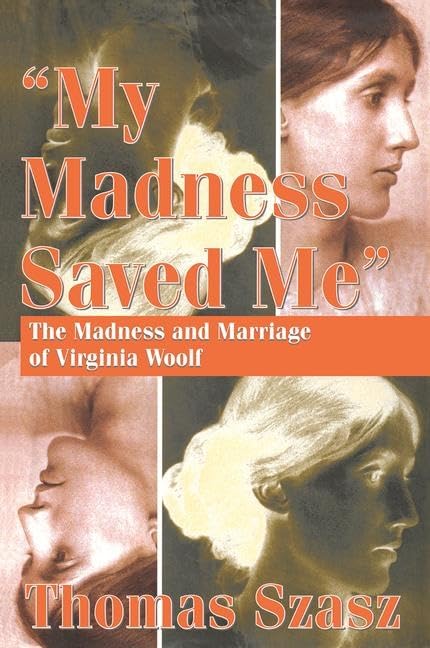
The vast literature on Virginia Woolf's life, work, and marriage falls into two groups. A large majority is certain that she was mentally ill, and a small minority is equally certain that she was not mentally ill but was misdiagnosed by psychiatrists. In this daring exploration of Woolf's life and work, Thomas Szaszfamed for his radical critique of psychiatric concepts, coercions, and excusesexamines the evidence and rejects both views. Instead, he looks at how Virginia Woolf, as well as her husband Leonard, used the concept of madness and the profession of psychiatry to manage and manipulate their own and each other's lives.Do we explain achievement when we attribute it to the fictitious entity we call "genius"? Do we explain failure when we attribute it to the fictitious entity we call "madness"? Or do we deceive ourselves the same way that the person deceives himself when he attributes the easy ignition of hydrogen to its being "flammable"? Szasz interprets Virginia Woolf's life and work as expressions of her character, and her character as the "product" of her free will. He offers this view as a corrective against the prevailing, ostensibly scientific view that attributes both her "madness" and her "genius" to biologicalgenetic causes. We tend to attribute exceptional achievement to genius, and exceptional failure to madness. Both, says Szasz, are fictitious entities.
⚠️ WARNING (California Proposition 65):
This product may contain chemicals known to the State of California to cause cancer,
birth defects, or other reproductive harm.
For MAP (Minimum Advertised Price) violations and Intellectual Property (IP) or Trademark concerns, please contact:
support@ergodebooks.com
⚠️ California Proposition 65 Warning: Some products sold on this website may expose you to chemicals known to the State of California to cause cancer, birth defects, or other reproductive harm. For more information, visit www.P65Warnings.ca.gov.