If you have any questions, you are always welcome to contact us. We'll get back to you as soon as possible, withing 24 hours on weekdays.
Customer service
All questions about your order, return and delivery must be sent to our customer service team by e-mail at yourstore@yourdomain.com
Sale & Press
If you are interested in selling our products, need more information about our brand or wish to make a collaboration, please contact us at press@yourdomain.com
Help
If you have any questions, you are always welcome to contact us. We'll get back to you as soon as possible, withing 24 hours on weekdays.
Customer service
All questions about your order, return and delivery must be sent to our customer service team by e-mail at yourstore@yourdomain.com
Sale & Press
If you are interested in selling our products, need more information about our brand or wish to make a collaboration, please contact us at press@yourdomain.com
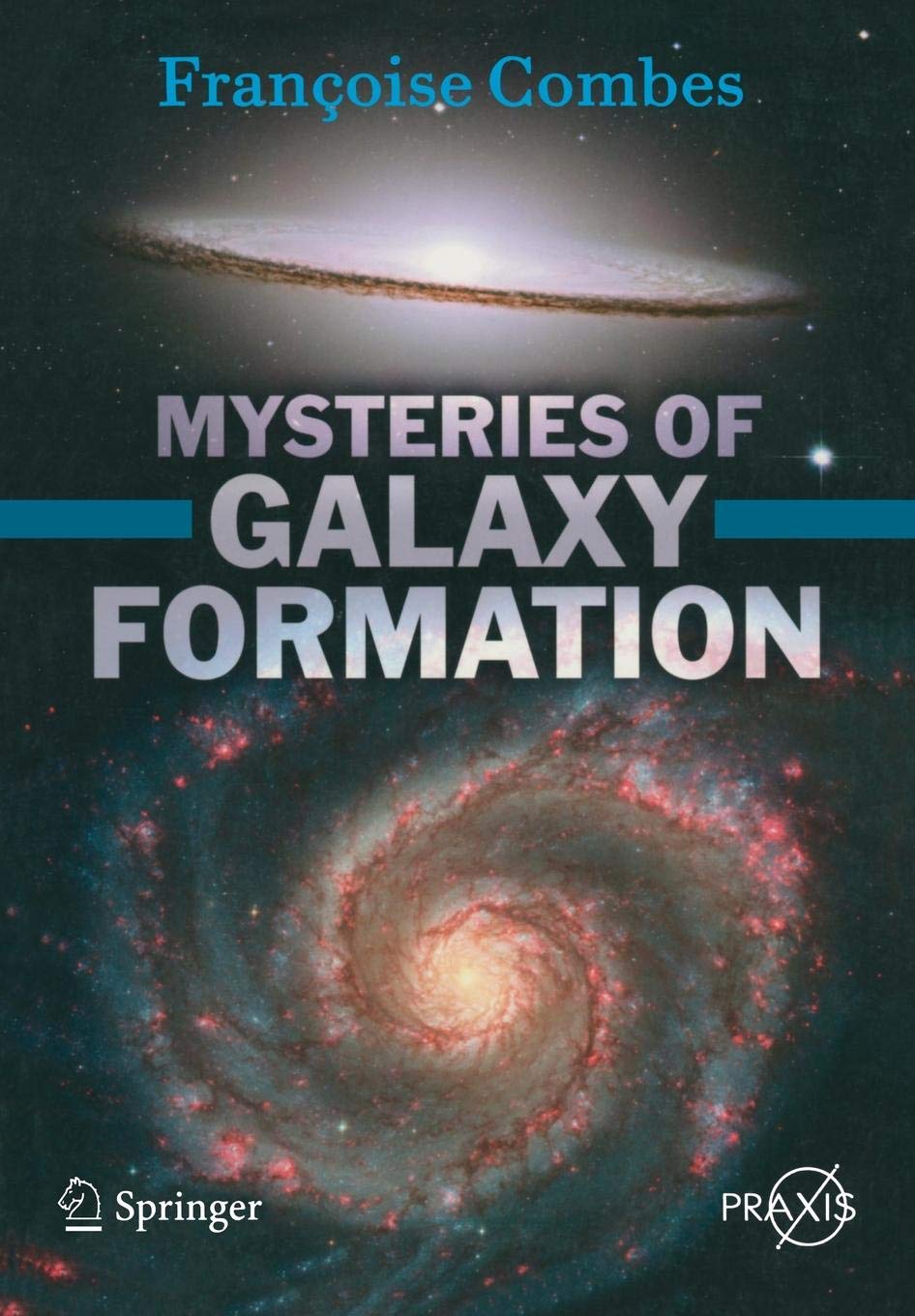
The mystery of how the galaxies formed is a complex and intriguing subject, involving several different theories and an understanding of many different phenomena. Franoise Combes outlines the context in which the Big Bang and the expansion of the universe occurred and the first ?inhomogeneities? from which arose the early structures of the universe. The author describes how, contrary to our everyday experience, space and time appear to be intimately connected. In astronomy, a telescope is a time machine. We can look today at distant galaxies and, although we describe them in the present tense, we are really seeing them in their youthful stages, now long over. Having outlined the evolution and structure of galaxies, black holes are introduced. What do we know about their origins and growth at the centers of galaxies? The author describes how scientists can observe and draw conclusions about black holes. Scenarios of both 'top down' and 'bottom up' galaxy formation are discussed, together with the relationship between red and blue galaxies and dwarf, elliptical, and spheroidal galaxies. The problem of dark matter is then addressed, including its relationship to visible matter and to the structure of the universe on the grand scale, focusing on the success of the Cold Dark Matter model. The author concludes by reviewing problems that remain to be solved and the techniques that might begin to be used to solve these.
⚠️ WARNING (California Proposition 65):
This product may contain chemicals known to the State of California to cause cancer,
birth defects, or other reproductive harm.
For MAP (Minimum Advertised Price) violations and Intellectual Property (IP) or Trademark concerns, please contact:
support@ergodebooks.com
⚠️ California Proposition 65 Warning: Some products sold on this website may expose you to chemicals known to the State of California to cause cancer, birth defects, or other reproductive harm. For more information, visit www.P65Warnings.ca.gov.