If you have any questions, you are always welcome to contact us. We'll get back to you as soon as possible, withing 24 hours on weekdays.
Customer service
All questions about your order, return and delivery must be sent to our customer service team by e-mail at yourstore@yourdomain.com
Sale & Press
If you are interested in selling our products, need more information about our brand or wish to make a collaboration, please contact us at press@yourdomain.com
Help
If you have any questions, you are always welcome to contact us. We'll get back to you as soon as possible, withing 24 hours on weekdays.
Customer service
All questions about your order, return and delivery must be sent to our customer service team by e-mail at yourstore@yourdomain.com
Sale & Press
If you are interested in selling our products, need more information about our brand or wish to make a collaboration, please contact us at press@yourdomain.com
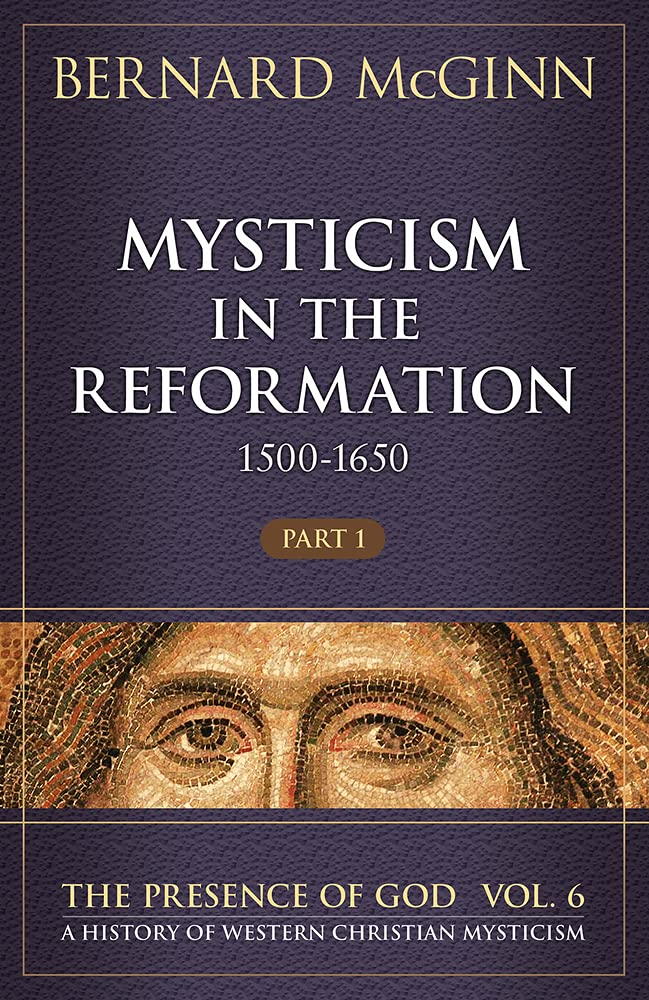
Mysticism in the Reformation, Part I of Volume 6 of The Presence of God Series, is the first full account of the role of the mystical element of Christianity in the Reformers who broke with Rome in the period 15001650. Although some modern Protestant theologians tried to distance the Reformation from any contact with mysticism, recent scholarship, by both Protestants and Catholics, has shown that Protestant mysticism is an important part of the heritage of the Reformation. After an Introduction surveying modern disputes about the nature of the Reformation and the Catholic reaction to it (both Catholic Reform and CounterReformation), Chapter One deals with how the pioneering Reformers Martin Luther and John Calvin reacted to the heritage of Christian mysticism, concentrating on Luthers complicated relation to mystical traditions. Chapter Two turns to the role of mysticism in select Radical Reformers of the sixteenth century, who created models of interior mystical religion that continued to have an effect over the centuries. Chapter Three analyzes the writings of the two most famous Lutheran mystics of the early seventeenth century, Johann Arndt and Jacob Boehme, whose impact in later Western religious traditions has been both powerful and controversial. Finally, Chapter Four considers the significance of mysticism in the English Reformation, both among those who accepted the Elizabethan Settlement that established the Anglican Church, as well as with the dissident Puritans who rejected it.
⚠️ WARNING (California Proposition 65):
This product may contain chemicals known to the State of California to cause cancer,
birth defects, or other reproductive harm.
For MAP (Minimum Advertised Price) violations and Intellectual Property (IP) or Trademark concerns, please contact:
support@ergodebooks.com
⚠️ California Proposition 65 Warning: Some products sold on this website may expose you to chemicals known to the State of California to cause cancer, birth defects, or other reproductive harm. For more information, visit www.P65Warnings.ca.gov.