

Title
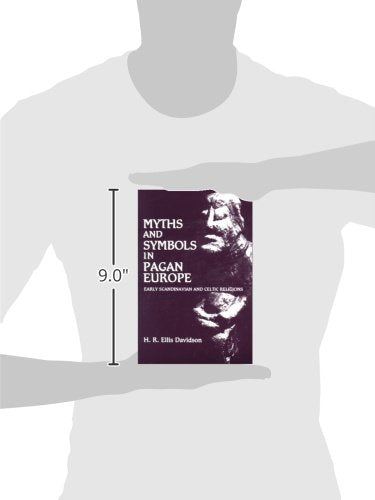
Myths and Symbols in Pagan Europe: Early Scandinavian and Celtic Religions,Used
Sold by Ergodebooks, an authorized reseller.
Returns accepted within 30 days | support@ergodebooks.com
Shipping Information
- Free Standard Shipping — United States only
- Processing Time: 3–5 business days
- Estimated Delivery: 6–10 business days after dispatch
- Double-boxed, fully insured & discreetly packaged
- Tracking number sent via email once dispatched
Returns & Refund
Returns accepted within 30 days of delivery.
Damaged or Defective Item
Free return shipping + replacement or full refund
Wrong Item Received
Free return shipping + replacement or full refund
Change of Mind
Return shipping at customer's expense · 25% restocking fee applies
Payment Option

Most people know of Valhalla, the WorldTree and the gods of Norse mythology, or the strange hunts and voyages of the ancient lrish tales. Yet few people realise the significance of the similarities and contrasts between the religions of the preChristian people of northwestern Europe. The Celts and Germans and Scandinavians had much in common in their religious practices and beliefs, and this is the first serious attempt that has been made to compare them. There are striking resemblances in their ideas about battlegoddesses and protective spirits, holy places, sacrificial rituals, divination and ideas about the Other World; and Myths and Symbols in Pagan Europe poses questions like: do such parallels go back to early times or are they owing to late Viking contact? Hilda Ellis Davidson has worked for many years on preChristian Scandinavian and Germanic religion and now compares them with the Celts from the background of previous studies, using evidence from archaeology, iconography, later literature and folklore, in a search for basic patterns which will add to our knowledge of the early peoples in Europe. Aimed at teachers and libraries but also accessible to students of history, religion and Celtic, Norse and German languages and cultures.
⚠️ WARNING (California Proposition 65):
This product may contain chemicals known to the State of California to cause cancer, birth defects, or other reproductive harm.
For more information, please visit www.P65Warnings.ca.gov.
- Q: What is the page count of this book? A: This book contains two hundred sixty-eight pages. It's a comprehensive exploration of early Scandinavian and Celtic religions.
- Q: What is the binding type of this book? A: This book is a paperback. This makes it flexible and lightweight for easy handling and reading.
- Q: Who is the author of this book? A: The author is Hilda Ellis Davidson. She is known for her extensive research on pre-Christian Scandinavian and Germanic religions.
- Q: What subjects does this book cover? A: This book covers early Scandinavian and Celtic religions. It compares their myths, symbols, and religious practices.
- Q: Is this book suitable for beginners? A: Yes, this book is suitable for beginners. It is accessible to students interested in history, religion, and cultural studies.
- Q: What is the main theme of this book? A: The main theme is the comparison of pre-Christian religions in north-western Europe. It highlights similarities and contrasts between the Celts and Germans.
- Q: How should I store this book? A: Store this book in a cool, dry place. Avoid direct sunlight to preserve the cover and pages.
- Q: Can I clean this book? A: Yes, you can clean this book. Use a soft, dry cloth to gently wipe the cover and pages if needed.
- Q: Is this book appropriate for children? A: No, this book is aimed at teachers and libraries. It may not be suitable for young children due to its complex themes.
- Q: How does this book compare to other works on the same topic? A: This book offers a unique comparative analysis. It distinguishes itself by using archaeological evidence alongside folklore.
- Q: What if the book arrives damaged? A: If the book arrives damaged, you should contact the seller for a return or exchange. Most sellers have policies for damaged items.
- Q: Does this book include illustrations? A: No, this book does not emphasize illustrations. It focuses primarily on textual analysis and academic discussion.
- Q: Is there a glossary or index in this book? A: Yes, this book includes an index. It helps readers locate specific topics or themes covered in the text.
- Q: What is the publisher of this book? A: The publisher is Syracuse University Press. They specialize in scholarly works and academic publications.
- Q: How do I access additional resources related to this book? A: You can access additional resources by checking the publisher’s website or academic databases for supplementary materials.