
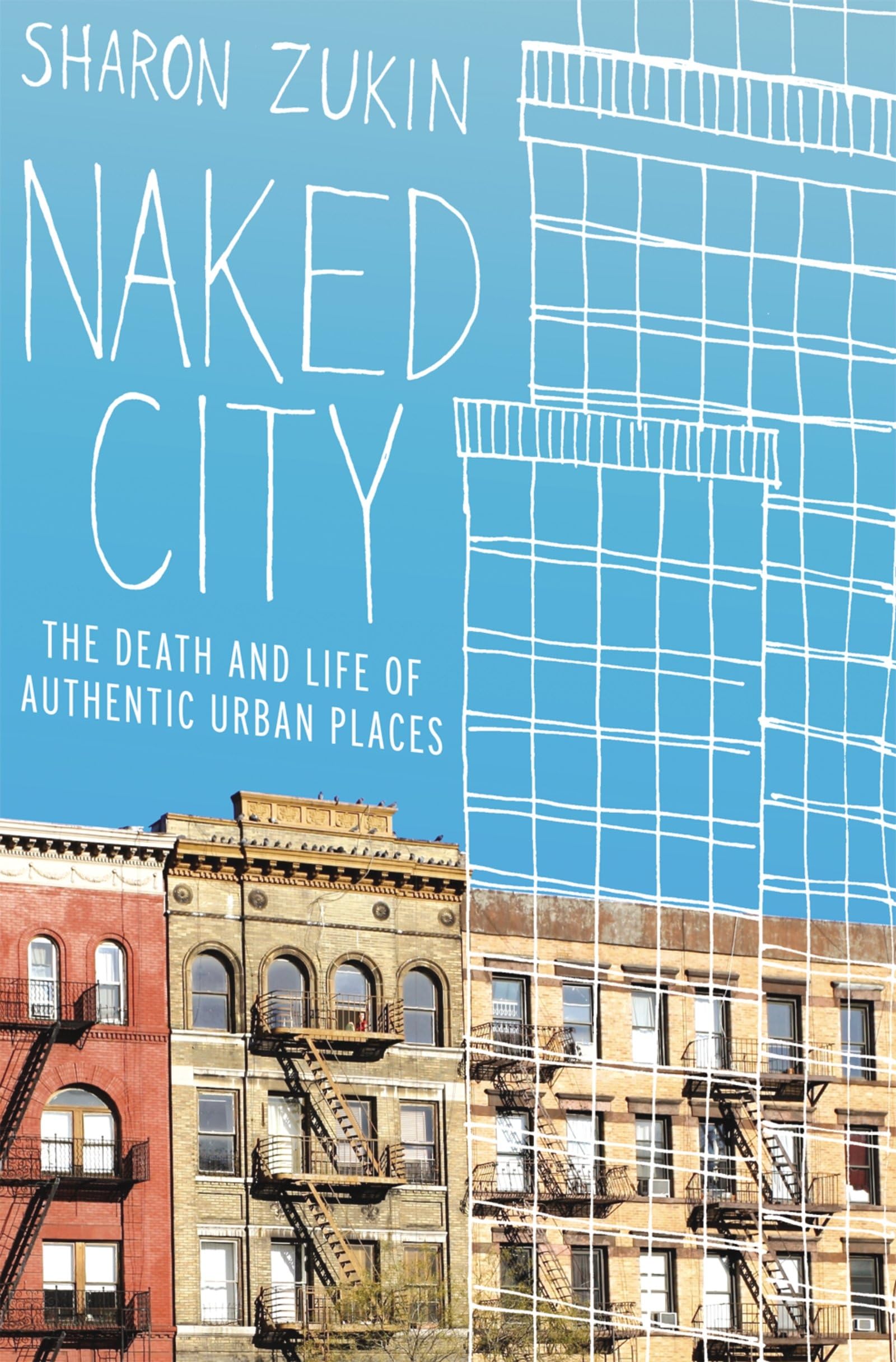
Title
Naked City: The Death and Life of Authentic Urban Places,Used
Sold by Ergodebooks, an authorized reseller.
Returns accepted within 30 days | support@ergodebooks.com
Shipping Information
- Free Standard Shipping — United States only
- Processing Time: 3–5 business days
- Estimated Delivery: 6–10 business days after dispatch
- Double-boxed, fully insured & discreetly packaged
- Tracking number sent via email once dispatched
Returns & Refund
Returns accepted within 30 days of delivery.
Damaged or Defective Item
Free return shipping + replacement or full refund
Wrong Item Received
Free return shipping + replacement or full refund
Change of Mind
Return shipping at customer's expense · 25% restocking fee applies
Payment Option

As cities have gentrified, educated urbanites have come to prize what they regard as 'authentic' urban life: aging buildings, art galleries, small boutiques, upscale food markets, neighborhood oldtimers, funky ethnic restaurants, and old, familyowned shops. These signify a place's authenticity, in contrast to the bland standardization of the suburbs and exurbs.But as Sharon Zukin shows in Naked City, the rapid and pervasive demand for authenticityevident in escalating real estate prices, expensive stores, and closely monitored urban streetscapeshas helped drive out the very people who first lent a neighborhood its authentic aura: immigrants, the working class, and artists. Zukin traces this economic and social evolution in six archetypal New York areasWilliamsburg, Harlem, the East Village, Union Square, Red Hook, and the city's community gardensand travels to both the city's first IKEA store and the World Trade Center site. She shows that for followers of Jane Jacobs, this transformation is a perversion of what was supposed to happen. Indeed, Naked City is a sobering update of Jacobs' legendary 1961 book, The Death and Life of Great American Cities. Like Jacobs, Zukin looks at what gives neighborhoods a sense of place, but argues that over time, the emphasis on neighborhood distinctiveness has become a tool of economic elites to drive up real estate values and effectively force out the neighborhood 'characters' that Jacobs so evocatively idealized.
⚠️ WARNING (California Proposition 65):
This product may contain chemicals known to the State of California to cause cancer, birth defects, or other reproductive harm.
For more information, please visit www.P65Warnings.ca.gov.
- Q: What is the main theme of 'Naked City: The Death and Life of Authentic Urban Places'? A: The main theme of the book explores the concept of urban authenticity and how gentrification affects neighborhoods, driving out the original inhabitants who contribute to a place's unique character.
- Q: Who is the author of 'Naked City'? A: The author of 'Naked City: The Death and Life of Authentic Urban Places' is Sharon Zukin.
- Q: When was 'Naked City' published? A: 'Naked City' was published on May 13, 2011.
- Q: What type of book is 'Naked City'? A: 'Naked City' is a non-fiction book that examines urban studies and sociology, focusing on the impact of economic changes on city neighborhoods.
- Q: How many pages are in 'Naked City'? A: 'Naked City' contains 312 pages.
- Q: What is the binding type of this book? A: 'Naked City' is available in paperback binding.
- Q: Is 'Naked City' suitable for academic study? A: Yes, 'Naked City' is suitable for academic study as it provides critical insights into urban sociology and the effects of gentrification.
- Q: Does 'Naked City' cover specific neighborhoods? A: Yes, the book discusses six archetypal neighborhoods in New York City, including Williamsburg, Harlem, and the East Village.
- Q: What is the significance of the book's title 'Naked City'? A: The title 'Naked City' reflects the exploration of urban spaces stripped of their authenticity due to gentrification and economic pressures.
- Q: Is 'Naked City' a reprint edition? A: Yes, this version of 'Naked City' is a reprint edition.