
Title
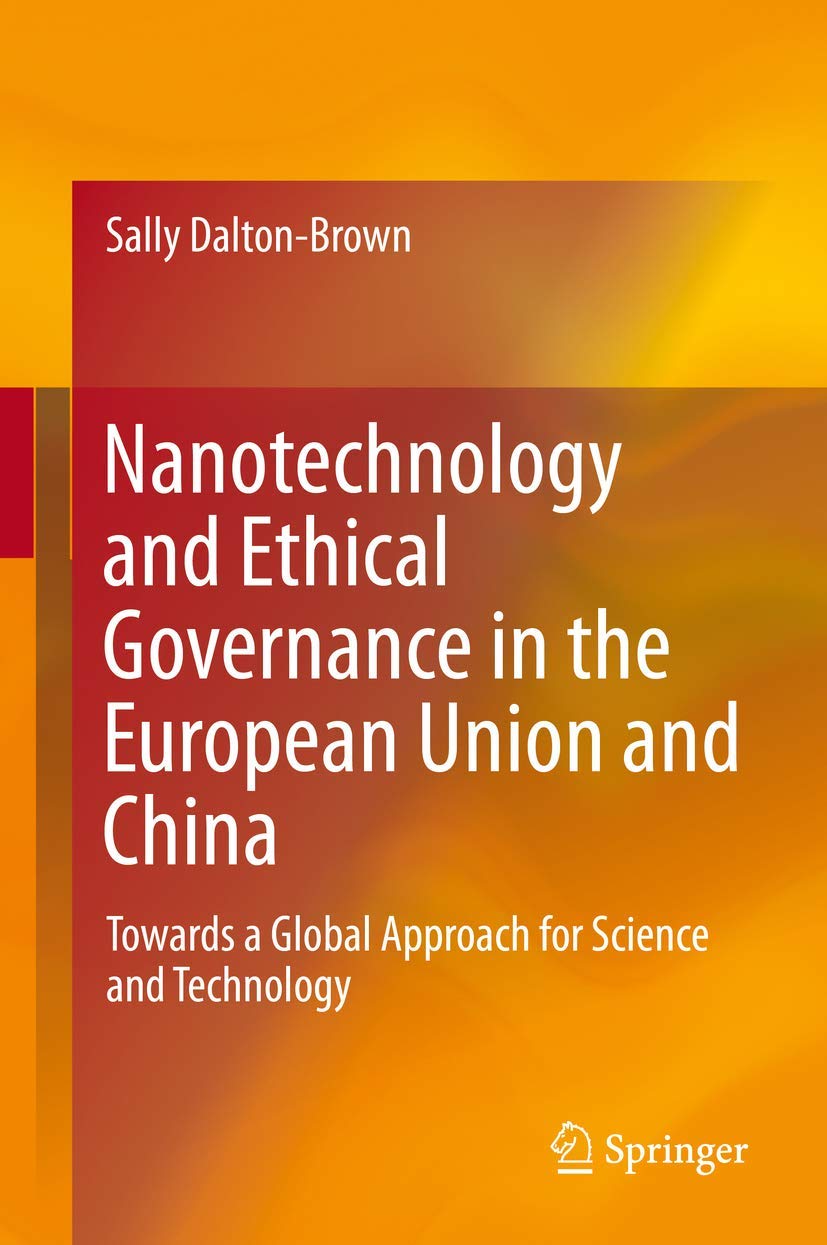
Nanotechnology and Ethical Governance in the European Union and China: Towards a Global Approach for Science and Technology,Used
Sold by Ergodebooks, an authorized reseller.
Returns accepted within 30 days | support@ergodebooks.com
Shipping Information
- Free Standard Shipping — United States only
- Processing Time: 3–5 business days
- Estimated Delivery: 6–10 business days after dispatch
- Double-boxed, fully insured & discreetly packaged
- Tracking number sent via email once dispatched
Returns & Refund
Returns accepted within 30 days of delivery.
Damaged or Defective Item
Free return shipping + replacement or full refund
Wrong Item Received
Free return shipping + replacement or full refund
Change of Mind
Return shipping at customer's expense · 25% restocking fee applies
Payment Option

This book addresses questions surrounding the feasibility of a global approach to ethical governance of science and technology. The emergence and rapid spread of nanotechnology offers a test case for how the world might act when confronted with a technology that could transform the global economy and provide solutions to issues such as pollution, while potentially creating new environmental and health risks. The author compares ethical issues identified by stakeholders in China and the EU about the rapid introduction of this potentially transformative technology a fitting framework for an exploration of global agency.The study explores the discourse ethics and participatory Technology Assessment (pTA) inspired by the work of Jrgen Habermas to argue that different views can be universally recognized and agreed upon, perhaps within an ideal global community of communication. The book offers a developed discourse model, utilizing virtue ethics as well as the work of Taylor, Beck, Korsgaard and others on identity formation, as a way forward in the context of global ethics. The author seeks to develop new vocabularies of comparison, to discover shared aspects of identity and to achieve, hopefully, an intercultural personhood that may lead to a global ethics.The book offers a useful guide for researchers on methods for advancing societal understanding of science and technology. The author addresses a broad audience, from philosophers, ethicists and scientists, to the interested general reader. For the layperson, one chapter surveys nanoissues as depicted in fiction and another offers a view of how an ordinary citizen can act as a global agent of change in ethics.
⚠️ WARNING (California Proposition 65):
This product may contain chemicals known to the State of California to cause cancer, birth defects, or other reproductive harm.
For more information, please visit www.P65Warnings.ca.gov.