If you have any questions, you are always welcome to contact us. We'll get back to you as soon as possible, withing 24 hours on weekdays.
Customer service
All questions about your order, return and delivery must be sent to our customer service team by e-mail at yourstore@yourdomain.com
Sale & Press
If you are interested in selling our products, need more information about our brand or wish to make a collaboration, please contact us at press@yourdomain.com
Help
If you have any questions, you are always welcome to contact us. We'll get back to you as soon as possible, withing 24 hours on weekdays.
Customer service
All questions about your order, return and delivery must be sent to our customer service team by e-mail at yourstore@yourdomain.com
Sale & Press
If you are interested in selling our products, need more information about our brand or wish to make a collaboration, please contact us at press@yourdomain.com
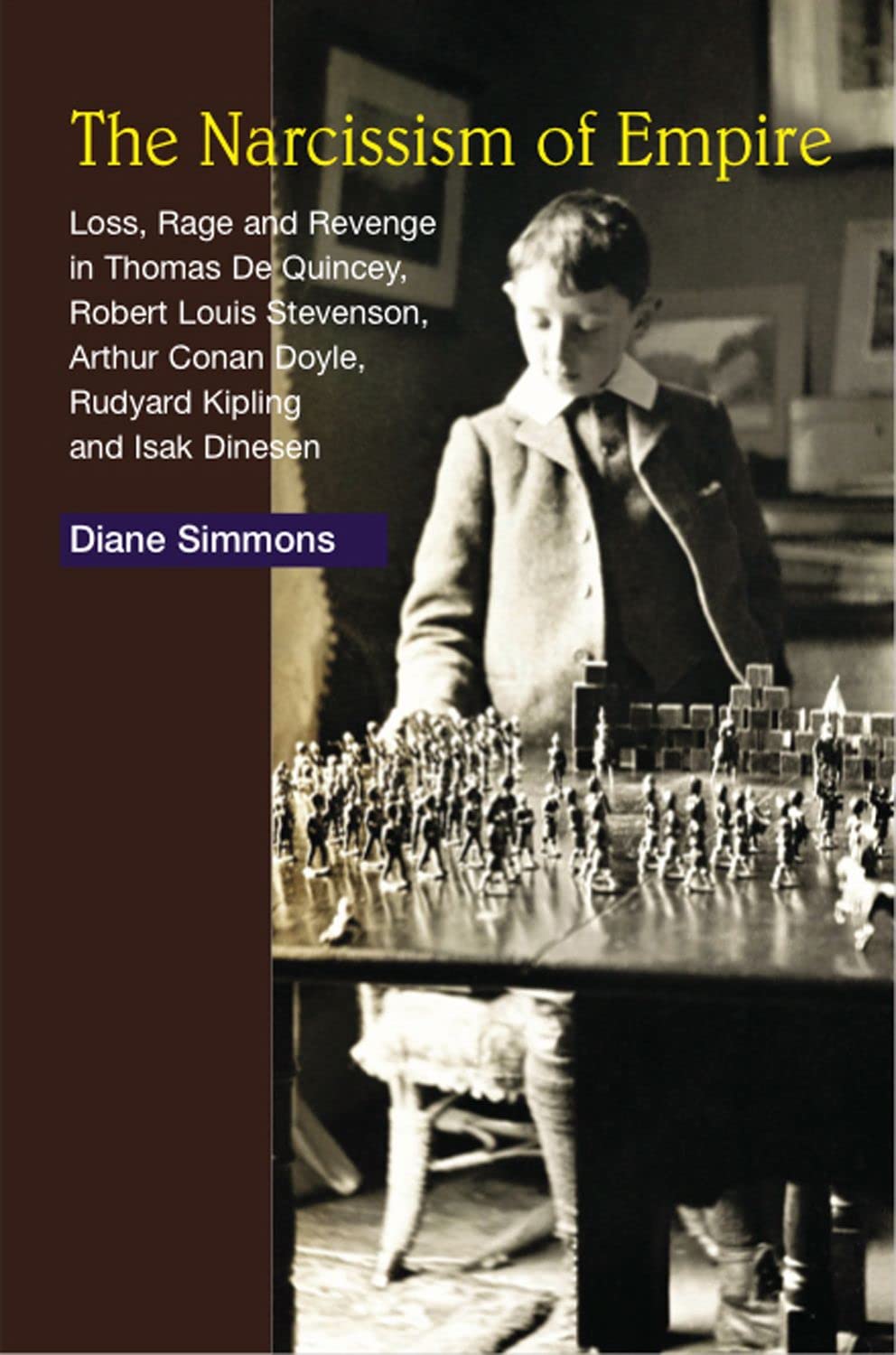
Widely read in the age of British imperialism and still popular today, the five writers studied here have allowed millions to participate vicariously in the imperial project. Yet all of these writers, so instrumental in popularising the imperial agenda of power and dominance, bore deep emotional scars and as adults bolstered their fragile psychic states through fantasies of empire. While soldiers and politicians may know to bury or at least camouflage their fears and desires, inner fantasy is the necessary ingredient of literature, and popular fiction often offers the opportunity to probe the mind of an age. The connection between childhood loss and the desire for imperial escape, power and dominance is illuminated by De Quincey's mad screeds against the Chinese as both terrifyingly powerful and laughably weak, while Stevenson's romances, though written from an invalid's bed, are credited with 'selling' the idea of empire as manly adventure. Conan Doyle's tales of a Britain menaced at home by imperial blowback are models of Great Power paranoia that resonate today, and Kipling's stories of imperial Britain grow increasingly grandiose as childhood's psychic wounds are reopened. Finally, Dinesen portrays plantation life in British East Africa as a gentle romance in which displaced African "squatters" serve as loyal and adoring retainers, providing the aristocratic aura for which the author yearns. It is sometimes said that, "Love's loss is empire's gain", and for these writers, Simmons shows, empire presented a magnificent opportunity to compensate for childhood calamity.
⚠️ WARNING (California Proposition 65):
This product may contain chemicals known to the State of California to cause cancer,
birth defects, or other reproductive harm.
For MAP (Minimum Advertised Price) violations and Intellectual Property (IP) or Trademark concerns, please contact:
support@ergodebooks.com
⚠️ California Proposition 65 Warning: Some products sold on this website may expose you to chemicals known to the State of California to cause cancer, birth defects, or other reproductive harm. For more information, visit www.P65Warnings.ca.gov.