If you have any questions, you are always welcome to contact us. We'll get back to you as soon as possible, withing 24 hours on weekdays.
Customer service
All questions about your order, return and delivery must be sent to our customer service team by e-mail at yourstore@yourdomain.com
Sale & Press
If you are interested in selling our products, need more information about our brand or wish to make a collaboration, please contact us at press@yourdomain.com
Help
If you have any questions, you are always welcome to contact us. We'll get back to you as soon as possible, withing 24 hours on weekdays.
Customer service
All questions about your order, return and delivery must be sent to our customer service team by e-mail at yourstore@yourdomain.com
Sale & Press
If you are interested in selling our products, need more information about our brand or wish to make a collaboration, please contact us at press@yourdomain.com
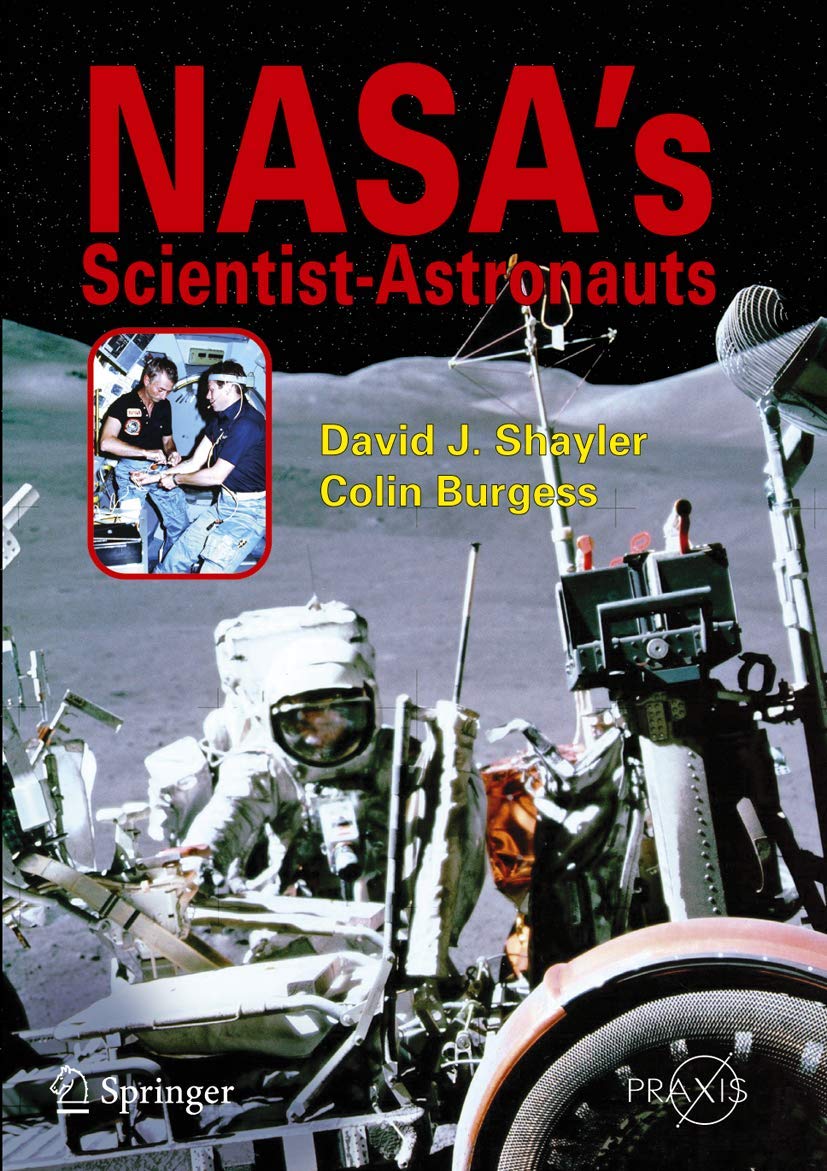
Mounting pressure in the early 1960s from the National Academy of Sciences (NAS) to study ways of expanding the role of astronauts to conduct science on future space missions led to NASAs conclusion that flying scientifically trained crewmembers would generate greater returns from each mission. NASA and industry studies continued investigating possibilities that could lead to the eventual creation of the first space stations using surplus Apollo hardware, through the Apollo Applications Programme (AAP). There was also a growing interest within the military to create their own manned space station programme, conducting onorbit experiments and research with strategic advantages for national security. In October 1964 the Soviets launched Voskhod 1 whose 3man crew were identified as the first scientific passengers in space. A few days later NASA and the NAS had completed joint studies into the possibility of using scientists in the manned space programme, and invited scientists to apply for astronaut training. In selecting the first group of scientistastronauts, NASA had one firm requirement; any person accepted into the programme would have to qualify as a military jet pilot. While the second group of scientists were completing their academic, survival and flight training programme, the remaining members of the first scientistastronaut group were involved in supporting the developing Apollo Applications programme and the Apollo lunar programme.
⚠️ WARNING (California Proposition 65):
This product may contain chemicals known to the State of California to cause cancer,
birth defects, or other reproductive harm.
For MAP (Minimum Advertised Price) violations and Intellectual Property (IP) or Trademark concerns, please contact:
support@ergodebooks.com
⚠️ California Proposition 65 Warning: Some products sold on this website may expose you to chemicals known to the State of California to cause cancer, birth defects, or other reproductive harm. For more information, visit www.P65Warnings.ca.gov.