
Title
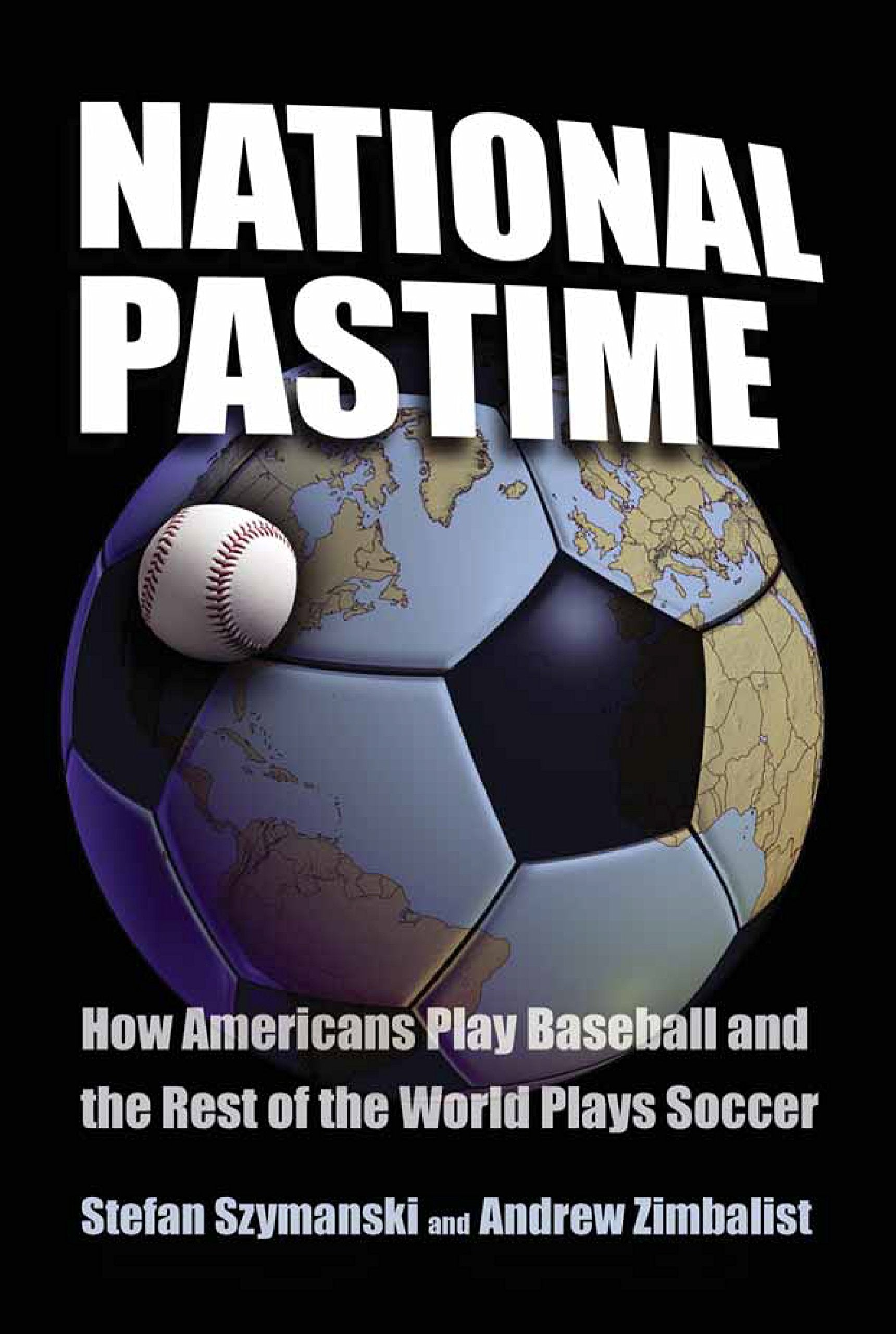
National Pastime: How Americans Play Baseball And The Rest Of The World Plays Soccer,Used
Sold by Ergodebooks, an authorized reseller.
Returns accepted within 30 days | support@ergodebooks.com
Shipping Information
- Free Standard Shipping — United States only
- Processing Time: 3–5 business days
- Estimated Delivery: 6–10 business days after dispatch
- Double-boxed, fully insured & discreetly packaged
- Tracking number sent via email once dispatched
Returns & Refund
Returns accepted within 30 days of delivery.
Damaged or Defective Item
Free return shipping + replacement or full refund
Wrong Item Received
Free return shipping + replacement or full refund
Change of Mind
Return shipping at customer's expense · 25% restocking fee applies
Payment Option

This is the story of two great sports. One is ''America's game,'' while the other is ''the world's game.'' Baseball and soccer are both beloved cultural institutions. What draws fans to one game is often a mystery to fans of the other. Despite superficial differences, however, the business and culture of these sports share more in common than meets the eye. This is the first indepth, crosscultural comparison of these two great pastimes and the megabusinesses that they have become. In N ational Pastime, Stefan Szymanski and Andrew Zimbalist illustrate how the different traditions of each sport have generated different possibilities for their commercial organization and exploitation. They pay special attention to the rich and complex evolution of baseball from its beginnings in America, and they trace modern soccer from its foundation in England through its subsequent expansion across the world. They illustrate how Victorian administrators laid the foundation for Major League Baseball (MLB) and soccer leagues such as the English Premier League, Italy's Serie A, and the European Champions League. The authors show how the organizers of baseball and soccer have learned from each other in the past and how they can continue to do so. Both sports are rich in tradition. In some cases, however, these traditionsoften arbitrary rules established by longdefunct administratorshave obstructed the healthy development of the sport. By studying the experiences of other sports, it might be possible to develop new and better ways to operate. For example, soccer might benefit from greater cooperation among teams as in baseball. On the other hand, MLB could learn from soccer's relegation rules and more open system of ownership, thus avoiding some of the excesses (competitive imbalance, uneven team resources) associated with monopoly. Nat ional Pastime does not advocate the jettisoning of all tradition to adopt wholesale the approach of another sport, of course.'
⚠️ WARNING (California Proposition 65):
This product may contain chemicals known to the State of California to cause cancer, birth defects, or other reproductive harm.
For more information, please visit www.P65Warnings.ca.gov.