
Title
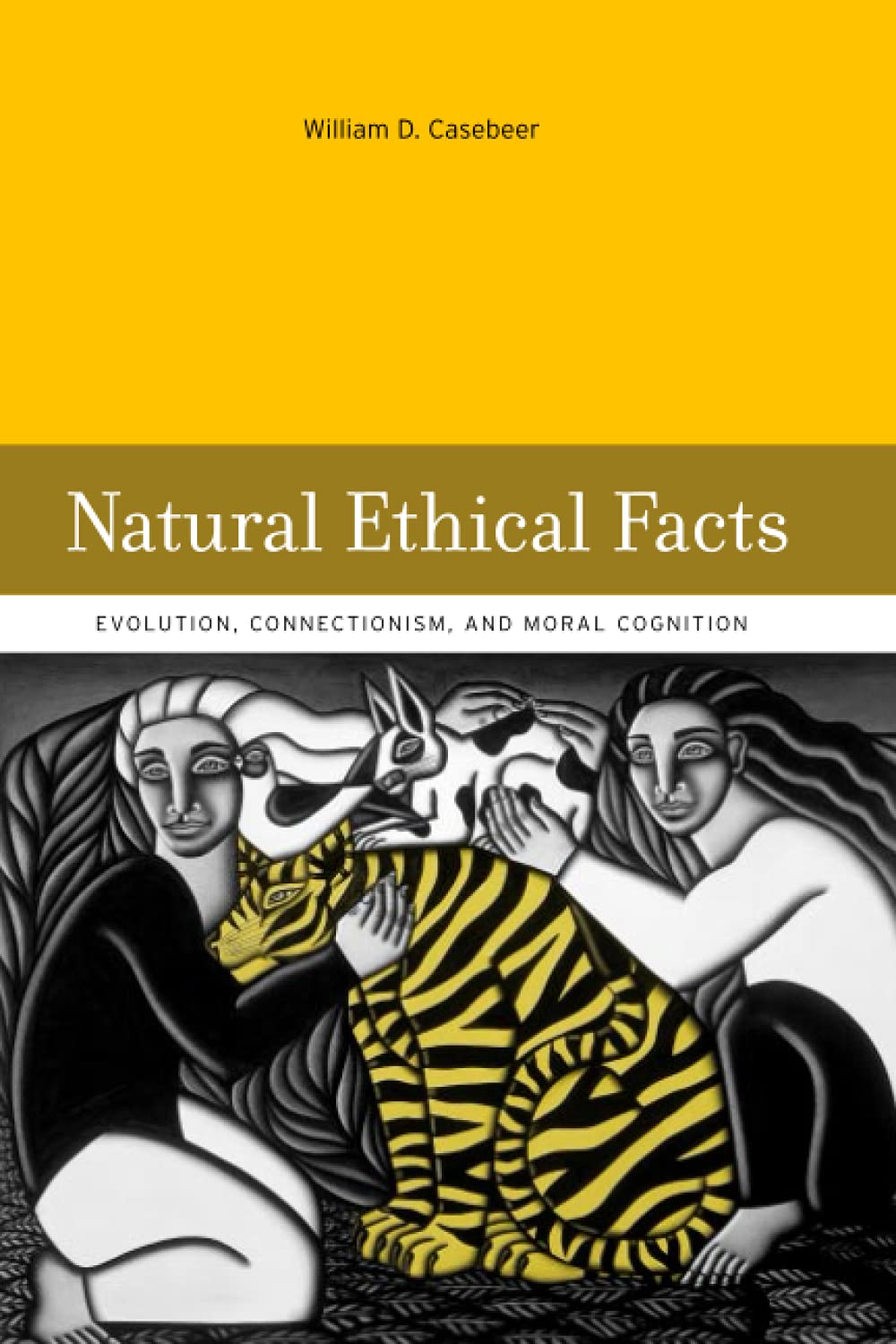
Natural Ethical Facts: Evolution, Connectionism, and Moral Cognition (Bradford Books),Used
Sold by Ergodebooks, an authorized reseller.
Returns accepted within 30 days | support@ergodebooks.com
Shipping Information
- Free Standard Shipping — United States only
- Processing Time: 3–5 business days
- Estimated Delivery: 6–10 business days after dispatch
- Double-boxed, fully insured & discreetly packaged
- Tracking number sent via email once dispatched
Returns & Refund
Returns accepted within 30 days of delivery.
Damaged or Defective Item
Free return shipping + replacement or full refund
Wrong Item Received
Free return shipping + replacement or full refund
Change of Mind
Return shipping at customer's expense · 25% restocking fee applies
Payment Option

In Natural Ethical Facts William Casebeer argues that we can articulate a fully naturalized ethical theory using concepts from evolutionary biology and cognitive science, and that we can study moral cognition just as we study other forms of cognition. His goal is to show that we have 'softly fixed' human natures, that these natures are evolved, and that our lives go well or badly depending on how we satisfy the functional demands of these natures. Natural Ethical Facts is a comprehensive examination of what a plausible moral science would look like. Casebeer begins by discussing the nature of ethics and the possible relationship between science and ethics. He then addresses David Hume's naturalistic fallacy and G. E. Moore's openquestion argument, drawing on the work of John Dewey and W. V. O. Quine. He then proposes a functional account of ethics, offering corresponding biological and moral descriptions. Discussing in detail the neural correlates of moral cognition, he argues that neural networks can be used to model ethical function. He then discusses the impact his views of moral epistemology and ontology will have on traditional ethical theory and moral education, concluding that there is room for other moral theories as long as they take into consideration the functional aspect of ethics; the pragmatic neoAristotelian virtue theory he proposes thus serves as a moral 'big tent.' Finally, he addresses objections to ethical naturalism that may arise, and calls for a reconciliation of the sciences and the humanities. 'Living well,' Casebeer writes, 'depends upon reweaving our ethical theories into the warp and woof of our scientific heritage, attending to the myriad consequences such a project will have for the way we live our lives and the manner in which we structure our collective moral institutions.'
⚠️ WARNING (California Proposition 65):
This product may contain chemicals known to the State of California to cause cancer, birth defects, or other reproductive harm.
For more information, please visit www.P65Warnings.ca.gov.