If you have any questions, you are always welcome to contact us. We'll get back to you as soon as possible, withing 24 hours on weekdays.
Customer service
All questions about your order, return and delivery must be sent to our customer service team by e-mail at yourstore@yourdomain.com
Sale & Press
If you are interested in selling our products, need more information about our brand or wish to make a collaboration, please contact us at press@yourdomain.com
Help
If you have any questions, you are always welcome to contact us. We'll get back to you as soon as possible, withing 24 hours on weekdays.
Customer service
All questions about your order, return and delivery must be sent to our customer service team by e-mail at yourstore@yourdomain.com
Sale & Press
If you are interested in selling our products, need more information about our brand or wish to make a collaboration, please contact us at press@yourdomain.com
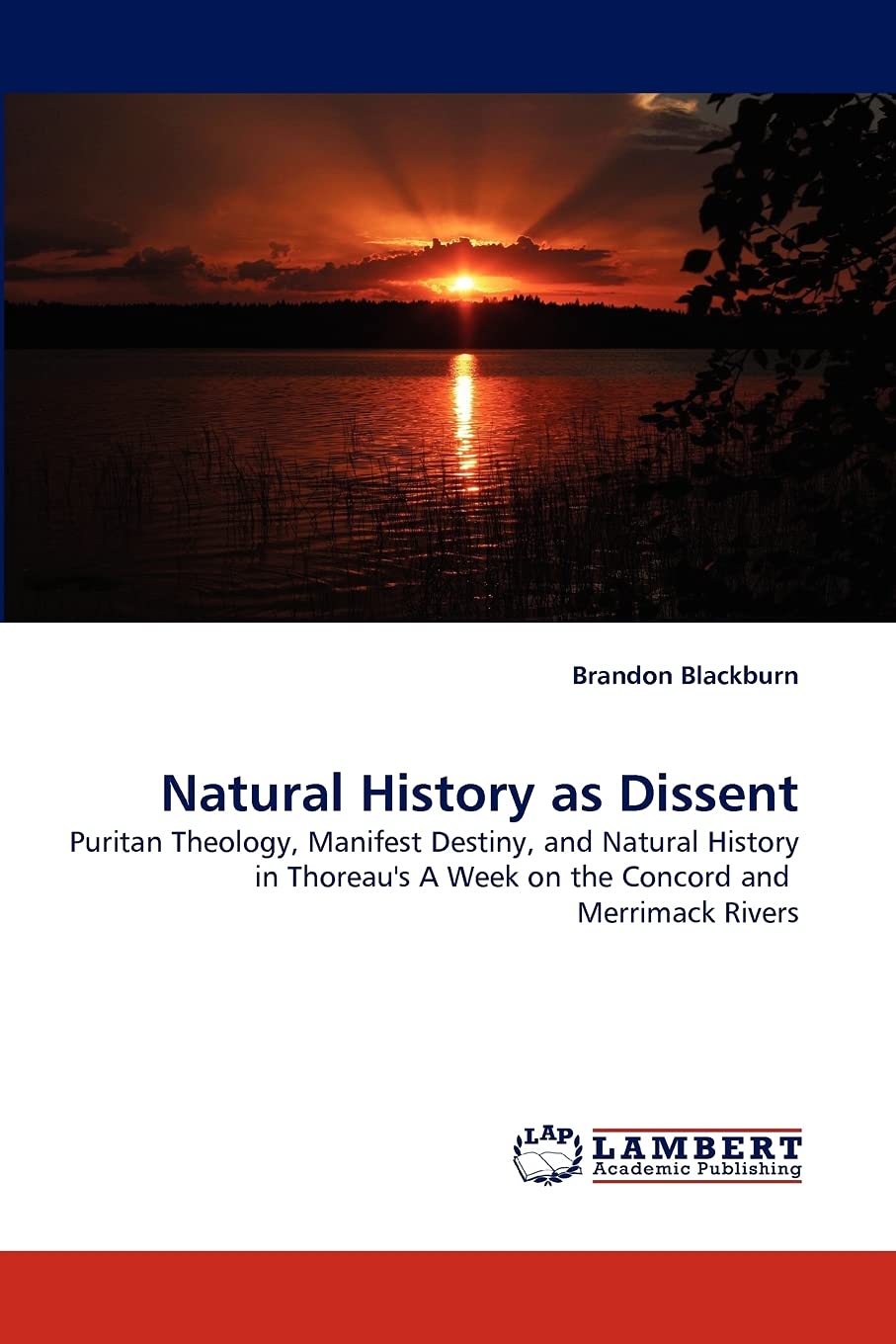
Puritan theology, the political ideology called "Manifest Destiny" and a new empirical methodology called "natural history": Henry David Thoreau wrestles with all three worldviews in his account of a trip down two rivers with his late brother. Titled A Week on the Concord and Merrimack Rivers, this works brings into focus what the theology of New England's past, its present politics, and an emerging scientific method share: a view that the world external to the individual is one of systematic order. In practicing his own brand of natural history, however, Thoreau voices his opposition to those with Puritanical or expansionist leanings. In his account of a week spent on the Concord and Merrimack rivers, Thoreau attempts to rescue the individual conscience from a Puritan theology that would subvert it to the will of God and attempts to unearth a Native American culture that was on the brink of being buried by westward expansion.
⚠️ WARNING (California Proposition 65):
This product may contain chemicals known to the State of California to cause cancer,
birth defects, or other reproductive harm.
For MAP (Minimum Advertised Price) violations and Intellectual Property (IP) or Trademark concerns, please contact:
support@ergodebooks.com
⚠️ California Proposition 65 Warning: Some products sold on this website may expose you to chemicals known to the State of California to cause cancer, birth defects, or other reproductive harm. For more information, visit www.P65Warnings.ca.gov.