If you have any questions, you are always welcome to contact us. We'll get back to you as soon as possible, withing 24 hours on weekdays.
Customer service
All questions about your order, return and delivery must be sent to our customer service team by e-mail at yourstore@yourdomain.com
Sale & Press
If you are interested in selling our products, need more information about our brand or wish to make a collaboration, please contact us at press@yourdomain.com
Help
If you have any questions, you are always welcome to contact us. We'll get back to you as soon as possible, withing 24 hours on weekdays.
Customer service
All questions about your order, return and delivery must be sent to our customer service team by e-mail at yourstore@yourdomain.com
Sale & Press
If you are interested in selling our products, need more information about our brand or wish to make a collaboration, please contact us at press@yourdomain.com
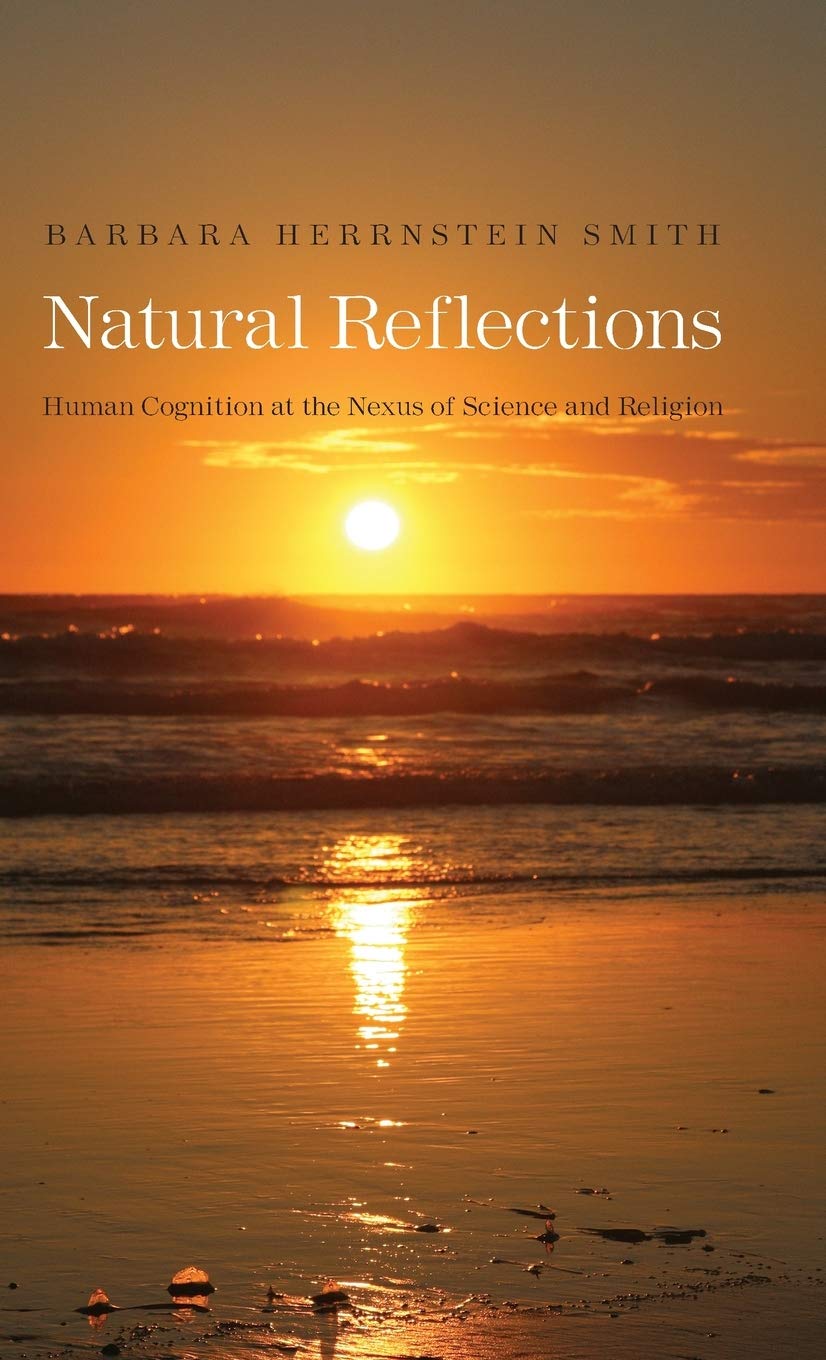
In this important and original book, eminent scholar Barbara Herrnstein Smith describes, assesses, and reflects upon a set of contemporary intellectual projects involving science, religion, and human cognition. One, which Smith calls the New Naturalism, is the effort to explain religion on the basis of cognitive science. Another, which she calls the New Natural Theology, is the attempt to reconcile naturalscientific accounts of the world with traditional religious belief. These two projects, she suggests, are in many ways mirror imagesor natural reflectionsof each other.Examining these and related efforts from the perspective of a constructivistpragmatist epistemology, Smith argues that crucial aspects of beliefreligious and otherthat remain elusive or invisible under dominant rationalist and computational models are illuminated by views of human cognition that stress its dynamic, embodied, and interactive features. She also demonstrates how constructivist understandings of the formation and stabilization of knowledgescientific and otheralert us to similarities in the springs of science and religion that are elsewhere seen largely in terms of difference and contrast.In Natural Reflections, Smith develops a sophisticated approach to issues often framed only polemically. Recognizing science and religion as complex, distinct domains of human practice, she also insists on their significant historical connections and cognitive continuities and offers important new modes of engagement with each of them.
⚠️ WARNING (California Proposition 65):
This product may contain chemicals known to the State of California to cause cancer,
birth defects, or other reproductive harm.
For MAP (Minimum Advertised Price) violations and Intellectual Property (IP) or Trademark concerns, please contact:
support@ergodebooks.com
⚠️ California Proposition 65 Warning: Some products sold on this website may expose you to chemicals known to the State of California to cause cancer, birth defects, or other reproductive harm. For more information, visit www.P65Warnings.ca.gov.