
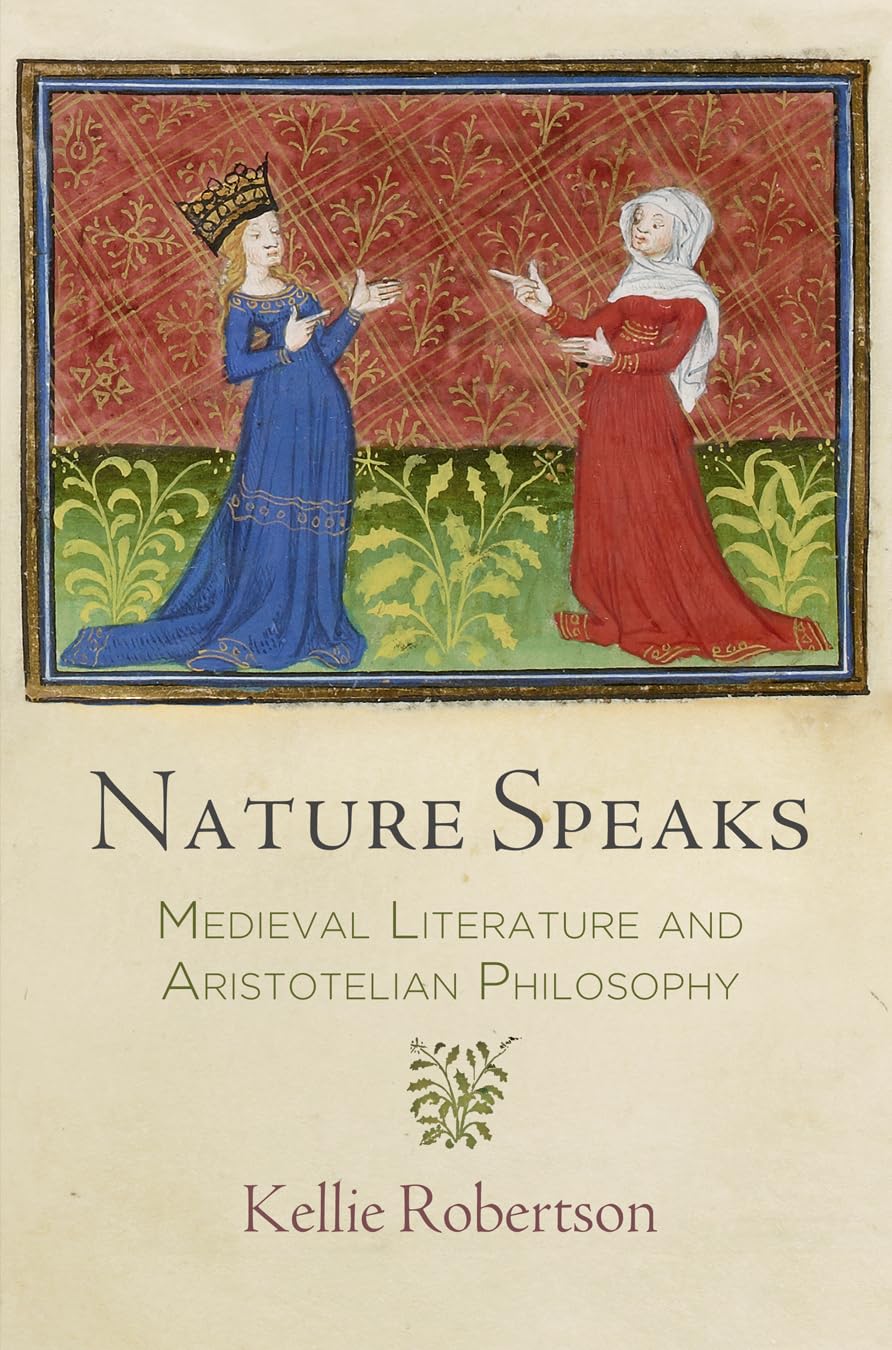
Title
Nature Speaks: Medieval Literature And Aristotelian Philosophy (The Middle Ages Series)
Sold by Ergodebooks, an authorized reseller.
Returns accepted within 30 days | support@ergodebooks.com
Shipping Information
- Free Standard Shipping — United States only
- Processing Time: 3–5 business days
- Estimated Delivery: 6–10 business days after dispatch
- Double-boxed, fully insured & discreetly packaged
- Tracking number sent via email once dispatched
Returns & Refund
Returns accepted within 30 days of delivery.
Damaged or Defective Item
Free return shipping + replacement or full refund
Wrong Item Received
Free return shipping + replacement or full refund
Change of Mind
Return shipping at customer's expense · 25% restocking fee applies
Payment Option

What Does It Mean To Speak For Nature? Contemporary Environmental Critics Warn That Giving A Voice To Nonhuman Nature Reduces It To A Mere Echo Of Our Own Needs And Desires; They Caution That It Is A Perverse Form Of Anthropocentrism. And Yet Nature'S Voice Proved A Powerful And Durable Ethical Tool For Premodern Writers, Many Of Whom Used It To Explore What It Meant To Be An Embodied Creature Or To Ask Whether Human Experience Is Independent Of The Natural World In Which It Is Forged.The History Of The Late Medieval Period Can Be Retold As The Story Of How Nature Gained An Authoritative Voice Only To Lose It Again At The Onset Of Modernity. This Distinctive Voice, Kellie Robertson Argues, Emerged From A Novel Historical Confluence Of Physics And Fictionwriting. Natural Philosophers And Poets Shared A Language For Talking About Physical Inclination, The Inherent Desire To Pursue The Good That Was Found In All Things Living And Nonliving. Moreover, Both Natural Philosophers And Poets Believed That Representing The Visible World Was A Problem Of Morality Rather Than Mere Description. Based On Readings Of Academic Commentaries And Scientific Treatises As Well As Popular Allegorical Poetry, Nature Speaks Contends That Controversy Over Aristotle'S Natural Philosophy Gave Birth To A Philosophical Poetics That Sought To Understand The Extent To Which The Human Will Was Necessarily Determined By The Same Forces That Shaped The Rest Of The Material World.Modern Disciplinary Divisions Have Largely Discouraged Shared Imaginative Responses To This Problem Among The Contemporary Sciences And Humanities. Robertson Demonstrates That This Earlier Worldview Can Offer An Alternative Model Of Humannonhuman Complementarity, One Premised Neither On Compulsory Human Exceptionalism Nor On The Simple Reduction Of One Category To The Other. Most Important, Nature Speaks Assesses What Is Gained And What Is Lost When Nature'S Voice Goes Silent.
⚠️ WARNING (California Proposition 65):
This product may contain chemicals known to the State of California to cause cancer, birth defects, or other reproductive harm.
For more information, please visit www.P65Warnings.ca.gov.
- Q: How many pages does this book have? A: This book has four hundred fifty-six pages. It's a detailed exploration of medieval literature and Aristotelian philosophy.
- Q: What are the dimensions of this book? A: The book measures six inches in length, one point twenty-six inches in width, and nine point zero two inches in height.
- Q: What type of binding does this book have? A: This book is bound in hardcover. This durable binding is ideal for long-term use and preservation.
- Q: Who is the author of this book? A: The author is Kellie Robertson. She explores the intersection of medieval literature and philosophical thought.
- Q: What is the genre of this book? A: The book falls under the Medieval genre. It examines themes from literature and philosophy during the medieval period.
- Q: Is this book suitable for academic study? A: Yes, this book is suitable for academic study. It provides in-depth analysis and critical perspectives on medieval texts.
- Q: What themes are explored in this book? A: Themes include human experience, nature's voice, and the ethical implications of speaking for nonhuman entities.
- Q: Is this book appropriate for casual readers? A: Yes, casual readers may find it interesting. However, some familiarity with philosophical concepts may enhance understanding.
- Q: Can this book be used for teaching? A: Yes, this book is suitable for teaching purposes. Its scholarly approach makes it a valuable resource for literature and philosophy courses.
- Q: How should I store this book? A: Store this book in a cool, dry place. Keeping it upright on a shelf will help maintain its shape and condition.
- Q: What is the best way to clean this book? A: To clean this book, use a soft, dry cloth. Avoid using liquids as they can damage the pages and binding.
- Q: Does this book come with a warranty? A: No, this book does not come with a warranty. However, it is a reliable publication from a reputable publisher.
- Q: What if my book arrives damaged? A: If your book arrives damaged, contact the seller for return options. Most sellers will provide a solution for damaged items.
- Q: Is there a digital version of this book available? A: Yes, a digital version may be available. Check with the publisher or online retailers for eBook options.
- Q: Is this book a good choice for someone interested in environmental philosophy? A: Yes, this book is a great choice for those interested in environmental philosophy. It discusses the ethical implications of nature's voice.
- Q: What kind of audience is this book intended for? A: The book is intended for scholars, students, and anyone interested in medieval literature and philosophical discourse.