
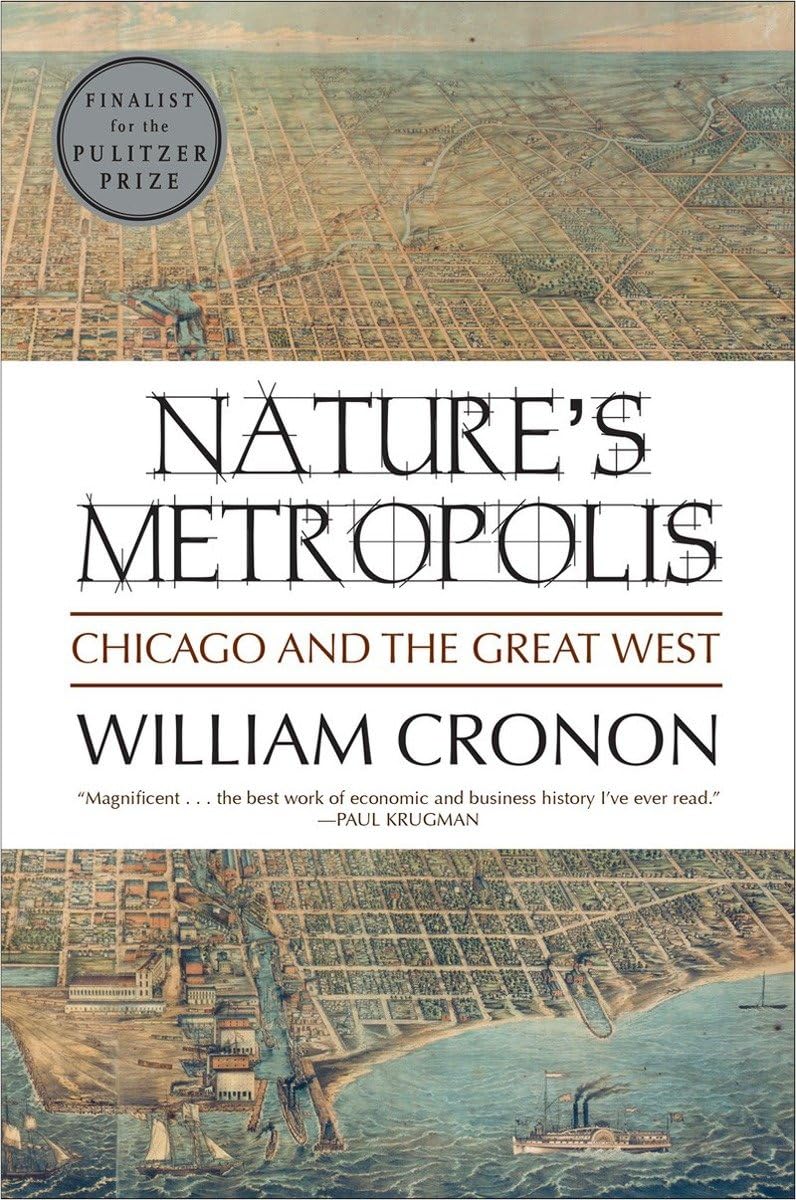
Title
Nature'S Metropolis: Chicago And The Great West,New
Sold by Ergodebooks, an authorized reseller.
Returns accepted within 30 days | support@ergodebooks.com
Shipping Information
- Free Standard Shipping — United States only
- Processing Time: 3–5 business days
- Estimated Delivery: 6–10 business days after dispatch
- Double-boxed, fully insured & discreetly packaged
- Tracking number sent via email once dispatched
Returns & Refund
Returns accepted within 30 days of delivery.
Damaged or Defective Item
Free return shipping + replacement or full refund
Wrong Item Received
Free return shipping + replacement or full refund
Change of Mind
Return shipping at customer's expense · 25% restocking fee applies
Payment Option

A Finalist For The Pulitzer Prize And Winner Of The Bancroft Prize. 'No One Has Written A Better Book About A Citynature'S Metropolis Is Elegant Testimony To The Proposition That Economic, Urban, Environmental, And Business History Can Be As Graceful, Powerful, And Fascinating As A Novel.' Kenneth T. Jackson, Boston Globein This Groundbreaking Work, William Cronon Gives Us An Environmental Perspective On The History Of Nineteenthcentury America. By Exploring The Ecological And Economic Changes That Made Chicago America'S Most Dynamic City And The Great West Its Hinterland, Mr. Cronon Opens A New Window Onto Our National Past. This Is The Story Of City And Country Becoming Ever More Tightly Bound In A System So Powerful That It Reshaped The American Landscape And Transformed American Culture. The World That Emerged Is Our Own.Winner Of The Chicago Tribune Heartland Prize
⚠️ WARNING (California Proposition 65):
This product may contain chemicals known to the State of California to cause cancer, birth defects, or other reproductive harm.
For more information, please visit www.P65Warnings.ca.gov.
- Q: What is the page count of Nature's Metropolis? A: This book has five hundred ninety-two pages. It provides an in-depth exploration of Chicago's historical significance and its relationship with the Great West.
- Q: What are the dimensions of the book? A: The dimensions are six point one inches in length, one point six one inches in width, and nine point three inches in height. These measurements make it a standard-sized paperback.
- Q: Who is the author of Nature's Metropolis? A: The author is William Cronon. He is a well-respected environmental historian and this book reflects his expertise in the subject.
- Q: What type of binding does this book have? A: This book is a paperback. The binding is designed to be flexible and lightweight, making it easy to handle.
- Q: Is Nature's Metropolis suitable for all ages? A: Yes, the book is suitable for a general audience. However, it is best suited for readers interested in history, economics, and environmental studies.
- Q: What themes does Nature's Metropolis explore? A: It explores themes of economic, urban, and environmental history. The narrative focuses on how Chicago evolved into a dynamic city and its impact on the Great West.
- Q: How should I care for this book? A: To keep the book in good condition, store it in a dry place, away from direct sunlight. Avoid bending the cover or pages to ensure longevity.
- Q: Can I read this book in one sitting? A: While it's possible, the book contains substantial content and may take several hours to read fully. Many readers prefer to digest it over multiple sessions.
- Q: What is the best way to store this book? A: Store it upright on a shelf to prevent bending. If you have multiple books, consider using a bookend to keep it secure.
- Q: Is Nature's Metropolis a good choice for students? A: Yes, it's an excellent choice for students studying American history or environmental science. It offers valuable insights and is often included in academic syllabi.
- Q: How does this book compare to other historical texts? A: Nature's Metropolis combines environmental themes with economic history, making it unique. It stands out for its narrative style and depth of analysis.
- Q: What if my book arrives damaged? A: If the book arrives damaged, you should contact your retailer for return or exchange options. Most retailers have policies in place for such issues.
- Q: Is there a warranty for this book? A: No, books typically do not come with warranties. However, return policies may vary by retailer.
- Q: What are common issues when reading this book? A: Some readers may find the detailed economic analysis challenging. It helps to have a basic understanding of historical context before diving in.
- Q: Are there any illustrations in Nature's Metropolis? A: No, the book primarily consists of text without illustrations. It focuses on detailed narratives and analyses rather than visual aids.
- Q: How can I find more books by William Cronon? A: You can search online bookstores or libraries for other works by William Cronon. He has authored several influential texts in environmental history.