
Title
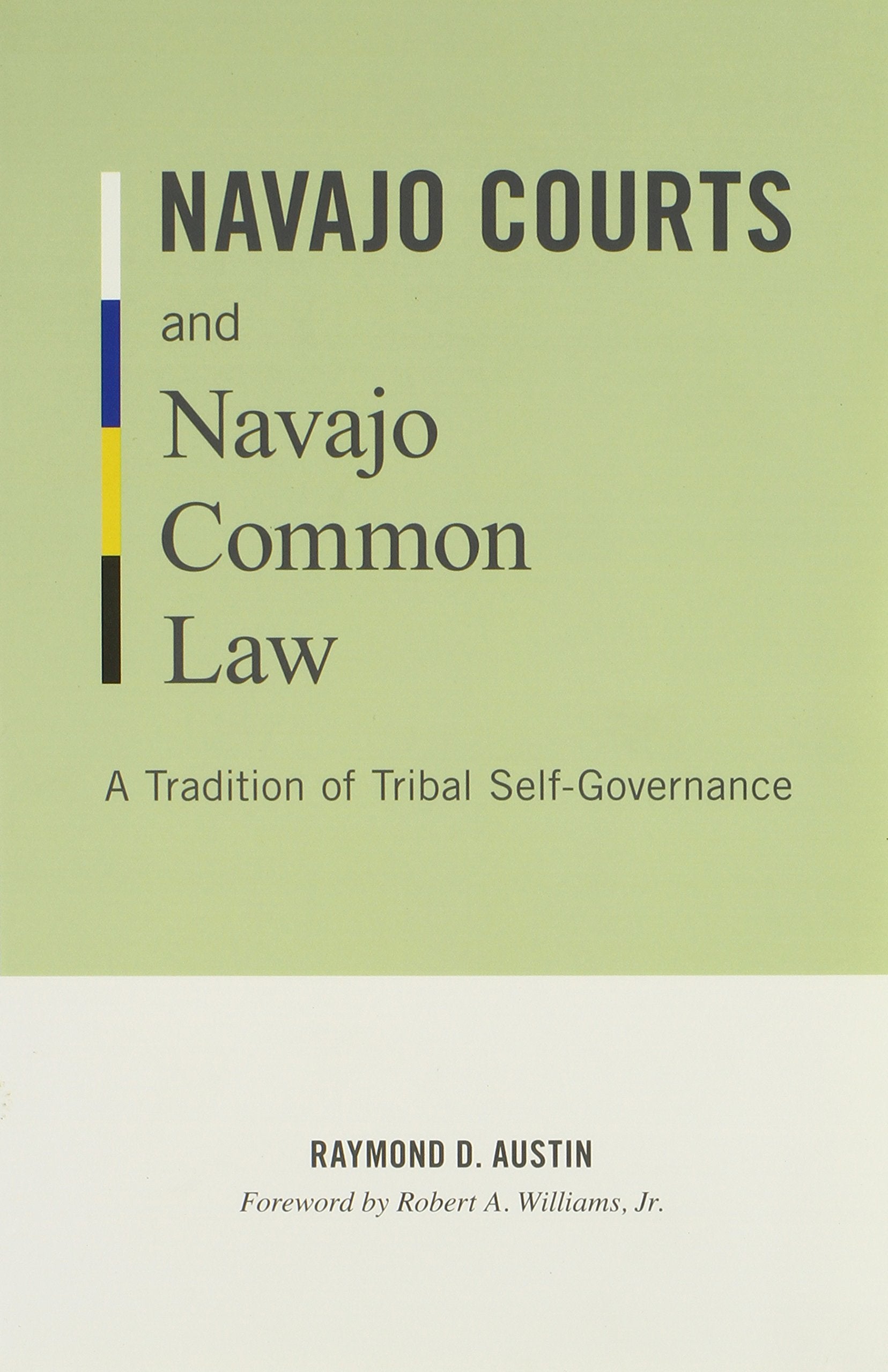
Navajo Courts and Navajo Common Law: A Tradition of Tribal SelfGovernance (Indigenous Americas),Used
Sold by Ergodebooks, an authorized reseller.
Returns accepted within 30 days | support@ergodebooks.com
Shipping Information
- Free Standard Shipping — United States only
- Processing Time: 3–5 business days
- Estimated Delivery: 6–10 business days after dispatch
- Double-boxed, fully insured & discreetly packaged
- Tracking number sent via email once dispatched
Returns & Refund
Returns accepted within 30 days of delivery.
Damaged or Defective Item
Free return shipping + replacement or full refund
Wrong Item Received
Free return shipping + replacement or full refund
Change of Mind
Return shipping at customer's expense · 25% restocking fee applies
Payment Option

The Navajo Nation court system is the largest and most established tribal legal system in the world. Since the landmark 1959 U.S. Supreme Court decision in Williams v. Lee that affirmed tribal court authority over reservationbased claims, the Navajo Nation has been at the vanguard of a farreaching, transformative jurisprudential movement among Indian tribes in North America and indigenous peoples around the world to retrieve and use traditional values to address contemporary legal issues.A justice on the Navajo Nation Supreme Court for sixteen years, Justice Raymond D. Austin has been deeply involved in the movement to develop tribal courts and tribal law as effective means of modern selfgovernment. He has written foundational opinions that have established Navajo common law and, throughout his legal career, has recognized the benefit of tribal customs and traditions as tools of restorative justice.In Navajo Courts and Navajo Common Law, Justice Austin considers the history and implications of how the Navajo Nation courts apply foundational Navajo doctrines to modern legal issues. He explains key Navajo foundational concepts like Hzh (harmony), K' (peacefulness and solidarity), and K' (kinship) both within the Navajo cultural context and, using the case method of legal analysis, as they are adapted and applied by Navajo judges in virtually every important area of legal life in the tribe.In addition to detailed case studies, Justice Austin provides a broad view of tribal law, documenting the development of tribal courts as important institutions of indigenous selfgovernance and outlining how other indigenous peoples, both in North America and elsewhere around the world, can draw on traditional precepts to achieve selfdetermination and selfgovernment, solve community problems, and control their own futures.
⚠️ WARNING (California Proposition 65):
This product may contain chemicals known to the State of California to cause cancer, birth defects, or other reproductive harm.
For more information, please visit www.P65Warnings.ca.gov.
- Q: What is the main focus of 'Navajo Courts and Navajo Common Law'? A: The book primarily examines the Navajo Nation court system, its evolution, and its role in tribal self-governance, emphasizing how traditional Navajo concepts are applied to contemporary legal issues.
- Q: Who is the author of this book? A: The author is Raymond D. Austin, who served as a justice on the Navajo Nation Supreme Court for sixteen years and has significantly contributed to the development of tribal law.
- Q: What are some key concepts discussed in the book? A: Key concepts include Hózhó (harmony), K'é (peacefulness and solidarity), and K'éí (kinship), which are explored in both cultural and legal contexts.
- Q: What type of legal analysis does the book use? A: The book employs the case method of legal analysis, utilizing detailed case studies to illustrate the application of Navajo common law.
- Q: Is this book suitable for those interested in Native American law? A: Yes, it is particularly valuable for those interested in Native American law, tribal governance, and the intersection of traditional values with modern legal frameworks.
- Q: What is the item condition of this book? A: The book is listed as 'New', indicating that it is in pristine condition and has not been previously used.
- Q: How many pages does the book contain? A: The book has a total of 296 pages.
- Q: When was 'Navajo Courts and Navajo Common Law' published? A: The book was published on November 25, 2009.
- Q: What is the binding type of the book? A: The book is available in paperback binding.
- Q: Can this book help understand tribal self-governance? A: Yes, it provides insights into the development of tribal courts as institutions of self-governance and their importance for indigenous peoples.