
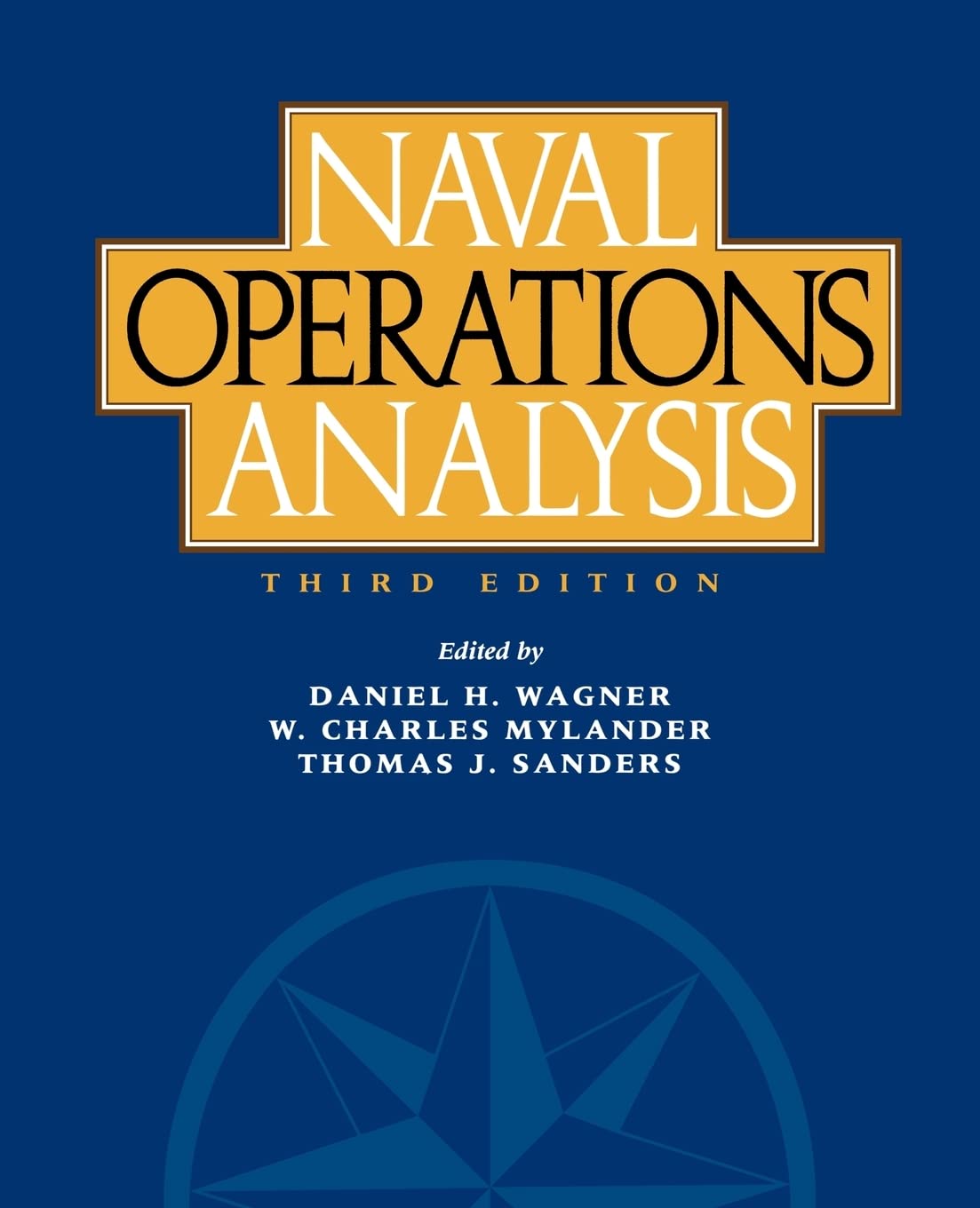
Title
Naval Operations Analysis: Third Edition,Used
Sold by Ergodebooks, an authorized reseller.
Returns accepted within 30 days | support@ergodebooks.com
Shipping Information
- Free Standard Shipping — United States only
- Processing Time: 3–5 business days
- Estimated Delivery: 6–10 business days after dispatch
- Double-boxed, fully insured & discreetly packaged
- Tracking number sent via email once dispatched
Returns & Refund
Returns accepted within 30 days of delivery.
Damaged or Defective Item
Free return shipping + replacement or full refund
Wrong Item Received
Free return shipping + replacement or full refund
Change of Mind
Return shipping at customer's expense · 25% restocking fee applies
Payment Option

This textbook for Naval Academy midshipmen focuses on search and detection theory as it was developed in World War II and evolved after the war. Accessible to anyone with a mathematical background, it covers analytical decisionmaking, simulation techniques, and models used in determining the probability of detection. This third edition is a comprehensive update that collects in one place the basic analytical developments in naval search theory over the last fifty years, while retaining the material on the models of search theory developed in the campaigns against the submarine threat in World War II. With recent improvements in stealth technology, the need to become more knowledgeable about search theory is increasing.
⚠️ WARNING (California Proposition 65):
This product may contain chemicals known to the State of California to cause cancer, birth defects, or other reproductive harm.
For more information, please visit www.P65Warnings.ca.gov.
- Q: How many pages are in 'Naval Operations Analysis: Third Edition'? A: This book has four hundred twenty-four pages. It provides an extensive overview of naval search theory.
- Q: What is the binding type of this textbook? A: The binding type is paperback. This makes it lightweight and easy to handle for students.
- Q: What are the dimensions of the book? A: The dimensions are seven point four eight inches in length, one point zero two inches in width, and nine point two one inches in height. These measurements make it portable for studying.
- Q: What topics does this book cover? A: It covers search and detection theory, analytical decision-making, and simulation techniques. This is crucial for understanding naval operations.
- Q: Who is the author of 'Naval Operations Analysis: Third Edition'? A: The author is Daniel R. Wagner. He presents the material in an accessible manner for readers.
- Q: Is this book suitable for beginners? A: Yes, it is accessible to anyone with a mathematical background. This makes it suitable for both beginners and advanced learners.
- Q: Can I use this book for self-study? A: Yes, this textbook is ideal for self-study. It provides comprehensive insights into naval search theory.
- Q: What is the primary audience for this book? A: The primary audience includes Naval Academy midshipmen and anyone interested in naval operations. It is also beneficial for military professionals.
- Q: Is there any specific prerequisite knowledge required? A: A basic mathematical background is recommended. This will help readers grasp the analytical concepts more effectively.
- Q: How should I care for this textbook? A: Store it in a cool, dry place to prevent damage. Avoid exposing it to direct sunlight to maintain its condition.
- Q: What is the recommended way to clean this book? A: Use a soft, dry cloth to gently wipe the cover. Avoid using water or cleaning solutions that could damage the pages.
- Q: How do I handle the book to keep it in good condition? A: Handle it with clean hands and avoid bending the spine. This will help preserve the structural integrity of the paperback.
- Q: What if the book arrives damaged? A: If the book arrives damaged, you should contact the seller for a return or exchange. Most sellers have policies to handle such situations.
- Q: Can I get a refund if I'm not satisfied with the book? A: Yes, many sellers offer a refund policy if you're not satisfied. Be sure to check the specific return policy of the retailer.
- Q: Is there a warranty for this book? A: Books typically do not come with a warranty. However, return policies may provide some level of buyer protection.
- Q: What do I do if I have issues with the content of the book? A: If you have issues with the content, consider reaching out to instructors or peers for clarification. You can also look for supplemental materials.