If you have any questions, you are always welcome to contact us. We'll get back to you as soon as possible, withing 24 hours on weekdays.
Customer service
All questions about your order, return and delivery must be sent to our customer service team by e-mail at yourstore@yourdomain.com
Sale & Press
If you are interested in selling our products, need more information about our brand or wish to make a collaboration, please contact us at press@yourdomain.com
Help
If you have any questions, you are always welcome to contact us. We'll get back to you as soon as possible, withing 24 hours on weekdays.
Customer service
All questions about your order, return and delivery must be sent to our customer service team by e-mail at yourstore@yourdomain.com
Sale & Press
If you are interested in selling our products, need more information about our brand or wish to make a collaboration, please contact us at press@yourdomain.com
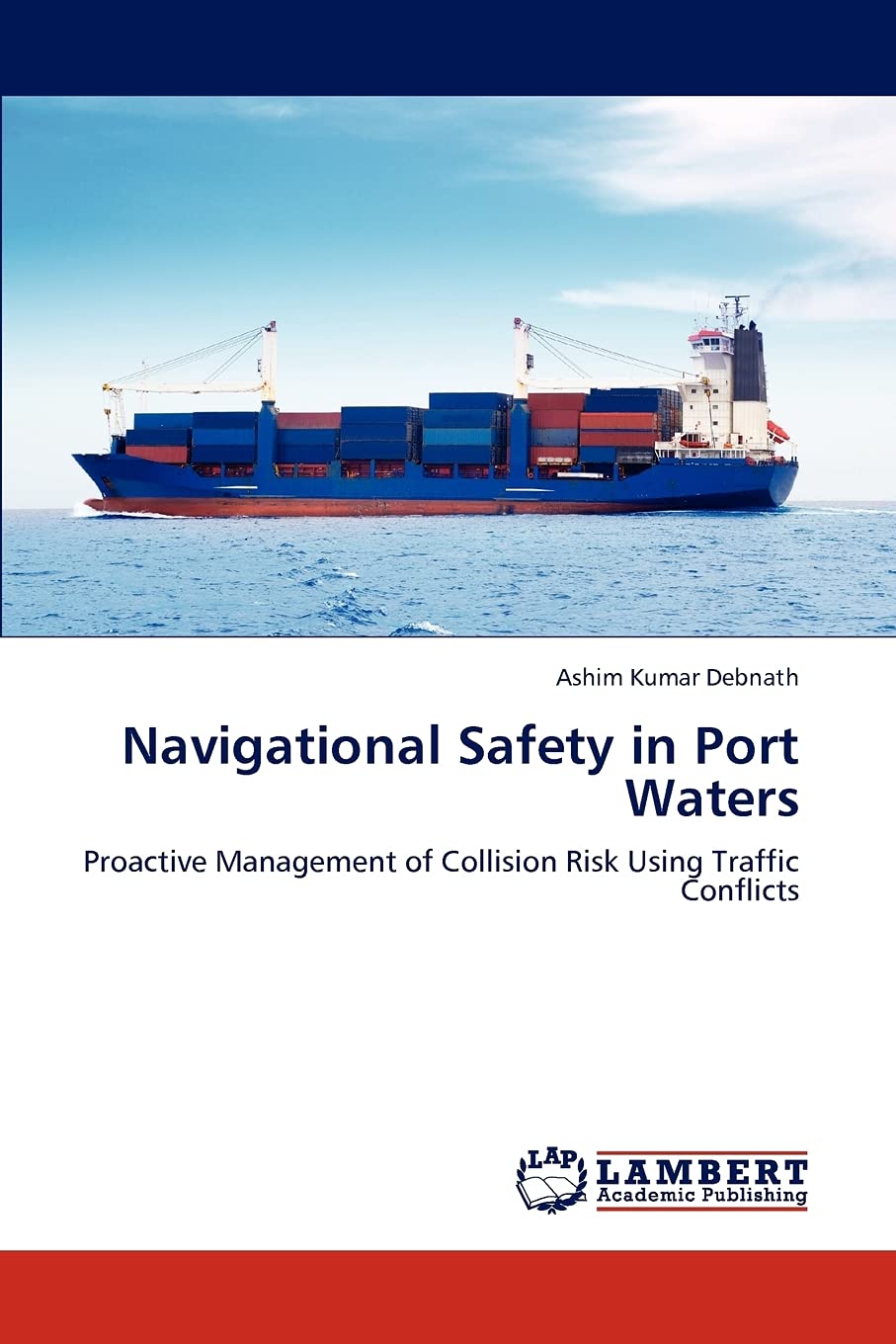
Traditionally navigational safety analyses rely on historical collision data which is often hampered because of low collision counts, insufficiency in explaining collision causation, and reactive approach to safety. A promising alternative approach that overcomes these problems is using navigational traffic conflicts or nearmisses as an alternative to the collision data. This book discusses how traffic conflicts can effectively be used in modeling of port water collision risks. Techniques for measuring and predicting collision risks in fairways, intersections, and anchorages are discussed by utilizing advanced statistical models. Risk measurement models, which quantitatively measure collision risks in waterways, are discussed. To predict risks, a hierarchical statistical modeling technique is discussed which identifies the factors influencing the risks. The modeling techniques are illustrated for Singapore port data. Results showed that traffic conflicts are an ethically appealing alternative to collision data for fast, reliable and effective safety assessment, thus possessing great potential for managing collision risks in port waters.
⚠️ WARNING (California Proposition 65):
This product may contain chemicals known to the State of California to cause cancer,
birth defects, or other reproductive harm.
For MAP (Minimum Advertised Price) violations and Intellectual Property (IP) or Trademark concerns, please contact:
support@ergodebooks.com
⚠️ California Proposition 65 Warning: Some products sold on this website may expose you to chemicals known to the State of California to cause cancer, birth defects, or other reproductive harm. For more information, visit www.P65Warnings.ca.gov.