
Title
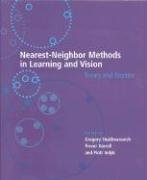
NearestNeighbor Methods in Learning And Vision: Theory And Practice (NEURAL INFORMATION PROCESSING),New
Sold by Ergodebooks, an authorized reseller.
Returns accepted within 30 days | support@ergodebooks.com
Shipping Information
- Free Standard Shipping — United States only
- Processing Time: 3–5 business days
- Estimated Delivery: 6–10 business days after dispatch
- Double-boxed, fully insured & discreetly packaged
- Tracking number sent via email once dispatched
Returns & Refund
Returns accepted within 30 days of delivery.
Damaged or Defective Item
Free return shipping + replacement or full refund
Wrong Item Received
Free return shipping + replacement or full refund
Change of Mind
Return shipping at customer's expense · 25% restocking fee applies
Payment Option

Advances in computational geometry and machine learning that offer new methods for search, regression, and classification with large amounts of highdimensional data.Regression and classification methods based on similarity of the input to stored examples have not been widely used in applications involving very large sets of highdimensional data. Recent advances in computational geometry and machine learning, however, may alleviate the problems in using these methods on large data sets. This volume presents theoretical and practical discussions of nearestneighbor (NN) methods in machine learning and examines computer vision as an application domain in which the benefit of these advanced methods is often dramatic. It brings together contributions from researchers in theory of computation, machine learning, and computer vision with the goals of bridging the gaps between disciplines and presenting stateoftheart methods for emerging applications. The contributors focus on the importance of designing algorithms for NN search, and for the related classification, regression, and retrieval tasks, that remain efficient even as the number of points or the dimensionality of the data grows very large. The book begins with two theoretical chapters on computational geometry and then explores ways to make the NN approach practicable in machine learning applications where the dimensionality of the data and the size of the data sets make the nave methods for NN search prohibitively expensive. The final chapters describe successful applications of an NN algorithm, localitysensitive hashing (LSH), to vision tasks.
⚠️ WARNING (California Proposition 65):
This product may contain chemicals known to the State of California to cause cancer, birth defects, or other reproductive harm.
For more information, please visit www.P65Warnings.ca.gov.