If you have any questions, you are always welcome to contact us. We'll get back to you as soon as possible, withing 24 hours on weekdays.
Customer service
All questions about your order, return and delivery must be sent to our customer service team by e-mail at yourstore@yourdomain.com
Sale & Press
If you are interested in selling our products, need more information about our brand or wish to make a collaboration, please contact us at press@yourdomain.com
Help
If you have any questions, you are always welcome to contact us. We'll get back to you as soon as possible, withing 24 hours on weekdays.
Customer service
All questions about your order, return and delivery must be sent to our customer service team by e-mail at yourstore@yourdomain.com
Sale & Press
If you are interested in selling our products, need more information about our brand or wish to make a collaboration, please contact us at press@yourdomain.com
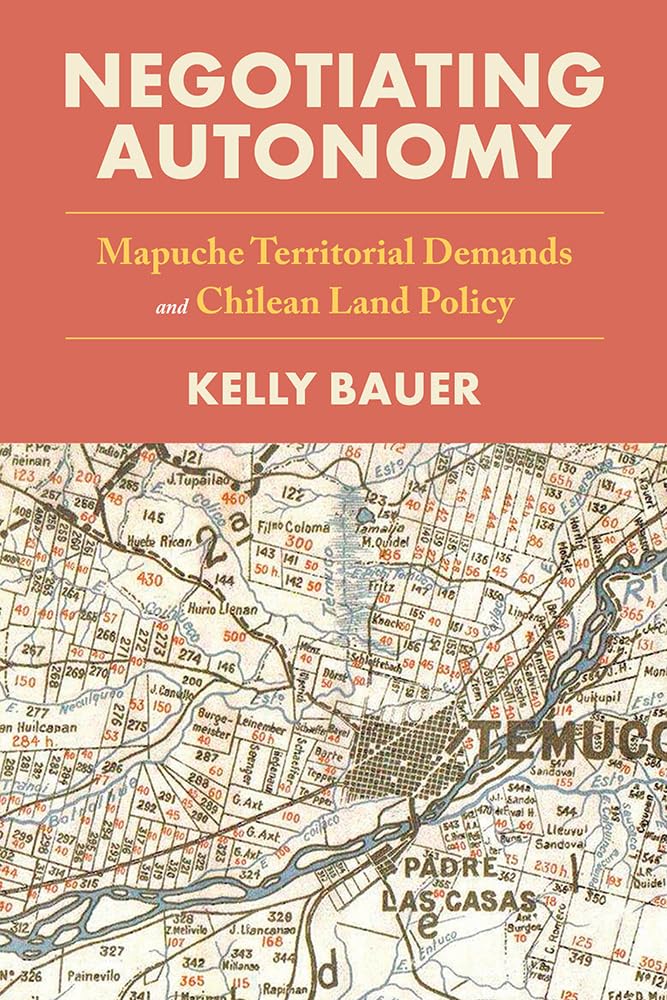
The 1980s and 90s saw Latin American governments recognizing the property rights of Indigenous and Afrodescendent communities as part of a broader territorial policy shift. But the resulting reforms were not applied consistently, more often extending neoliberal governance than recognizing Indigenous Peoples rights. In Negotiating Autonomy, Kelly Bauer explores the inconsistencies by which the Chilean government transfers land in response to Mapuche territorial demands. Interviews with community and government leaders, statistical analysis of an original dataset of Mapuche mobilization and land transfers, and analysis of policy documents reveals that many assumptions about postdictatorship Chilean politics as technocratic and depoliticized do not apply to Indigenous policy. Rather, state officials often work to preserve the hegemony of political and economic elites in the region, effectively protecting existing market interests over efforts to extend the neoliberal project to the governance of Mapuche territorial demands. In addition to complicating understandings of Chilean governance, these hidden patterns of policy implementation reveal the numerous ways these governance strategies threaten the recognition of Indigenous rights and create limited space for communities to negotiate autonomy.
⚠️ WARNING (California Proposition 65):
This product may contain chemicals known to the State of California to cause cancer,
birth defects, or other reproductive harm.
For MAP (Minimum Advertised Price) violations and Intellectual Property (IP) or Trademark concerns, please contact:
support@ergodebooks.com
⚠️ California Proposition 65 Warning: Some products sold on this website may expose you to chemicals known to the State of California to cause cancer, birth defects, or other reproductive harm. For more information, visit www.P65Warnings.ca.gov.