If you have any questions, you are always welcome to contact us. We'll get back to you as soon as possible, withing 24 hours on weekdays.
Customer service
All questions about your order, return and delivery must be sent to our customer service team by e-mail at yourstore@yourdomain.com
Sale & Press
If you are interested in selling our products, need more information about our brand or wish to make a collaboration, please contact us at press@yourdomain.com
Help
If you have any questions, you are always welcome to contact us. We'll get back to you as soon as possible, withing 24 hours on weekdays.
Customer service
All questions about your order, return and delivery must be sent to our customer service team by e-mail at yourstore@yourdomain.com
Sale & Press
If you are interested in selling our products, need more information about our brand or wish to make a collaboration, please contact us at press@yourdomain.com
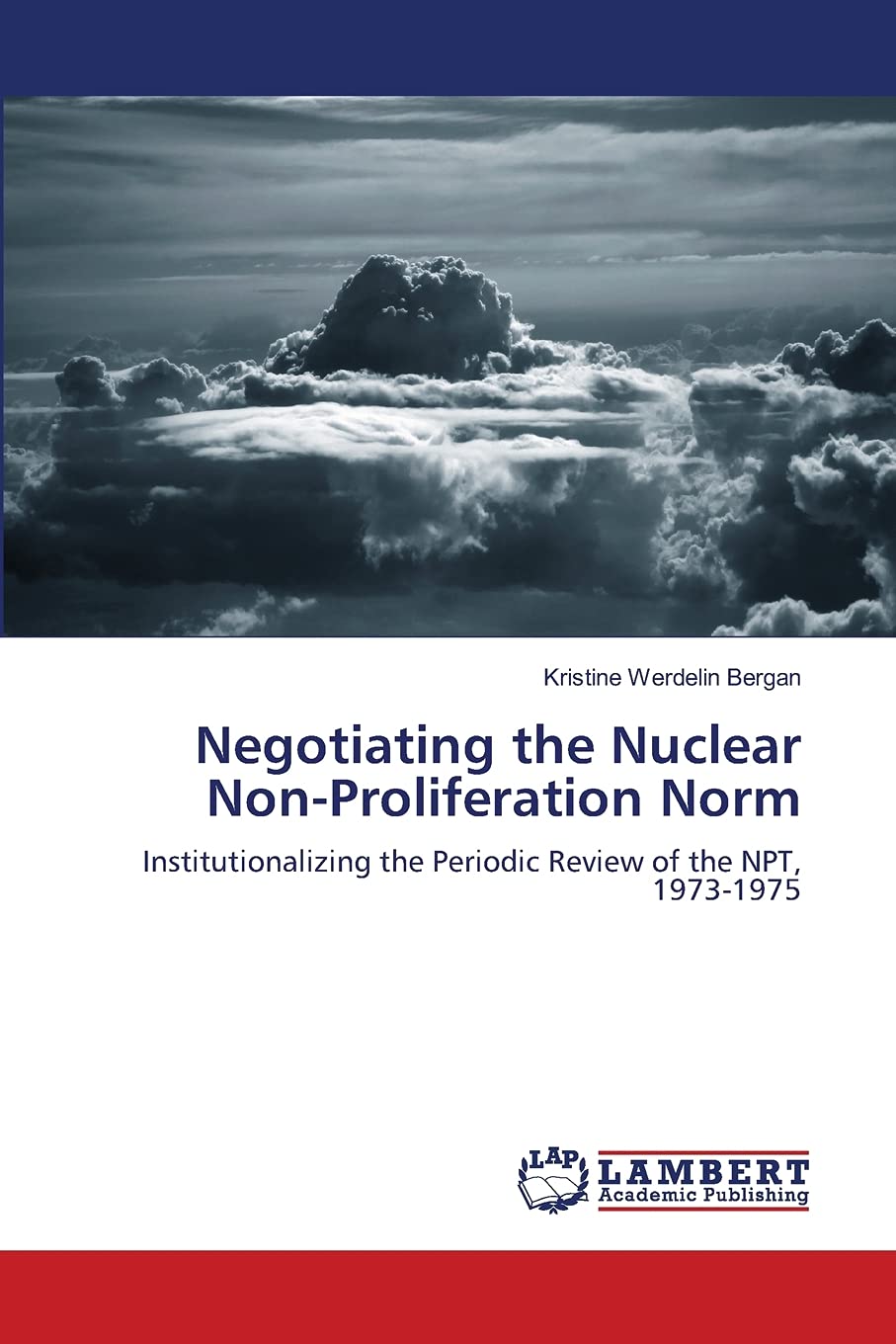
This dissertation argues that the roles played by Sweden and the United Kingdom in the organization of the first Review Conference of the NonProliferation Treaty (NPT) in 1975 were decisive for the establishment of an international nonproliferation norm. Even before the NPT was signed in 1968, it was subject to massive international criticism for being discriminatory. On the one hand the treaty requested all nonnuclear weapon states to forego the nuclear option, while on the other it legitimized the nuclear capability of the five existing nuclear weapon states. Consequently, the expectations to the Review Conference that was stipulated in the treaty were high. The 1974 Indian nuclear test put the conference under additional pressure. If seen as a failure, this could serve as a deathly blow for the young regime. Instead however, the first Review Conference established a periodic review for the NPT that undoubtably has contributed to the institutionalization of nuclear nonproliferation as an international norm. A precondition for this fortunate result was the character of the conflict between the superpowers, the dtente.
⚠️ WARNING (California Proposition 65):
This product may contain chemicals known to the State of California to cause cancer,
birth defects, or other reproductive harm.
For MAP (Minimum Advertised Price) violations and Intellectual Property (IP) or Trademark concerns, please contact:
support@ergodebooks.com
⚠️ California Proposition 65 Warning: Some products sold on this website may expose you to chemicals known to the State of California to cause cancer, birth defects, or other reproductive harm. For more information, visit www.P65Warnings.ca.gov.