
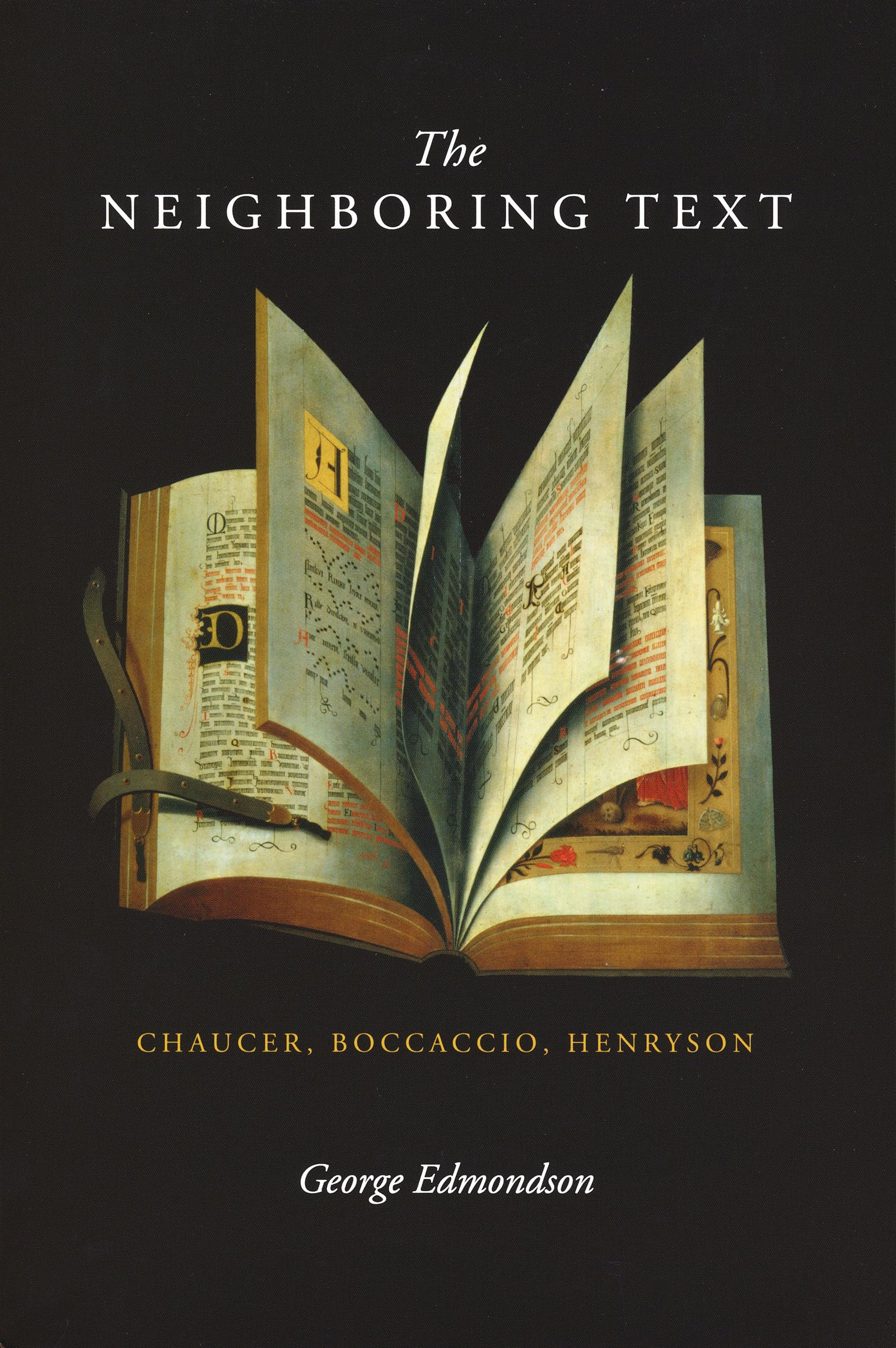
Title
Neighboring Text: Chaucer, Boccaccio, Henryson
Sold by Ergodebooks, an authorized reseller.
Returns accepted within 30 days | support@ergodebooks.com
Shipping Information
- Free Standard Shipping — United States only
- Processing Time: 3–5 business days
- Estimated Delivery: 6–10 business days after dispatch
- Double-boxed, fully insured & discreetly packaged
- Tracking number sent via email once dispatched
Returns & Refund
Returns accepted within 30 days of delivery.
Damaged or Defective Item
Free return shipping + replacement or full refund
Wrong Item Received
Free return shipping + replacement or full refund
Change of Mind
Return shipping at customer's expense · 25% restocking fee applies
Payment Option

Most medieval texts were not really texts in the modern sense of printed, bound, standalone volumes, but were instead scribal productions that circulated in manuscript form, often alongside unrelated writings, thereby producing what seem to be haphazard compilations. In The Neighboring Text: Chaucer, Boccaccio, Henryson, George Edmondson argues that we have tended to apply a vertical, linear model of literary history to this late medieval manuscript culture. By contrast, he brings recent work in the fields of psychoanalysis and political philosophy to bear on the question of literary history in order to develop a countermodel informed by a horizontal ethos of neighborliness.Edmondson analyzes the different ways that three canonical textsChaucers Troilus and Criseyde; its source, Boccaccios Il Filostrato; and its fifteenthcentury Scottish derivative, Robert Henrysons Testament of Cresseidtreat two figures, Troilus and Criseyde, and how those differences affect our understanding of literary history. He argues that what makes them neighboring texts is their shared concern with the subject of medieval Trojan historiography in general, and their very different treatments of Troilus in particular. At the same time, Edmondson supplements the medieval ideal of neighborliness with the psychoanalytic understanding of the neighbor as a figure both proximate and strange: at once the building block of community and its stumbling block. The result is a repositioning of the three works as a textual neighborhoodone in which the legendary history of Troy is transformed from the basis of imaginary national genealogies to a figure for the aggression and enjoyment, the conflicting gestures of identification and estrangement, that shape the neighbor relation.
⚠️ WARNING (California Proposition 65):
This product may contain chemicals known to the State of California to cause cancer, birth defects, or other reproductive harm.
For more information, please visit www.P65Warnings.ca.gov.