
Title
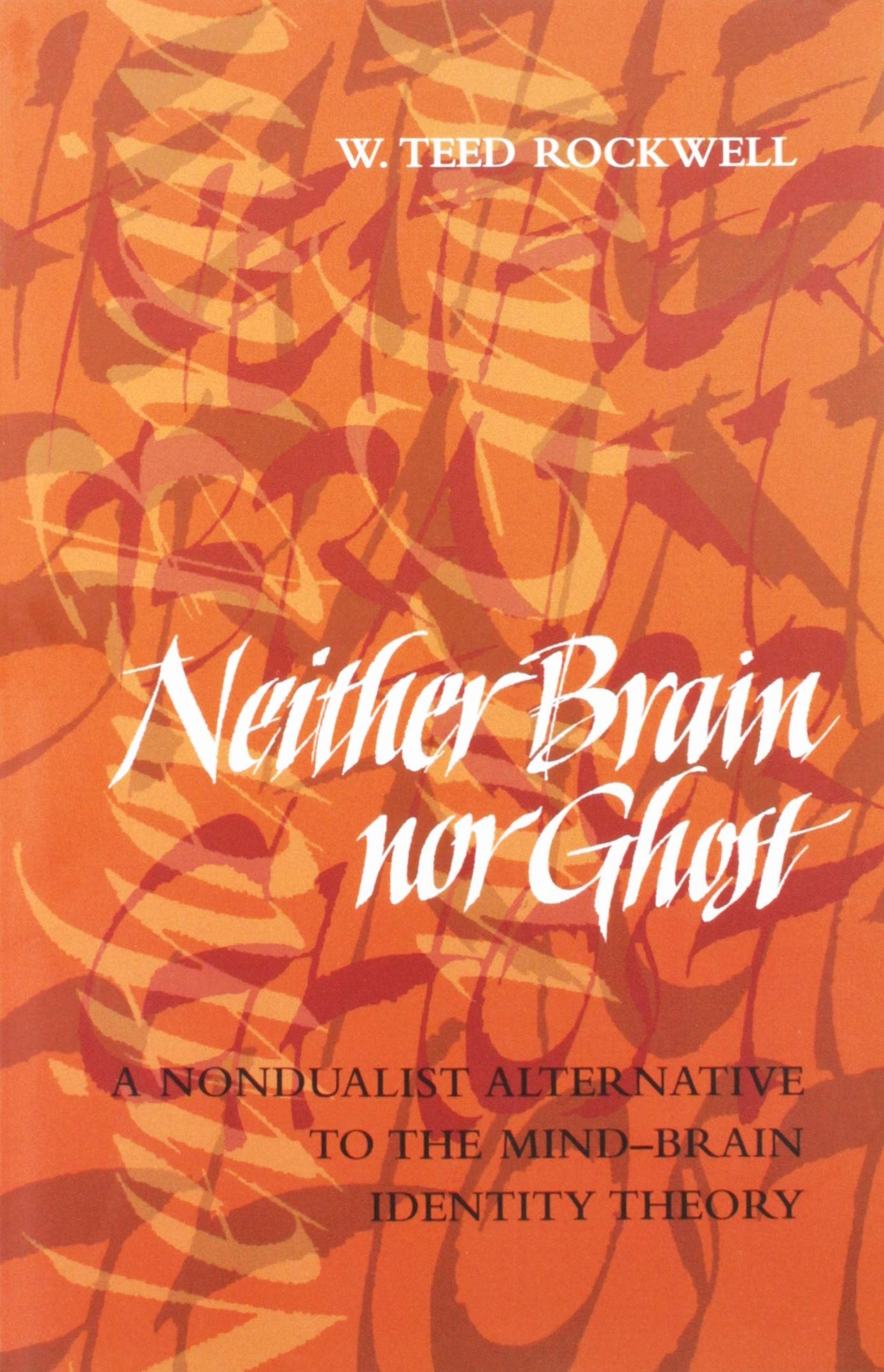
Neither Brain Nor Ghost: A Nondualist Alternative To The Mindbrain Identity Theory
Sold by Ergodebooks, an authorized reseller.
Returns accepted within 30 days | support@ergodebooks.com
Shipping Information
- Free Standard Shipping — United States only
- Processing Time: 3–5 business days
- Estimated Delivery: 6–10 business days after dispatch
- Double-boxed, fully insured & discreetly packaged
- Tracking number sent via email once dispatched
Returns & Refund
Returns accepted within 30 days of delivery.
Damaged or Defective Item
Free return shipping + replacement or full refund
Wrong Item Received
Free return shipping + replacement or full refund
Change of Mind
Return shipping at customer's expense · 25% restocking fee applies
Payment Option

In This Highly Original Work, Teed Rockwell Rejects Both Dualism And The Mindbrain Identity Theory. He Proposes Instead That Mental Phenomena Emerge Not Merely From Brain Activity But From An Interacting Nexus Of Brain, Body, And World. The Mind Can Be Seen Not As An Organ Within The Body, But As A Behavioral Field That Fluctuates Within This Brainbodyworld Nexus. If We Reject The Dominant Form Of The Mindbrain Identity Theorywhich Rockwell Calls Cartesian Materialism (Distinct From Daniel Dennett'S Concept Of The Same Name)And Accept This New Alternative, Then Many Philosophical And Scientific Problems Can Be Solved. Other Philosophers Have Flirted With These Ideas, Including Dewey, Heidegger, Putnam, Millikan, And Dennett. But Rockwell Goes Further Than These Tentative Speculations And Offers A Detailed Alternative To The Dominant Philosophical View, Applying Pragmatist Insights To Contemporary Scientific And Philosophical Problems.Rockwell Shows That Neuroscience No Longer Supports The Mindbrain Identity Theory Because The Brain Cannot Be Isolated From The Rest Of The Nervous System; Moreover, There Is Evidence That The Mind Is Hormonal As Well As Neural. These Data, And Rockwell'S Reanalysis Of The Concept Of Causality, Show Why The Borders Of Mental Embodiment Cannot Be Neatly Drawn At The Skull, Or Even At The Skin. Rockwell Then Demonstrates How His Proposed View Of The Mind Can Resolve Paradoxes Engendered By The Mindbrain Identity Theory In Such Fields As Neuroscience, Artificial Intelligence, Epistemology, And Philosophy Of Language. Finally, He Argues That Understanding The Mind As A Behavioral Field Supports The New Cognitive Science Paradigm Of Dynamic Systems Theory (Dst).
⚠️ WARNING (California Proposition 65):
This product may contain chemicals known to the State of California to cause cancer, birth defects, or other reproductive harm.
For more information, please visit www.P65Warnings.ca.gov.
- Q: How many pages does the book have? A: The book has two hundred thirty-one pages. This length provides a comprehensive exploration of the mind-brain identity theory.
- Q: What is the binding type of this book? A: The book is available in paperback binding. This makes it lightweight and easy to handle.
- Q: What are the dimensions of the book? A: The book measures six inches in length, zero point seven five inches in width, and nine point twenty-five inches in height. These dimensions make it portable for reading.
- Q: Who is the author of the book? A: The author is W. Teed Rockwell. He provides a unique perspective on cognitive psychology.
- Q: What genre does this book fall under? A: The book falls under the genre of cognitive psychology. It addresses complex philosophical and scientific issues.
- Q: How does this book challenge existing theories? A: The book rejects dualism and the mind-brain identity theory. It proposes a new understanding of the mind as a behavioral field.
- Q: Is this book suitable for beginners in philosophy? A: Yes, this book is suitable for beginners. It introduces complex ideas in an accessible manner, making it reader-friendly.
- Q: What insights does the author apply to contemporary problems? A: The author applies pragmatist insights to contemporary philosophical and scientific problems. This approach offers fresh perspectives on traditional debates.
- Q: Does the book discuss neuroscience? A: Yes, the book discusses neuroscience extensively. It critiques the mind-brain identity theory based on recent neuroscientific findings.
- Q: Are any notable philosophers mentioned in the book? A: Yes, notable philosophers like Dewey, Heidegger, and Dennett are mentioned. Their ideas influence Rockwell's arguments.
- Q: What is the main argument of the author? A: The main argument is that mental phenomena emerge from a nexus of brain, body, and world. This view challenges traditional theories.
- Q: How does this book address artificial intelligence? A: The book addresses artificial intelligence by resolving paradoxes related to the mind-brain identity theory. It explores implications for AI development.
- Q: What is the author's stance on causality? A: The author reanalyzes the concept of causality. He argues that mental embodiment cannot be neatly defined at physical boundaries.
- Q: Can this book help in understanding cognitive science? A: Yes, this book supports understanding cognitive science. It aligns with the dynamic systems theory paradigm.
- Q: Is this book a used copy? A: Yes, this book is categorized as a used book in good condition. It is still a valuable resource for readers.