
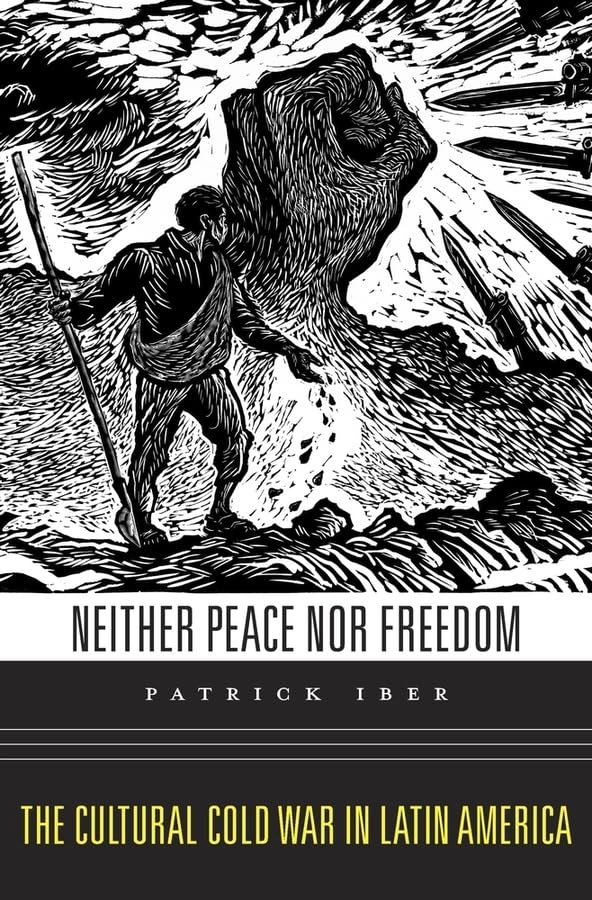
Title
Neither Peace Nor Freedom: The Cultural Cold War In Latin America
Sold by Ergodebooks, an authorized reseller.
Returns accepted within 30 days | support@ergodebooks.com
Shipping Information
- Free Standard Shipping — United States only
- Processing Time: 3–5 business days
- Estimated Delivery: 6–10 business days after dispatch
- Double-boxed, fully insured & discreetly packaged
- Tracking number sent via email once dispatched
Returns & Refund
Returns accepted within 30 days of delivery.
Damaged or Defective Item
Free return shipping + replacement or full refund
Wrong Item Received
Free return shipping + replacement or full refund
Change of Mind
Return shipping at customer's expense · 25% restocking fee applies
Payment Option

During The Cold War, Leftwing Latin American Artists, Writers, And Scholars Worked As Diplomats, Advised Rulers, Opposed Dictators, And Even Led Nations. Their Competing Visions Of Social Democracy And Their Pursuit Of Justice, Peace, And Freedom Led Them To Organizations Sponsored By The Governments Of The Cold War Powers: The Sovietbacked World Peace Council, The U.S.Supported Congress For Cultural Freedom, And, After The 1959 Cuban Revolution, The Homegrown Casa De Las Amricas.Neither Peace Nor Freedom Delves Into The Entwined Histories Of These Organizations And The Aspirations And Dilemmas Of Intellectuals Who Participated In Them, From Diego Rivera And Pablo Neruda To Gabriel Garca Mrquez And Jorge Luis Borges. Patrick Iber Corrects The View That Such Individuals Were Merely Pawns Of The Competing Superpowers. Movements For Democracy And Social Justice Sprung Up Among Procommunist And Anticommunist Factions, And Casa De Las Amricas Promoted A Brand Of Revolutionary Nationalism That Was Beholden To Neither The Soviet Union Nor The United States.But Ultimately, Intellectuals From Latin America Could Not Break Free From The Cold Wars Rigid Binaries. With The Soviet Union Demanding Fealty From Latin American Communists, The United States Zealously Supporting Their Repression, And Fidel Castro Pushing For Regional Armed Revolution, Advocates Of Social Democracy Found Little Room To Promote Their Ideals Without Compromising Them. Cold War Politics Had Offered Utopian Dreams, But Intellectuals Could Get Neither The Peace Nor The Freedom They Sought.
⚠️ WARNING (California Proposition 65):
This product may contain chemicals known to the State of California to cause cancer, birth defects, or other reproductive harm.
For more information, please visit www.P65Warnings.ca.gov.
- Q: How many pages does the book have? A: This book contains three hundred thirty-six pages. It provides an in-depth exploration of the Cultural Cold War in Latin America.
- Q: What are the dimensions of this book? A: The book measures six and a half inches in length, one inch in width, and nine and three tenths inches in height. These dimensions make it a standard hardcover size.
- Q: What type of binding does this book have? A: This book is bound in hardcover. This binding style ensures durability and longevity for readers.
- Q: Who is the author of this book? A: The author is Patrick Iber. He delves into the complex interactions between culture and politics during the Cold War.
- Q: What is the genre of this book? A: This book falls under the genre of historical non-fiction. It explores the cultural dynamics of Latin America during the Cold War era.
- Q: Is this book suitable for young readers? A: This book is intended for adult readers. Its themes and discussions about the Cold War may not be appropriate for younger audiences.
- Q: Can I read this book for my history class? A: Yes, this book is an excellent resource for history classes. It provides detailed insights into the Cultural Cold War and its impact on Latin America.
- Q: How do I properly care for this hardcover book? A: To care for the book, store it upright in a cool, dry place. Avoid exposure to direct sunlight to preserve the cover and pages.
- Q: Is there a warranty for this book? A: Books typically do not come with warranties. However, check with the retailer for their return policy.
- Q: What if the book arrives damaged? A: If the book arrives damaged, contact the retailer immediately for a return or exchange. Most retailers have policies for damaged items.
- Q: Are there any notable figures discussed in the book? A: Yes, the book discusses notable figures such as Diego Rivera, Pablo Neruda, and Gabriel García Márquez. Their contributions to the cultural landscape are explored.
- Q: Does this book cover any specific events? A: Yes, it covers significant events like the Cuban Revolution and the activities of organizations such as Casa de las Américas. These events are crucial to understanding the Cultural Cold War.
- Q: Is the language in this book accessible to the general public? A: Yes, the language is accessible, but some prior knowledge of the Cold War may enhance understanding. It’s written for a general audience interested in history.
- Q: Does the book include any illustrations or photographs? A: No, this book does not include illustrations or photographs. It focuses on text-based analysis and narratives.
- Q: What are the main themes of this book? A: The main themes include social democracy, justice, and the impact of Cold War politics on Latin American intellectuals. It examines their aspirations and challenges.