If you have any questions, you are always welcome to contact us. We'll get back to you as soon as possible, withing 24 hours on weekdays.
Customer service
All questions about your order, return and delivery must be sent to our customer service team by e-mail at yourstore@yourdomain.com
Sale & Press
If you are interested in selling our products, need more information about our brand or wish to make a collaboration, please contact us at press@yourdomain.com
Help
If you have any questions, you are always welcome to contact us. We'll get back to you as soon as possible, withing 24 hours on weekdays.
Customer service
All questions about your order, return and delivery must be sent to our customer service team by e-mail at yourstore@yourdomain.com
Sale & Press
If you are interested in selling our products, need more information about our brand or wish to make a collaboration, please contact us at press@yourdomain.com
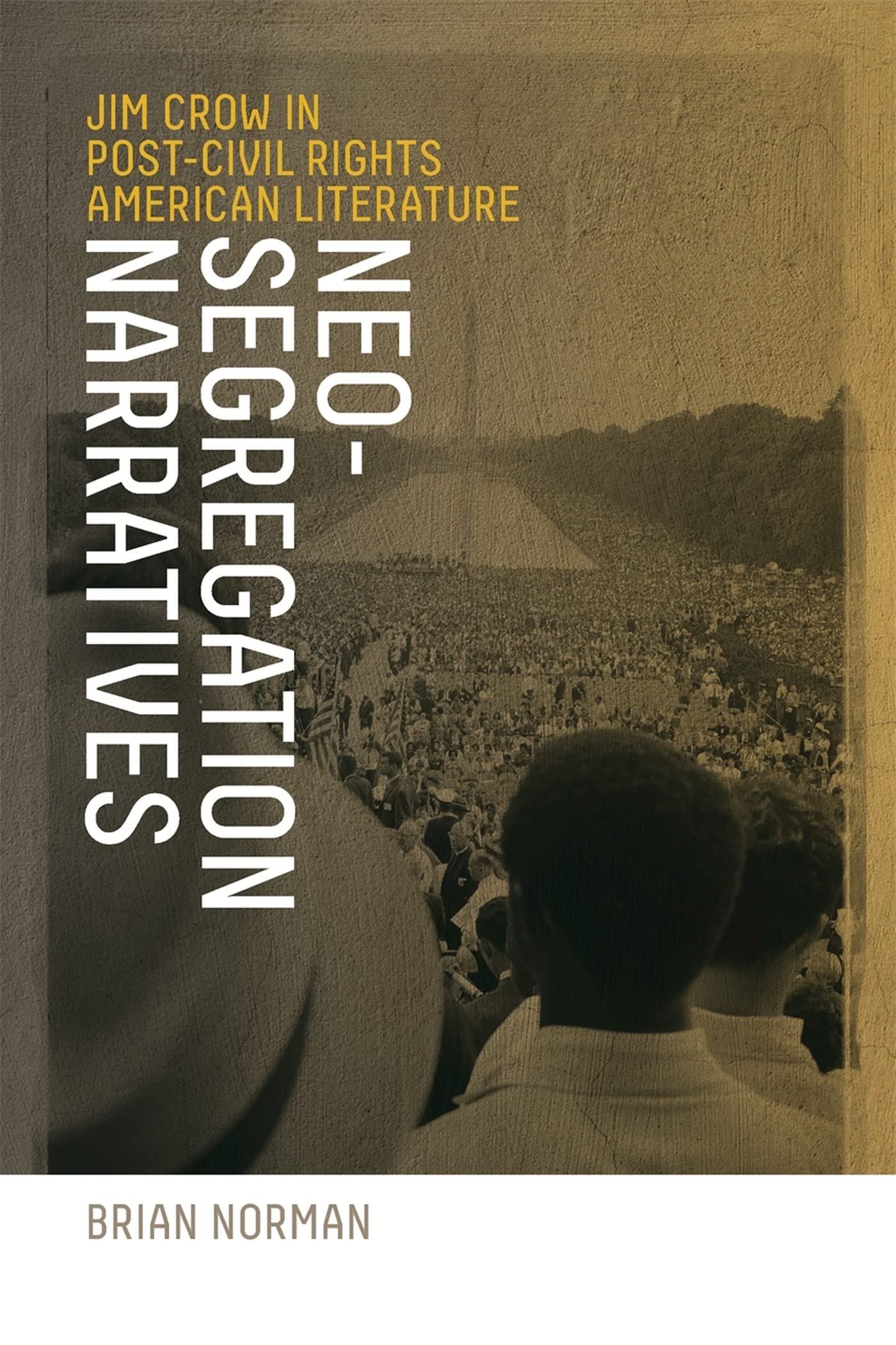
This study of what Brian Norman terms a neosegregation narrative tradition examines literary depictions of life under Jim Crow that were written well after the civil rights movement.From Toni Morrisons first novel, The Bluest Eye, to bestselling black fiction of the 1980s to a string of recent work by black and nonblack authors and artists, Jim Crow haunts the postcivil rights imagination. Norman traces a neosegregation narrative traditionone that developed in tandem with neoslave narrativesby which writers return to a moment of stark de jure segregation to address contemporary concerns about national identity and the persistence of racial divides. These writers upset dominant national narratives of achieved equality, portraying what are often more elusive racial divisions in what some would call a postracial present.Norman examines works by black writers such as Lorraine Hansberry, Toni Morrison, Alice Walker, David Bradley, Wesley Brown, SuzanLori Parks, and Colson Whitehead, films by Spike Lee, and other cultural works that engage in debates about gender, Black Power, blackface minstrelsy, literary history, and whiteness and ethnicity. Norman also shows that multiethnic writers such as Sherman Alexie and Tom Spanbauer use Jim Crow as a reference point, extending the tradition of William Faulkners representations of the segregated South and John Howard Griffins notorious account of crossing the color line from white to black in his 1961 work Black Like Me.
⚠️ WARNING (California Proposition 65):
This product may contain chemicals known to the State of California to cause cancer,
birth defects, or other reproductive harm.
For MAP (Minimum Advertised Price) violations and Intellectual Property (IP) or Trademark concerns, please contact:
support@ergodebooks.com
⚠️ California Proposition 65 Warning: Some products sold on this website may expose you to chemicals known to the State of California to cause cancer, birth defects, or other reproductive harm. For more information, visit www.P65Warnings.ca.gov.