If you have any questions, you are always welcome to contact us. We'll get back to you as soon as possible, withing 24 hours on weekdays.
Customer service
All questions about your order, return and delivery must be sent to our customer service team by e-mail at yourstore@yourdomain.com
Sale & Press
If you are interested in selling our products, need more information about our brand or wish to make a collaboration, please contact us at press@yourdomain.com
Help
If you have any questions, you are always welcome to contact us. We'll get back to you as soon as possible, withing 24 hours on weekdays.
Customer service
All questions about your order, return and delivery must be sent to our customer service team by e-mail at yourstore@yourdomain.com
Sale & Press
If you are interested in selling our products, need more information about our brand or wish to make a collaboration, please contact us at press@yourdomain.com
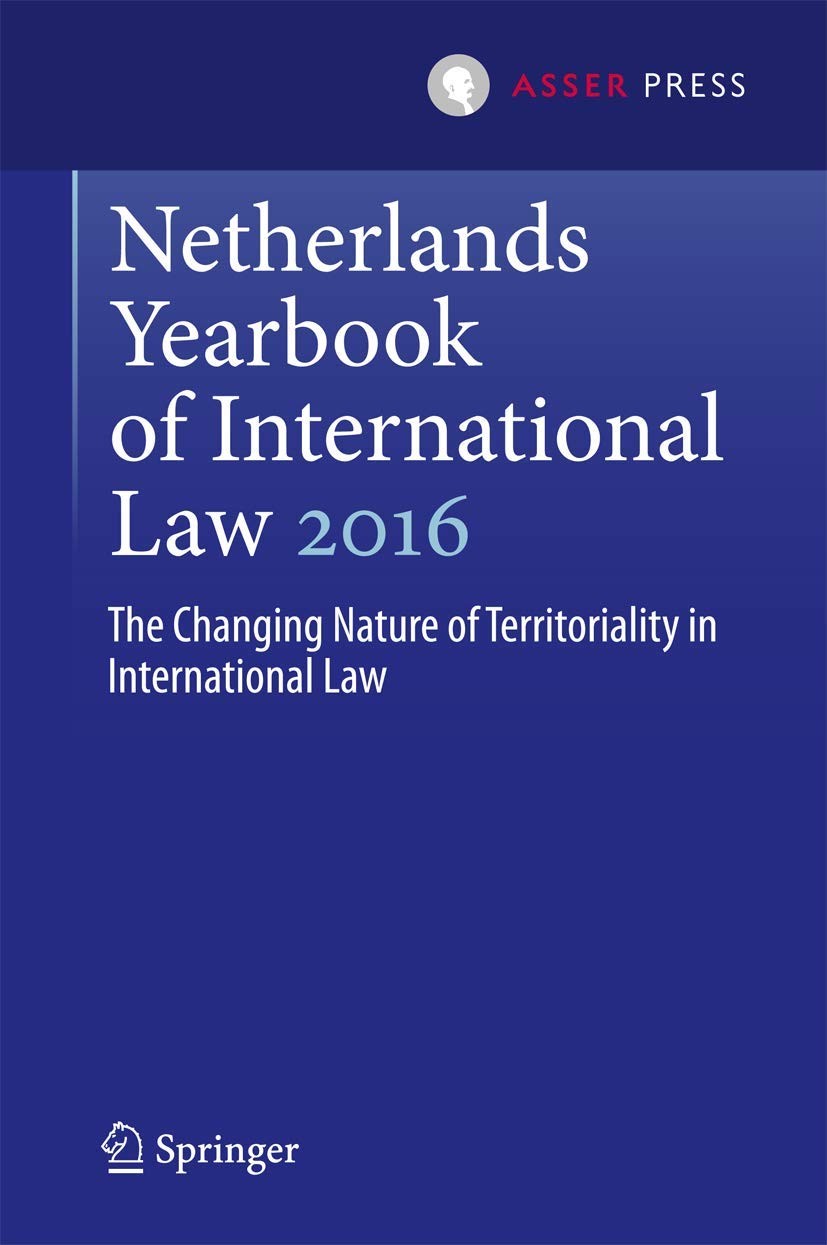
International law holds a paradoxical position with territory. Most rules of international law are traditionally based on the notion of State territory, and territoriality still significantly shapes our contemporary legal system. At the same time, new developments have challenged territory as the main organising principle in international relations. Three trends in particular have affected the role of territoriality in international law: the move towards functional regimes, the rise of cosmopolitan projects claiming to transgress state boundaries, and the development of technologies resulting in the need to address intangible, nonterritorial, phenomena. Yet, notwithstanding some profound changes, it remains impossible to think of international law without a territorial locus. If international law is undergoing changes, this implies a reconfiguration of territory, but not a move beyond it.The Netherlands Yearbook of International Law was first published in 1970. It offers a forum for the publication of scholarly articles of a conceptual nature in a varying thematic area of public international law.
⚠️ WARNING (California Proposition 65):
This product may contain chemicals known to the State of California to cause cancer,
birth defects, or other reproductive harm.
For MAP (Minimum Advertised Price) violations and Intellectual Property (IP) or Trademark concerns, please contact:
support@ergodebooks.com
⚠️ California Proposition 65 Warning: Some products sold on this website may expose you to chemicals known to the State of California to cause cancer, birth defects, or other reproductive harm. For more information, visit www.P65Warnings.ca.gov.