
Title
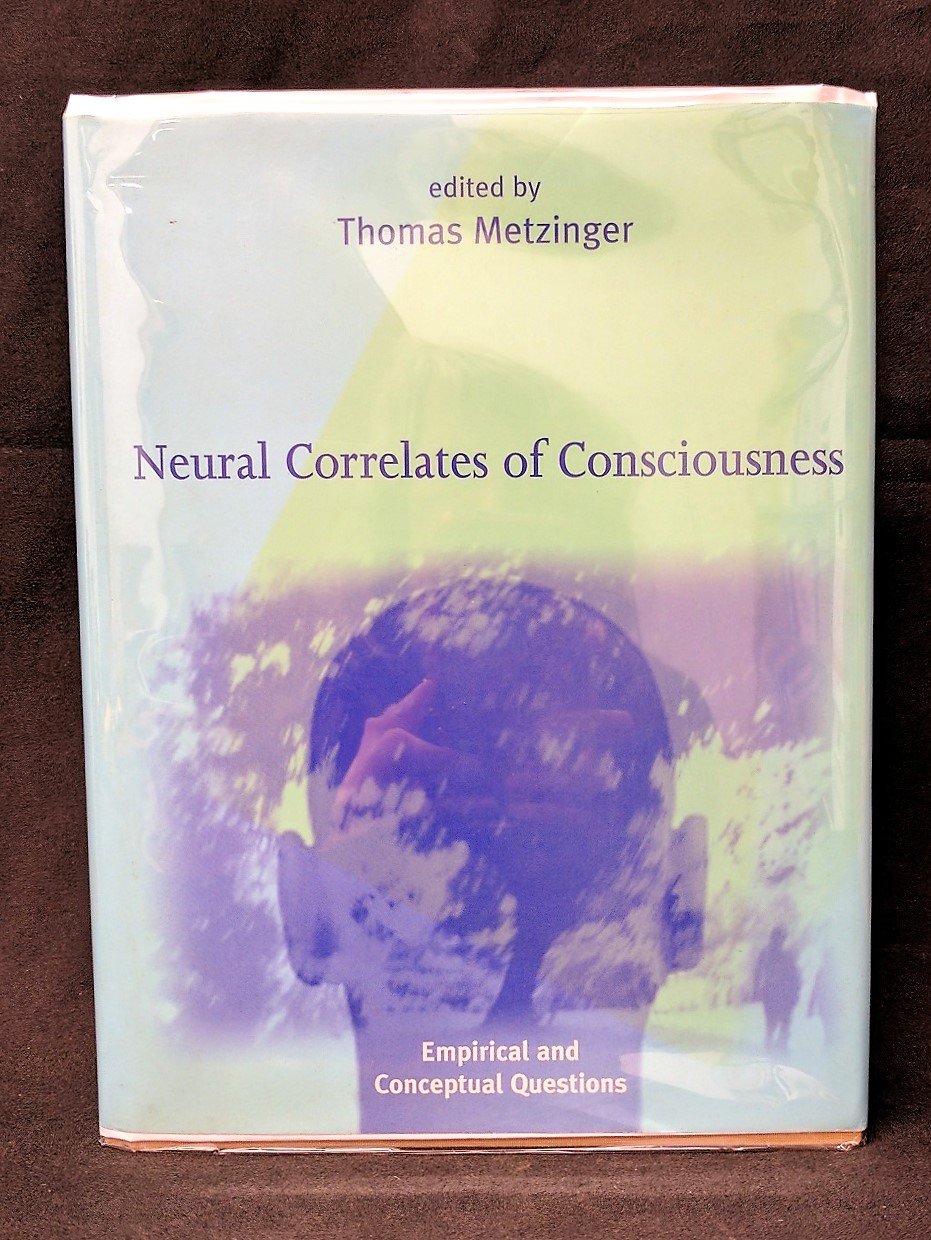
Neural Correlates of Consciousness: Empirical and Conceptual Questions,Used
Sold by Ergodebooks, an authorized reseller.
Returns accepted within 30 days | support@ergodebooks.com
Shipping Information
- Free Standard Shipping — United States only
- Processing Time: 3–5 business days
- Estimated Delivery: 6–10 business days after dispatch
- Double-boxed, fully insured & discreetly packaged
- Tracking number sent via email once dispatched
Returns & Refund
Returns accepted within 30 days of delivery.
Damaged or Defective Item
Free return shipping + replacement or full refund
Wrong Item Received
Free return shipping + replacement or full refund
Change of Mind
Return shipping at customer's expense · 25% restocking fee applies
Payment Option

This book brings together an international group of neuroscientists and philosophers who are investigating how the content of subjective experience is correlated with events in the brain. The fundamental methodological problem in consciousness research is the subjectivity of the target phenomenonthe fact that conscious experience, under standard conditions, is always tied to an individual, firstperson perspective. The core empirical question is whether and how physical states of the human nervous system can be mapped onto the content of conscious experience. The search for the neural correlates of consciousness (NCC) has become a highly active field of investigation in recent years. Methods such as singlecell recording in monkeys and brain imaging and electrophysiology in humans, applied to such phenomena as blindsight, implicit/explicit cognition, and binocular rivalry, have generated a wealth of data. The same period has seen the development of a number of theories about NCC location. This volume brings together the leading experimentalists and theoreticians in the field. Topics include foundational and evolutionary issues, global integration, vision, consciousness and the NMDA receptor complex, neuroimaging, implicit processes, intentionality and phenomenal volition, schizophrenia, social cognition, and the phenomenal self.ContributorsJackie Andrade, Ansgar Beckermann, David J. Chalmers, Francis Crick, Antonio R. Damasio, Gerald M. Edelman, Dominic ffytche, Hans Flohr, N.P. Franks, Vittorio Gallese, Melvyn A. Goodale, Valerie Gray Hardcastle, Beena Khurana, Christof Koch, W.R. Lieb, Erik D. Lumer, Thomas Metzinger, Kelly J. Murphy, Romi Nijhawan, Jolle Proust, Antti Revonsuo, Gerhard Roth, Thomas Schmidt, Wolf Singer, Giulio Tononi
⚠️ WARNING (California Proposition 65):
This product may contain chemicals known to the State of California to cause cancer, birth defects, or other reproductive harm.
For more information, please visit www.P65Warnings.ca.gov.
- Q: How many pages does the book have? A: This book has three hundred fifty pages. It provides extensive insights into the neural correlates of consciousness.
- Q: What is the binding type of this book? A: The binding type is hardcover. This ensures durability and longevity for extensive reading.
- Q: What are the dimensions of the book? A: The dimensions are nine point three three inches in length, seven point two one inches in width, and one point zero three inches in height.
- Q: Who is the author of this book? A: The author is Thomas Metzinger. He is known for his work in philosophy and neuroscience.
- Q: What is the main topic of this book? A: The main topic is the correlation between subjective experience and brain events. It explores the neural correlates of consciousness.
- Q: How should I read this book? A: You can read this book as a comprehensive study on consciousness. It is suitable for both professionals and interested laypersons.
- Q: Is this book suitable for beginners? A: Yes, this book is suitable for beginners. It provides foundational insights into consciousness research.
- Q: Can I use this book for academic purposes? A: Yes, this book is ideal for academic purposes. It is a valuable resource for students and researchers in psychology and philosophy.
- Q: How should I store this book? A: Store this book in a cool, dry place, upright or flat. This will help maintain its condition over time.
- Q: Does this book contain illustrations? A: Yes, the book contains one colour and forty-six black and white illustrations. These visuals support the text and enhance understanding.
- Q: What if the book arrives damaged? A: If the book arrives damaged, contact the seller for a return or exchange. Most sellers have policies in place for such issues.
- Q: Is there a warranty for this book? A: No, there is typically no warranty for books. However, check the return policy for any specific guarantees.
- Q: What should I do if I have questions about the content? A: If you have questions about the content, consider joining a discussion group or contacting experts in neuroscience or philosophy.
- Q: Can this book help with understanding consciousness theories? A: Yes, this book discusses various theories of consciousness. It includes contributions from leading experts in the field.
- Q: Is this book appropriate for a general audience? A: Yes, this book is appropriate for a general audience interested in neuroscience. It balances academic rigor with accessibility.
- Q: What unique insights does this book offer? A: This book offers unique insights into the empirical and conceptual questions surrounding consciousness. It combines perspectives from both neuroscience and philosophy.