
Title
Neurointerventions, Crime, and Punishment: Ethical Considerations (Studies in Penal Theory and Philosophy),Used
Sold by Ergodebooks, an authorized reseller.
Returns accepted within 30 days | support@ergodebooks.com
Shipping Information
- Free Standard Shipping — United States only
- Processing Time: 3–5 business days
- Estimated Delivery: 6–10 business days after dispatch
- Double-boxed, fully insured & discreetly packaged
- Tracking number sent via email once dispatched
Returns & Refund
Returns accepted within 30 days of delivery.
Damaged or Defective Item
Free return shipping + replacement or full refund
Wrong Item Received
Free return shipping + replacement or full refund
Change of Mind
Return shipping at customer's expense · 25% restocking fee applies
Payment Option

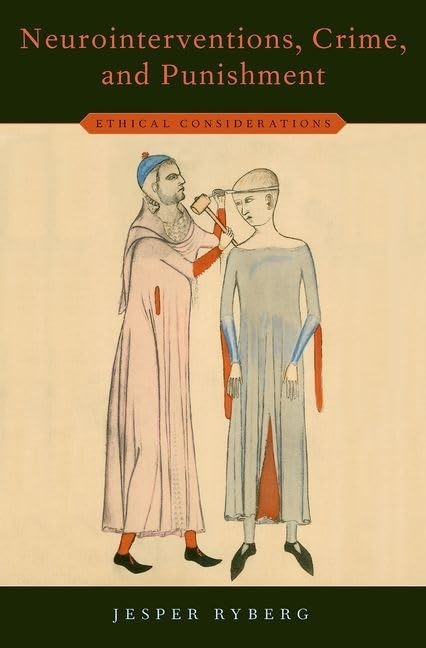
Advances in new neuroscientific research tools and technologies have not only led to new insight into the processes of the human brain, they have also refined and provided genuinely new ways of modifying and manipulating the human brain. The aspiration of such interventions is to affect conative, cognitive, and affective brain processes associated with emotional regulation, empathy, and moral judgment. Can the use of neuroscientific technologies for influencing the human functioning brain as a means of preventing offenders from engaging in future criminal conduct be justified?In Neurointerventions, Crime, and Punishment, Jesper Ryberg considers various ethical challenges surrounding this question. More precisely, he provides a framework for considering neuroethical issues within the criminal justice system and examines a set of procedures which the criminal justice system relies on to deal with criminal offending. To do this, Ryberg addresses the following questions, among others: Is it morally acceptable to offer more lenient sentences to offenders in return for participation in neuroscientific treatment programs? Or would such offers be unacceptably coercive? Is it possible to administer neurointerventions as a type of punishment? Would it be acceptable for physicians to participate in the administration of neurointerventions on offenders? What is the moral significance of the sordid history of brain interventions for the present or future use of such treatment options? As rehabilitation comes back into fashion after many decades and as neuroscientific knowledge and technology advance rapidly, these intricate and controversial topics become increasingly more urgent. Ryberg argues that many of the inprinciple objections to neuroscientific treatment are premature, but given the way criminal justice systems currently function, such treatment methods should not be put into practice.
⚠️ WARNING (California Proposition 65):
This product may contain chemicals known to the State of California to cause cancer, birth defects, or other reproductive harm.
For more information, please visit www.P65Warnings.ca.gov.