
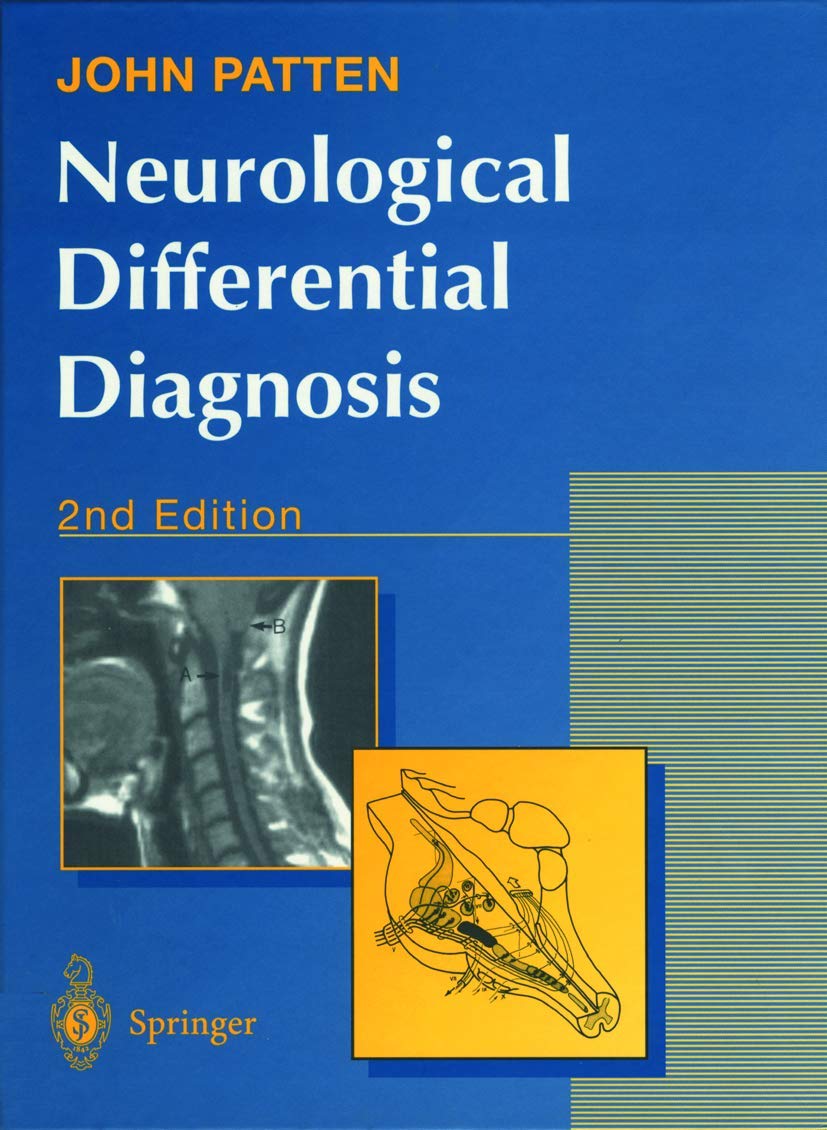
Title
Neurological Differential Diagnosis,Used
Sold by Ergodebooks, an authorized reseller.
Returns accepted within 30 days | support@ergodebooks.com
Shipping Information
- Free Standard Shipping — United States only
- Processing Time: 3–5 business days
- Estimated Delivery: 6–10 business days after dispatch
- Double-boxed, fully insured & discreetly packaged
- Tracking number sent via email once dispatched
Returns & Refund
Returns accepted within 30 days of delivery.
Damaged or Defective Item
Free return shipping + replacement or full refund
Wrong Item Received
Free return shipping + replacement or full refund
Change of Mind
Return shipping at customer's expense · 25% restocking fee applies
Payment Option

The majority of doctors are ill at ease when confronted by a patient with a neurological problem. Candidates for qualifying examinations and higher diplomas dread that they will be allocated a neurological 'Iong case'. This is a serious reflection on the adequacy of training in neurology. It is still possible in some medical schools for a student to go through the entire clinical course without an attachment to the neurological unit. Increasing competition for teaching time has led to the situation where in most US medical schools, and at least one new medical school in the UK, a twoweek c1inical attachment to the neurology service is considered adequate. Those fortunate enough to attend a postgraduate course find a minimum of 3 months' intensive training is necessary before any confidence in tackling a neurological problem is achieved. Unfortunately, neurological textbooks seldom seem to recognize the intensely practical nature of the subject. There are many short texts that achievebrevity by the exclusion of explanatory material; these are difficult to read and digest. At the opposite extreme are the neurological compendia, often unbalanced by excessive coverage of rare diseases and all based on the assumption that patients announce on arrival that they have a demyelinating, heredofamilial, neoplastic etc. disorder. These texts are useful only to those who already have a good working knowledge of neurological diseases.
⚠️ WARNING (California Proposition 65):
This product may contain chemicals known to the State of California to cause cancer, birth defects, or other reproductive harm.
For more information, please visit www.P65Warnings.ca.gov.
- Q: What are the dimensions of 'Neurological Differential Diagnosis'? A: The book measures nine point zero two inches in length, one point two six inches in width, and eleven point five inches in height.
- Q: How many pages does 'Neurological Differential Diagnosis' have? A: This book contains four hundred sixty-four pages, providing extensive information on neurological differential diagnosis.
- Q: What type of binding does 'Neurological Differential Diagnosis' have? A: The book is bound in hardcover, which ensures durability and a professional appearance.
- Q: Who is the author of 'Neurological Differential Diagnosis'? A: The author of this book is John P. Patten, a recognized expert in the field of neurology.
- Q: What category does 'Neurological Differential Diagnosis' fall under? A: This book is categorized under Neuropsychology, focusing on neurological issues and differential diagnosis.
- Q: How can I use 'Neurological Differential Diagnosis' effectively? A: You can use this book as a reference for understanding neurological problems, ideal for medical students and professionals.
- Q: Is 'Neurological Differential Diagnosis' suitable for beginners? A: Yes, it is suitable for beginners, but a basic understanding of neurology is recommended for better comprehension.
- Q: Can 'Neurological Differential Diagnosis' help with exam preparation? A: Yes, this book can aid in exam preparation for qualifying examinations and higher diplomas in neurology.
- Q: What is the intended audience for 'Neurological Differential Diagnosis'? A: The intended audience includes medical students, practitioners, and anyone interested in neurology.
- Q: Are there any practical applications included in 'Neurological Differential Diagnosis'? A: Yes, the book emphasizes practical approaches to diagnosing neurological issues, addressing real-world scenarios.
- Q: How should I care for 'Neurological Differential Diagnosis'? A: To keep the book in good condition, store it upright in a dry place and avoid exposure to moisture.
- Q: Can I clean 'Neurological Differential Diagnosis' if it gets dirty? A: Yes, you can gently wipe the cover with a dry cloth to remove any dust or stains.
- Q: How should I store 'Neurological Differential Diagnosis'? A: Store the book in a cool, dry location, ideally on a shelf, to avoid damage.
- Q: What if 'Neurological Differential Diagnosis' arrives damaged? A: If the book arrives damaged, you should contact the seller for return or replacement options.
- Q: Is 'Neurological Differential Diagnosis' available in other formats? A: Currently, this book is available only in hardcover format, ensuring its durability and quality.
- Q: What makes 'Neurological Differential Diagnosis' different from other textbooks? A: Unlike many textbooks, it balances practical insights with theoretical knowledge, addressing common challenges in neurology.