
Title
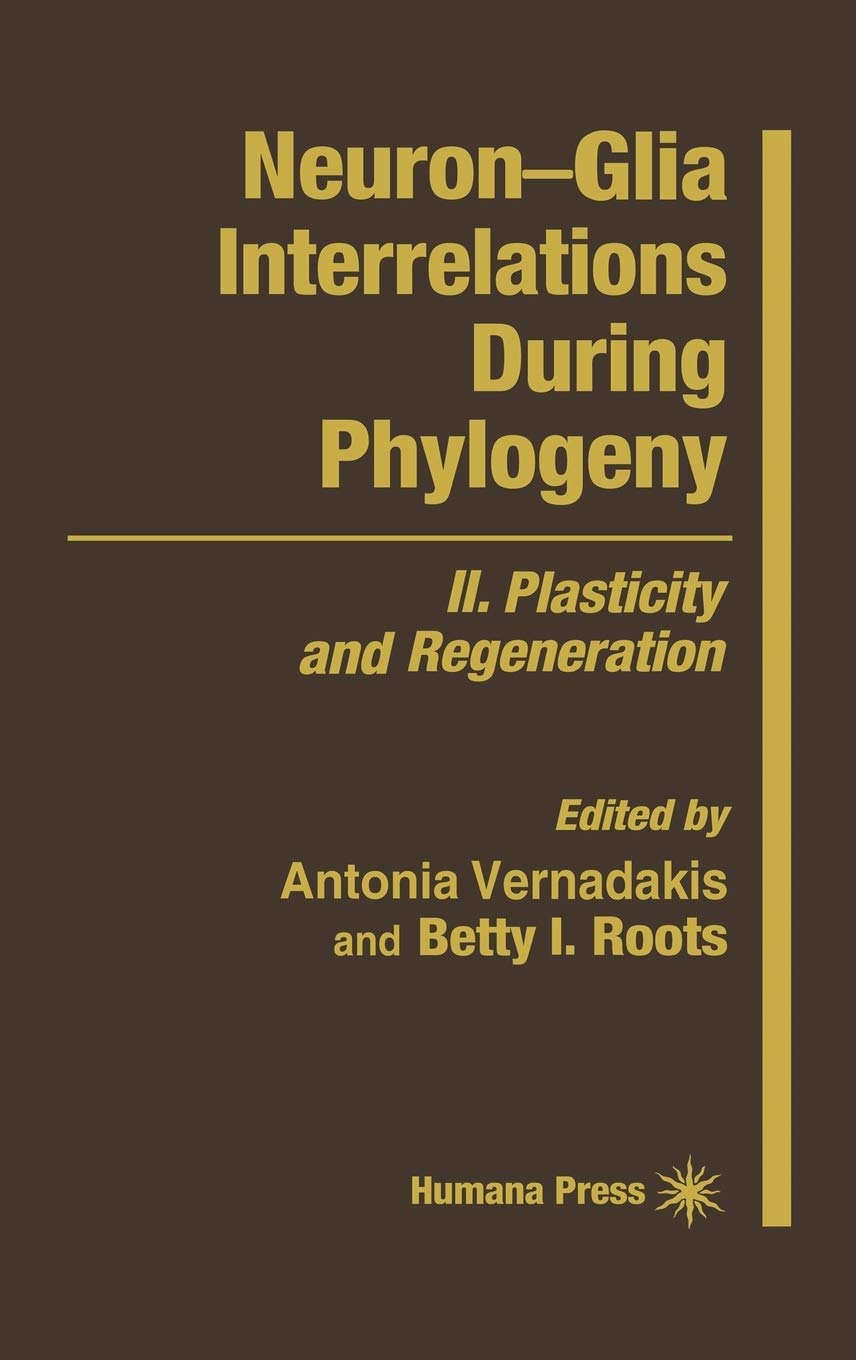
NeuronGlia Interrelations During Phylogeny: II. Plasticity and Regeneration (Contemporary Neuroscience),New
Sold by Ergodebooks, an authorized reseller.
Returns accepted within 30 days | support@ergodebooks.com
Shipping Information
- Free Standard Shipping — United States only
- Processing Time: 3–5 business days
- Estimated Delivery: 6–10 business days after dispatch
- Double-boxed, fully insured & discreetly packaged
- Tracking number sent via email once dispatched
Returns & Refund
Returns accepted within 30 days of delivery.
Damaged or Defective Item
Free return shipping + replacement or full refund
Wrong Item Received
Free return shipping + replacement or full refund
Change of Mind
Return shipping at customer's expense · 25% restocking fee applies
Payment Option

It has been established that neuroglia are involved in early neu ronal growth, differentiation, and migration; these issues are well discussed in the companion volume entitled NeuronGlia Interrela tions During Phylogeny: I. Phylogeny and Ontogeny of Glial Cells. The present volume, NeuronGlia Interrelations During Phylogeny: II. Plas ticity and Regeneration, focuses on two aspects: (1) neuronglia inter relations as they relate to the physiological and metabolic homeostasis of neurons; and (2) the role of neuroglia and neuronal plasticity in regeneration and aging. NeuronGlia Interrelations During Phylogeny: II. Plasticity and Regeneration begins with the unique presentation, 'NeuronGlia In teractions in the Human Fetal Brain,' by Sogos et al. The interesting issue discussed in this chapter is the immunocompetence of the CNS, a field that is now rising. The chapter by Oland et al., 'Glial Cells Playa Key Role in the Construction of Insect Olfactory Glomeruli,' discusses a unique role of glial cells as intermediates in afferent axon induction of substructure with the CNS. The chapter by Vanhems, 'Insect Glial Cells and Their Relationships with Neurons,' compliments the information presented in the companion volume by Fredieu and Mahowald and, in this volume, the chapter by Tobert and Oland. The chapter by Tsacopoulos and Poitry, 'Metabolite Exchanges and Signal Trafficking Between Glial Cells and Neurons in the Insect Retina,' provides evidence of the nutritive functions of glial cells and the important role of alanine supplied by glial cells to photoreceptors, a clear neuronglia interaction.
⚠️ WARNING (California Proposition 65):
This product may contain chemicals known to the State of California to cause cancer, birth defects, or other reproductive harm.
For more information, please visit www.P65Warnings.ca.gov.