
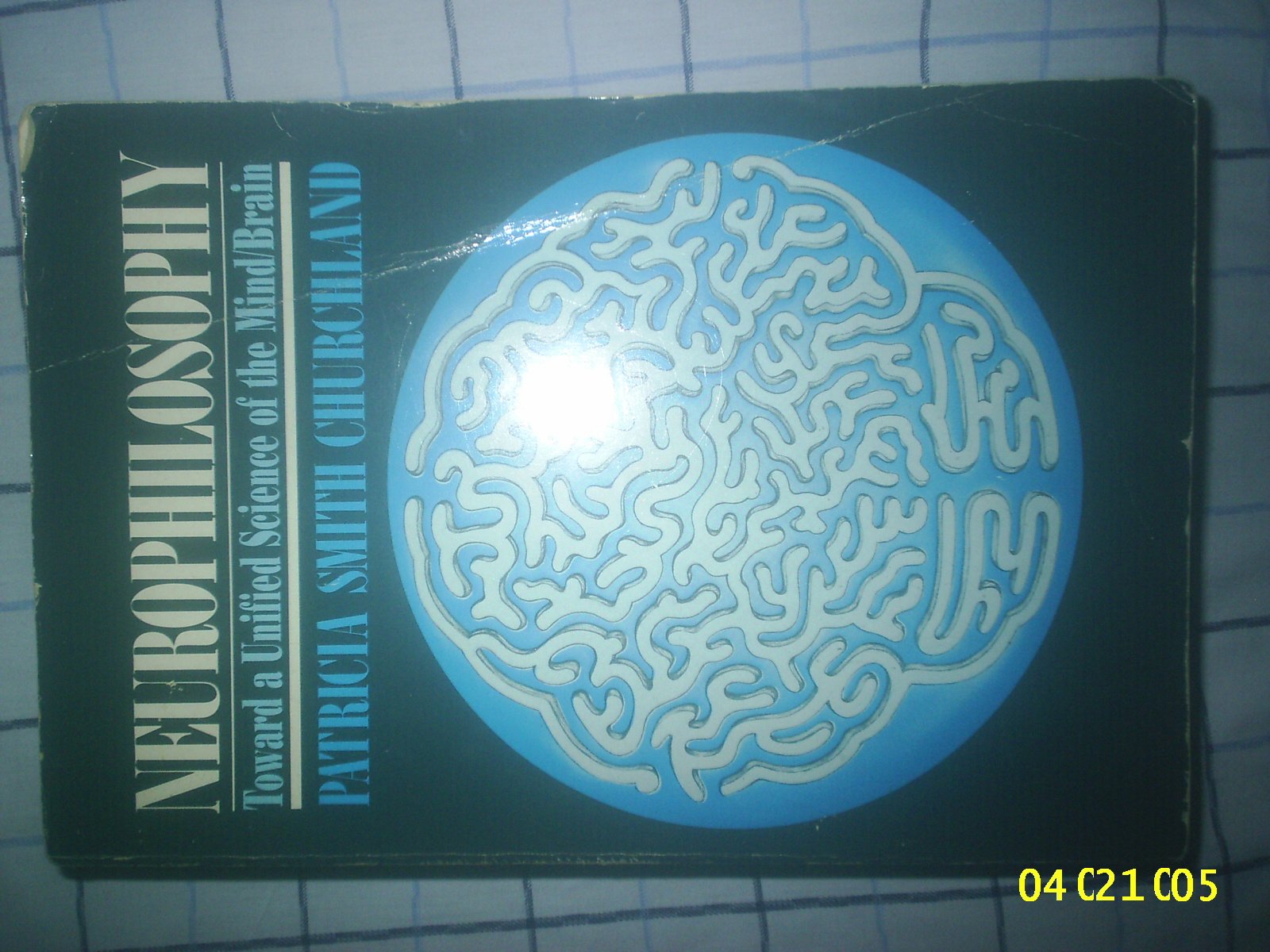
Title
Neurophilosophy: Toward A Unified Science Of The Mindbrain
Sold by Ergodebooks, an authorized reseller.
Returns accepted within 30 days | support@ergodebooks.com
Shipping Information
- Free Standard Shipping — United States only
- Processing Time: 3–5 business days
- Estimated Delivery: 6–10 business days after dispatch
- Double-boxed, fully insured & discreetly packaged
- Tracking number sent via email once dispatched
Returns & Refund
Returns accepted within 30 days of delivery.
Damaged or Defective Item
Free return shipping + replacement or full refund
Wrong Item Received
Free return shipping + replacement or full refund
Change of Mind
Return shipping at customer's expense · 25% restocking fee applies
Payment Option

Five Chapters In The Book'S First Part, Some Elementary Neuroscience, Sketch The History Of The Science Of Nervous Systems And Provide A General Introduction To Neurophysiology, Neuroanatomy, And Neuropsychology. In The Second Part, Recent Developments In The Philosophy Of Science, Chapters Place The Mindbody Problem Within The Wider Context Of The Philosophy Of Science. Drawing On Recent Research In This Area, A General Account Of Intertheoretic Reduction Is Explained, Arguments For A Reductionist Strategy Are Developed, And Traditional Objections From Dualists And Other Anti Reductionists Are Answered In Novel Ways. The Third Part, A Neurophilosophical Perspective, Concludes The Book With A Presentation And Discussion Of Some Of The Most Promising Theoretical Developments Currently Under Exploration In Functional Neurobiology And In The Connectionist Models Within Artificial Intelligence Research.A Bradford Book.
⚠️ WARNING (California Proposition 65):
This product may contain chemicals known to the State of California to cause cancer, birth defects, or other reproductive harm.
For more information, please visit www.P65Warnings.ca.gov.
- Q: What is the page count of this book? A: This book has five hundred sixty pages. It provides an in-depth exploration of neuroscience and philosophy.
- Q: What are the dimensions of 'Neurophilosophy'? A: The book measures nine point four five inches in length, five point five two inches in width, and one point one six inches in height.
- Q: Is this book a paperback? A: Yes, 'Neurophilosophy' is published in paperback format. This makes it lightweight and easy to handle.
- Q: Who is the author of 'Neurophilosophy'? A: The author is Patricia Smith Churchland. She is known for her work in neurophilosophy and the philosophy of mind.
- Q: What topics are covered in this book? A: The book covers neuroscience, neuroanatomy, neuropsychology, and the philosophy of science. It integrates these fields to address the mind-body problem.
- Q: Is there any specific audience for this book? A: Yes, this book is suitable for students and professionals interested in neuroscience and philosophy. It offers advanced discussions on complex topics.
- Q: How do I read and understand this book? A: To fully appreciate 'Neurophilosophy', having a foundational knowledge of neuroscience and philosophy is beneficial. The book is structured in three parts for gradual understanding.
- Q: Is this book appropriate for beginners? A: This book may not be ideal for complete beginners. It targets readers with some background in neuroscience or philosophy.
- Q: How should I store this book to keep it in good condition? A: Store the book upright on a shelf in a dry place. Avoid exposing it to direct sunlight to prevent fading and damage.
- Q: Can I return the book if I’m not satisfied? A: Yes, there is a no quibbles return policy. You can return the book if it does not meet your expectations.
- Q: What if the book arrives damaged? A: If the book arrives damaged, you should contact customer support for a replacement or refund. They will guide you through the process.
- Q: What packaging is used for shipping this book? A: The book is guaranteed to be packaged securely for shipment. This ensures that it arrives in mint condition.
- Q: Are there any safety concerns with this book? A: No, there are no safety concerns associated with reading this book. It is intended for educational purposes.
- Q: What is the publication year of 'Neurophilosophy'? A: The book is published by MIT Press, though the specific publication year isn't provided in the details.
- Q: Does this book include illustrations or diagrams? A: The provided details do not specify if the book includes illustrations or diagrams. It focuses on textual content.
- Q: Is this book part of a series? A: No, 'Neurophilosophy' is not indicated as part of a series. It stands alone as a comprehensive text on its subjects.