
Title
Neuroscience and Social Work Practice: The Missing Link,Used
Sold by Ergodebooks, an authorized reseller.
Returns accepted within 30 days | support@ergodebooks.com
Shipping Information
- Free Standard Shipping — United States only
- Processing Time: 3–5 business days
- Estimated Delivery: 6–10 business days after dispatch
- Double-boxed, fully insured & discreetly packaged
- Tracking number sent via email once dispatched
Returns & Refund
Returns accepted within 30 days of delivery.
Damaged or Defective Item
Free return shipping + replacement or full refund
Wrong Item Received
Free return shipping + replacement or full refund
Change of Mind
Return shipping at customer's expense · 25% restocking fee applies
Payment Option

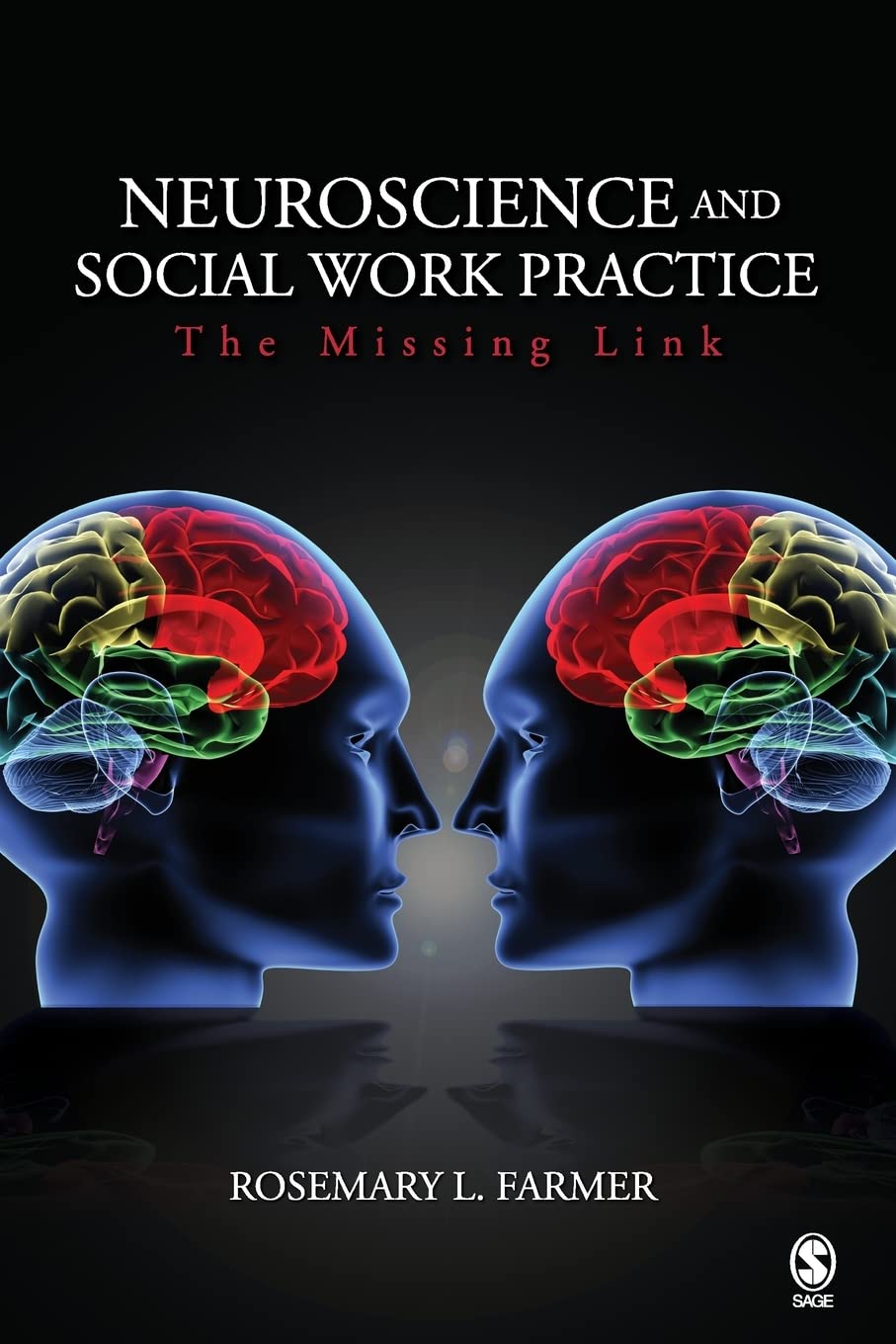
Over the past 30 years, findings in the neurosciences have grown exponentially and have provided a profound understanding of the link between behavior and biology. Although the Social Work community has long taken pride in using a biopsychosocialspiritual (BPSS) framework in conceptualization and intervention, the biological aspect of this BPSS framework has been sorely missing. Neuroscience and Social Work Practice provides the critical missing link. Introducing the latest neuroscience research, it gives practitioners essential datain an easily accessible formwith which to take on the challenges of increasingly complex human problems and diagnoses.Key Features Takes readers on a 'tour of the brain' and makes dense scientific material more engaging Provides a framework for how human service professionals can understand and implement neuroscience clinical data with the use of the Transactional Model Uses case vignettes to explain how neuroscience findings have been applied to specific practice situations Offers a deeper understanding of the links between neuroscience research and social work in such areas as trauma, attachment, psychotherapy, substance abuse, and the effects of psychotropic medicationsIntended AudienceThis cuttingedge text is indispensable for practitioners in the human services field and is an essential supplement for upperlevel undergraduate or graduate students of courses in Human Behavior in the Social Environment and Social Work Direct Practice as well as courses on Interpersonal Practice with Individuals, Children, and Families.
⚠️ WARNING (California Proposition 65):
This product may contain chemicals known to the State of California to cause cancer, birth defects, or other reproductive harm.
For more information, please visit www.P65Warnings.ca.gov.
- Q: How many pages does this book have? A: This book has two hundred pages. It provides a comprehensive overview of the intersection between neuroscience and social work.
- Q: What are the dimensions of this book? A: The book measures six inches in length, zero point four seven inches in width, and nine point zero two inches in height. This compact size makes it easy to handle.
- Q: What binding does this book use? A: This book is available in paperback binding. This makes it lightweight and flexible for reading.
- Q: Who is the author of this book? A: The author of this book is Rosemary L. Farmer. She offers insights based on extensive research in neuroscience.
- Q: What is the main focus of this book? A: The main focus is the link between neuroscience and social work practice. It emphasizes the importance of biological understanding in social work.
- Q: Is this book suitable for graduate students? A: Yes, this book is suitable for graduate students. It serves as an essential supplement for courses in Human Behavior and Social Work Direct Practice.
- Q: How can I apply the concepts from this book in practice? A: You can apply the concepts by using the Transactional Model as outlined in the text. The book includes case vignettes for practical understanding.
- Q: Is this book appropriate for beginners in social work? A: Yes, beginners can benefit from this book. It simplifies complex neuroscience concepts for easier comprehension.
- Q: What key features does this book offer? A: Key features include a 'tour of the brain' and frameworks for applying neuroscience in social work. It also addresses trauma, attachment, and psychotherapy.
- Q: How do I care for this book? A: To care for this book, keep it in a dry place away from direct sunlight. Handle it gently to avoid spine damage.
- Q: Is this book suitable for children? A: No, this book is not specifically designed for children. It targets practitioners and students in social work.
- Q: What if the book arrives damaged? A: If the book arrives damaged, you can return it according to the seller's return policy. Ensure you contact customer support for assistance.
- Q: Does this book cover mental health topics? A: Yes, this book covers mental health topics including trauma, attachment, and psychotherapy. It connects these issues with neuroscience findings.
- Q: What is the overall tone of the book? A: The overall tone is clinical and informational. It focuses on providing valuable insights for practitioners.
- Q: Can this book be used as a reference for case studies? A: Yes, this book can be used as a reference for case studies. It includes practical examples illustrating neuroscience application.
- Q: Is there a glossary or index in this book? A: Yes, the book includes an index to help readers locate specific topics easily. This enhances its usability as a reference guide.