
Title
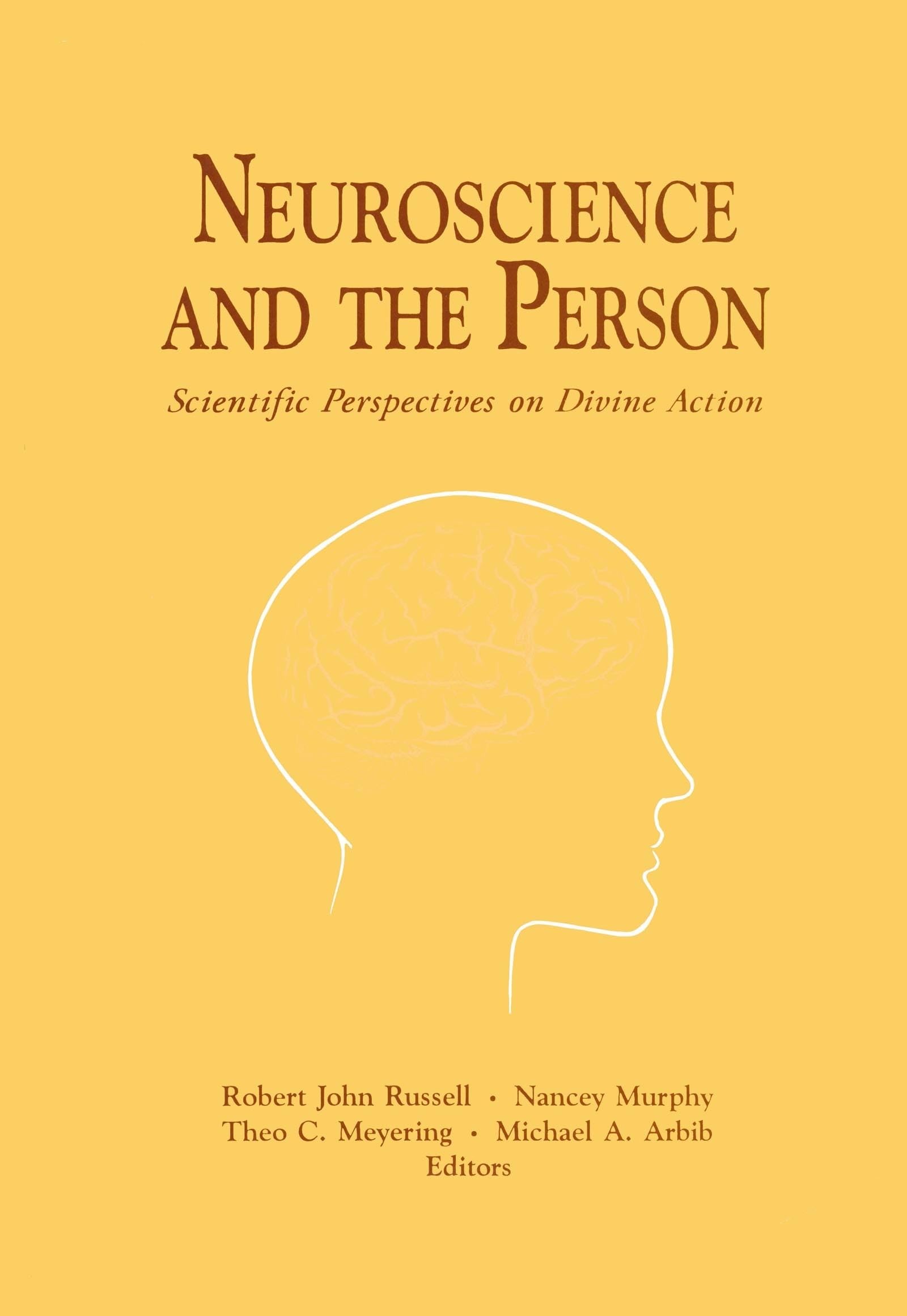
Neuroscience and the Person: Scientific Perspectives on Divine Action (Scientific Perspectives on Divine Action/Vatican Observat,Used
Sold by Ergodebooks, an authorized reseller.
Returns accepted within 30 days | support@ergodebooks.com
Shipping Information
- Free Standard Shipping — United States only
- Processing Time: 3–5 business days
- Estimated Delivery: 6–10 business days after dispatch
- Double-boxed, fully insured & discreetly packaged
- Tracking number sent via email once dispatched
Returns & Refund
Returns accepted within 30 days of delivery.
Damaged or Defective Item
Free return shipping + replacement or full refund
Wrong Item Received
Free return shipping + replacement or full refund
Change of Mind
Return shipping at customer's expense · 25% restocking fee applies
Payment Option

This collection of twentyone essays explores the creative interaction among the cognitive neurosciences, philosophy, and theology. It is the result of the fourth of five international research conferences cosponsored by the Vatican Observatory, Rome, and the Center for Theology and the Natural Sciences, Berkeley. The overarching goal of these conferences is to support the engagement of constructive theology with the natural sciences and to investigate the philosophical and theological elements in ongoing theoretical research in the natural sciences.This series of conferences builds on the initial Vatican Observatory conference and its resulting publication, Physics, Philosophy, and Theology: A Common Quest for Understanding (1988), and on previous jointlysponsored conferences and their publications: Quantum Cosmology and the Laws of Nature (1993), Chaos and Complexity (1995); and Molecular and Evolutionary Biology (1998). A future conference will focus on quantum physics and quantum field theory.In Section One, essays on biblical accounts of human nature (Joel B. Green) and on the role of philosophical theories of human nature in recent theology (Fergus Kerr) are paired with snapshots of neuroscientific research (Joseph E. LeDoux, Peter Hagoort, Marc Jeannerod, and Leslie A. Brothers) to set the poles between which the volumes dialogue proceeds. In Section Two, essays of two types bridge the fields of cognitive neuroscience and philosophy of mind: the first begin with findings in science that raise philosophical issues (Michael A. Arbib, LeDoux, Jeannerod); the second type address current philosophical accounts of human nature, focusing especially on reductionism (William R. Stoeger, Nancey Murphy, Theo C. Meyering). Essays in Section Three proceed from neuroscientific or philosophical accounts of human nature to theological interpretations: three essays provide comprehensive accounts of human nature consistent with both theology and science (Philip Clayton, Arthur Peacocke, Ian G. Barbour); others relate findings and general trends in neuroscience to phenomenological and Thomistic accounts of human experience (Stephen Happel), to Christian teaching on life after death (Ted Peters), and to religious experience (Fraser Watts, Wesley J. Wildman, and Leslie Brothers). Section Four offers conflicting answers to the question whether or not a theistic account is needed to make sense of the various dimensions of human nature canvassed in this volume.
⚠️ WARNING (California Proposition 65):
This product may contain chemicals known to the State of California to cause cancer, birth defects, or other reproductive harm.
For more information, please visit www.P65Warnings.ca.gov.