
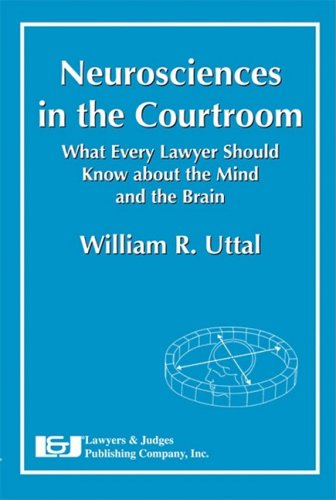
Title
Neuroscience In The Courtroom
Sold by Ergodebooks, an authorized reseller.
Returns accepted within 30 days | support@ergodebooks.com
Shipping Information
- Free Standard Shipping — United States only
- Processing Time: 3–5 business days
- Estimated Delivery: 6–10 business days after dispatch
- Double-boxed, fully insured & discreetly packaged
- Tracking number sent via email once dispatched
Returns & Refund
Returns accepted within 30 days of delivery.
Damaged or Defective Item
Free return shipping + replacement or full refund
Wrong Item Received
Free return shipping + replacement or full refund
Change of Mind
Return shipping at customer's expense · 25% restocking fee applies
Payment Option

In Legal Cases Reading A Persons Mind Is Often Attempted. There Are Many Legal And Ethical Questions Surrounding These Attempts And The Science Behind Them. Neuroscience In The Courtroom Presents The Most Current Research In The Neuroscience Area As It Relates To The Legal Arena. In This Text You Will Learn About The Distinctions Between The Brain And The Mind. You Will Also Be Introduced To The Most Recent Research On Detecting Deception, Control Of Aggression And The Brain, Cognitive Disorders And Brain Adaptations, Ethics And Reliability And Validation Of Testing And Studies, And More. Actual Science And Pseudoscience Are Distinguished. This Text Discusses The Scientific Validity Of Information From This Research As It Relates To Use In The Courtroom. The Author, William R. Uttal, Also Compares The Results To The Standards For Scientific Evidence Presented In Trial Set By The Frye And Daubert Criteria. He Also Makes Recommendations As To Whether Or Not This Type Of Information Should Be Admissible In Court At This Time. This Book Is An Excellent Starting Point For Any Legal Professional Looking To Understand The Human Mind And How Research On It Has Impacted Todays Court Proceedings And Evidence Presented.
⚠️ WARNING (California Proposition 65):
This product may contain chemicals known to the State of California to cause cancer, birth defects, or other reproductive harm.
For more information, please visit www.P65Warnings.ca.gov.
- Q: How many pages does this book have? A: This book has two hundred eighty-eight pages. It's a comprehensive text that covers various aspects of neuroscience in legal contexts.
- Q: What type of binding does this book have? A: This book is paperback bound. This makes it lightweight and portable, ideal for legal professionals on the go.
- Q: Who is the author of this book? A: The author is William R. Uttal. He is known for his expertise in neuroscience and its implications in legal settings.
- Q: What are the dimensions of this book? A: The book measures five point ninety-eight inches in length, zero point ninety-eight inches in width, and nine point zero two inches in height. These dimensions make it easy to handle and store.
- Q: What is the main subject of this book? A: The main subject is the intersection of neuroscience and legal issues. It delves into topics like mind reading, deception detection, and ethical considerations.
- Q: How can I use this book for my legal practice? A: You can use this book as a reference to understand how neuroscience applies to legal cases. It provides insights on admissibility and scientific standards in court.
- Q: Is this book suitable for beginners in legal studies? A: Yes, this book is suitable for beginners. It presents complex topics in an accessible manner, making it a great introduction to neuroscience in law.
- Q: What are the key features of this book? A: The key features include current research findings and practical implications for legal professionals. It also distinguishes between actual science and pseudo-science.
- Q: How do I keep this book in good condition? A: To keep the book in good condition, store it in a cool, dry place and avoid exposing it to direct sunlight. Handle it carefully to prevent wear and tear.
- Q: What should I do if the book arrives damaged? A: If the book arrives damaged, contact the seller for a return or replacement. Ensure you keep the original packaging for the return process.
- Q: Are there any ethical considerations discussed in this book? A: Yes, the book discusses several ethical considerations related to the use of neuroscience in legal contexts. It evaluates the reliability of various testing methods.
- Q: How does this book compare to other legal texts? A: This book offers a unique perspective by focusing specifically on neuroscience. Unlike many legal texts, it incorporates scientific research into legal frameworks.
- Q: Is there a glossary or index in this book? A: Yes, the book includes an index for easy navigation. This helps readers locate specific topics quickly, enhancing usability.
- Q: What kind of research is referenced in this book? A: The book references contemporary research on topics like deception detection and cognitive disorders. These studies provide a scientific basis for discussions in court.
- Q: Can this book help me understand brain adaptations in legal cases? A: Yes, the book covers brain adaptations and their relevance in legal settings. It provides insights into how these adaptations can affect behavior and testimony.