
Title
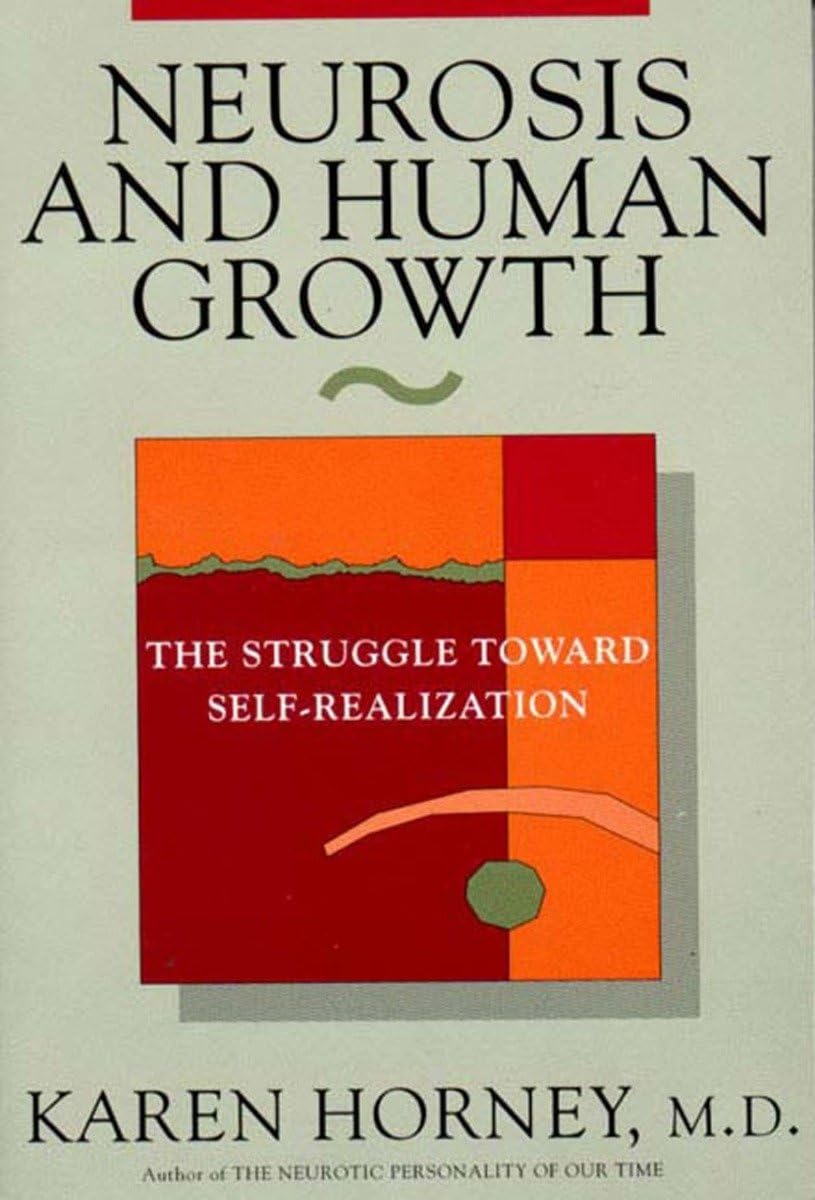
Neurosis and Human Growth: The Struggle Towards SelfRealization,Used
Sold by Ergodebooks, an authorized reseller.
Returns accepted within 30 days | support@ergodebooks.com
Shipping Information
- Free Standard Shipping — United States only
- Processing Time: 3–5 business days
- Estimated Delivery: 6–10 business days after dispatch
- Double-boxed, fully insured & discreetly packaged
- Tracking number sent via email once dispatched
Returns & Refund
Returns accepted within 30 days of delivery.
Damaged or Defective Item
Free return shipping + replacement or full refund
Wrong Item Received
Free return shipping + replacement or full refund
Change of Mind
Return shipping at customer's expense · 25% restocking fee applies
Payment Option

One of the most original psychoanalysts after Freud, Karen Horney pioneered such now familiar concepts as alienation, selfrealization, and the idealized image, and she brought to psychoanalysis a new understanding of the importance of culture and environment.Karen Horney was born in Hamburg, Germany, in 1885 and studied at the University of Berlin, receiving her medical degree in 1913. From 1914 to 1918 she studied psychiatry at BerlinLankwitz, Germany, and from 1918 to 1932 taught at the Berlin Psychoanalytic Institute. She participated in many international congresses, among them the historic discussion of lay analysis, chaired by Sigmund Freud.Dr. Horney came to the United States in 1932 and for two years was Associate Director of the Psychoanalytic Institute, Chicago. In 1934 she came to New York and was a member of the teaching staff of the New York Psychoanalytic Institute until 1941, when she became one of the founders of the Association for the Advancement of Psychoanalysis and the American Institute for Psychoanalysis.In Neurosis and Human Growth, Dr. Horney discusses the neurotic process as a special form of the human development, the antithesis of healthy growth. She unfolds the different stages of this situation, describing neurotic claims, the tyranny or inner dictates and the neurotic's solutions for relieving the tensions of conflict in such emotional attitudes as domination, selfeffacement, dependency, or resignation. Throughout, she outlines with penetrating insight the forces that work for and against the person's realization of his or her potentialities.This 40th Anniversary Edition includes a new preface by Stephanie Steinfeld, Ph.D., and Jeffrey Rubin, M.D., of the American Institute for Psychoanalysis.
⚠️ WARNING (California Proposition 65):
This product may contain chemicals known to the State of California to cause cancer, birth defects, or other reproductive harm.
For more information, please visit www.P65Warnings.ca.gov.
- Q: What is the main focus of 'Neurosis and Human Growth'? A: 'Neurosis and Human Growth' primarily explores the neurotic process as a unique form of human development, contrasting it with healthy growth. Karen Horney delves into various stages of neurosis and its effects on self-realization.
- Q: Who is the author of this book? A: The author of 'Neurosis and Human Growth' is Karen Horney, a prominent psychoanalyst known for her innovative approaches to psychology and her contributions to understanding human development.
- Q: What edition of the book is available? A: The available edition is the 40th Anniversary Edition, which includes a new preface by Stephanie Steinfeld, Ph.D., and Jeffrey Rubin, M.D.
- Q: What topics does Karen Horney cover in this book? A: In this book, Horney discusses neurotic claims, the tyranny of inner dictates, and emotional attitudes such as domination, self-effacement, dependency, and resignation, providing insights into the struggle for self-realization.
- Q: How many pages does this book have? A: 'Neurosis and Human Growth' has a total of 400 pages, making it a comprehensive read on the subject of neuropsychology.
- Q: Is this book suitable for beginners in psychology? A: Yes, 'Neurosis and Human Growth' is written in a manner that is accessible to both beginners and those familiar with psychological concepts, making it suitable for a wide audience.
- Q: What is the binding type of this book? A: The book is available in a paperback binding, which makes it lightweight and easy to handle.
- Q: When was 'Neurosis and Human Growth' first published? A: 'Neurosis and Human Growth' was first published on May 18, 1991, and has since been recognized for its contributions to the field of psychoanalysis.
- Q: What insights does Horney provide about culture and environment? A: Karen Horney emphasizes the significant impact of culture and environment on personal development and neurotic behavior, which she believes is essential for understanding the human psyche.
- Q: Is there any specific audience that would benefit from this book? A: 'Neurosis and Human Growth' is beneficial for students, professionals in psychology, and anyone interested in personal development and understanding the complexities of human behavior.