If you have any questions, you are always welcome to contact us. We'll get back to you as soon as possible, withing 24 hours on weekdays.
Customer service
All questions about your order, return and delivery must be sent to our customer service team by e-mail at yourstore@yourdomain.com
Sale & Press
If you are interested in selling our products, need more information about our brand or wish to make a collaboration, please contact us at press@yourdomain.com
Help
If you have any questions, you are always welcome to contact us. We'll get back to you as soon as possible, withing 24 hours on weekdays.
Customer service
All questions about your order, return and delivery must be sent to our customer service team by e-mail at yourstore@yourdomain.com
Sale & Press
If you are interested in selling our products, need more information about our brand or wish to make a collaboration, please contact us at press@yourdomain.com
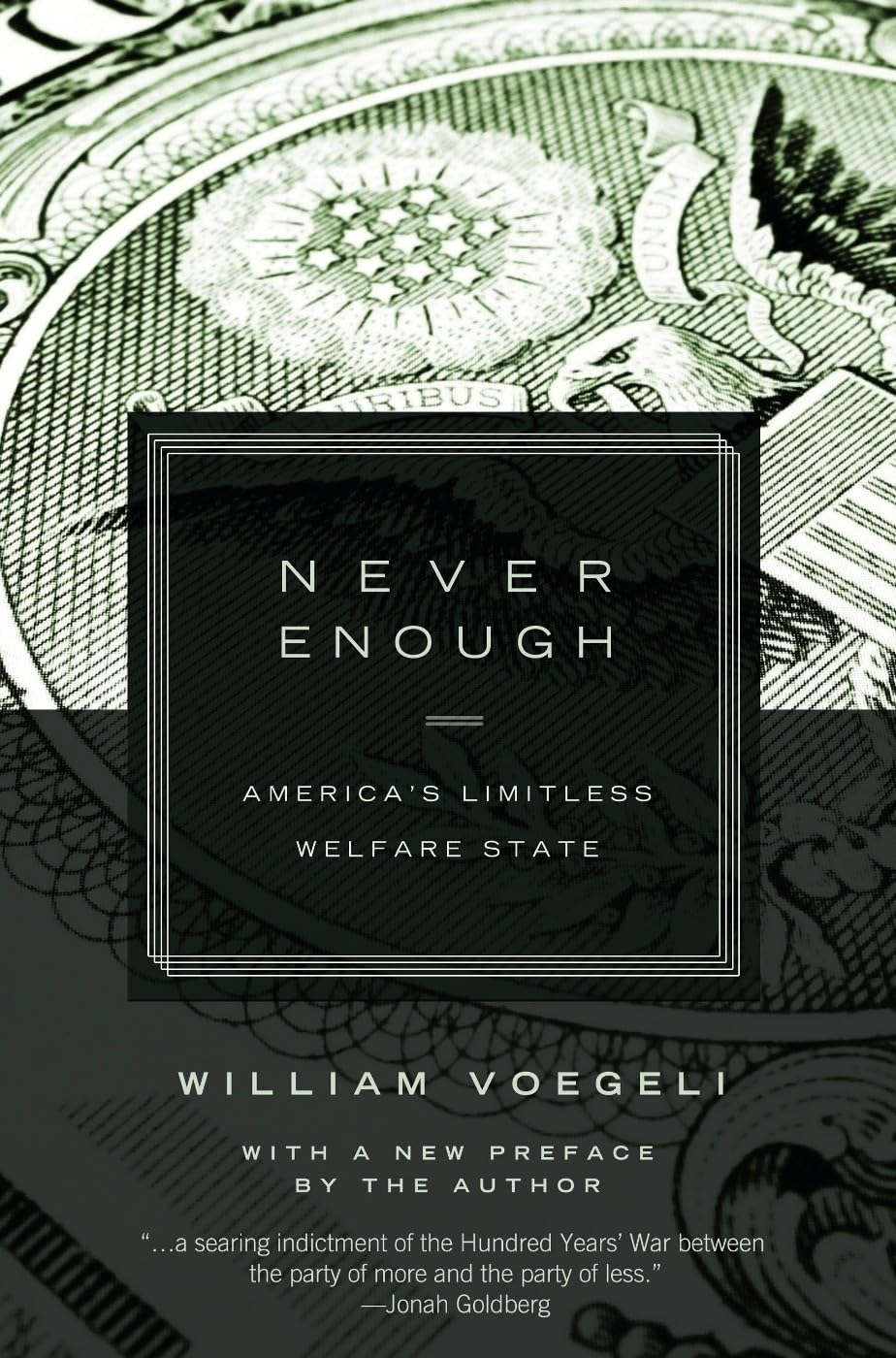
Since the beginning of the New Deal, American liberals have insisted that the government must do moremuch moreto help the poor, to increase economic security, to promote social justice and solidarity, to reduce inequality, and to mitigate the harshness of capitalism. Nonetheless, liberals have never answered, or even acknowledged, the corresponding question: What would be the size and nature of a welfare state that was not contemptibly austere, that did not urgently need new programs, bigger budgets, and a broader mandate? Even though the federal governments outlays have doubled every eighteen years since 1940, liberal rhetoric is always addressed to a nation trapped in Groundhog Day, where every year is 1932, and none of the existing welfare state programs that spend tens of billions of dollars matter, or even exist.Never Enough explores the roots and consequences of liberals aphasia about the welfare states ultimate size. It assesses what liberalisms lack of a limiting principle says about the longrunning argument between liberals and conservatives, and about the policy choices confronting America in a new century. Never Enough argues that the failure to speak clearly and candidly about the welfare states limits has grave policy consequences. The worst result, however, is the way it has jeopardized the experiment in selfgovernment by encouraging Americans to regard their government as a vehicle for exploiting their fellowcitizens, rather than as a compact for respecting one anothers rights and safeguarding the opportunities of future generations.
⚠️ WARNING (California Proposition 65):
This product may contain chemicals known to the State of California to cause cancer,
birth defects, or other reproductive harm.
For MAP (Minimum Advertised Price) violations and Intellectual Property (IP) or Trademark concerns, please contact:
support@ergodebooks.com
⚠️ California Proposition 65 Warning: Some products sold on this website may expose you to chemicals known to the State of California to cause cancer, birth defects, or other reproductive harm. For more information, visit www.P65Warnings.ca.gov.