
Title
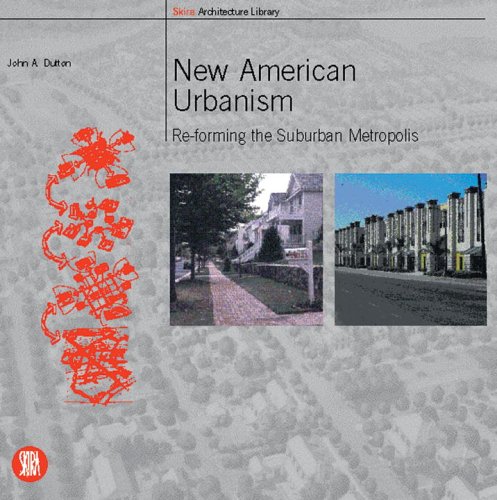
New American Urbanism: Reforming the Suburban Metropolis (Skira Architecture Library),Used
Sold by Ergodebooks, an authorized reseller.
Returns accepted within 30 days | support@ergodebooks.com
Shipping Information
- Free Standard Shipping — United States only
- Processing Time: 3–5 business days
- Estimated Delivery: 6–10 business days after dispatch
- Double-boxed, fully insured & discreetly packaged
- Tracking number sent via email once dispatched
Returns & Refund
Returns accepted within 30 days of delivery.
Damaged or Defective Item
Free return shipping + replacement or full refund
Wrong Item Received
Free return shipping + replacement or full refund
Change of Mind
Return shipping at customer's expense · 25% restocking fee applies
Payment Option

Over the past few decades, many American architects have reclaimed urban and suburban land development as an important, contemporary architectural issue. This renewed interest in 'town planning' focuses on the relationships between buildings and open spaces that form urban patterns. These architects argue that a range of appropriate urban patterns organized into neighborhoods can best meet the physical and social needs of residents and restore a sense of community. Architecture and urbanism, in this view, are instrumental agents of social change and reform.The projects in this book demonstrate their attempts to restructure urban growth into cohesive designs that balance buildings, open space, infrastructure, landscape, and transportation. In place of the piecemeal advance of placeless, cardominated suburban sprawl, they envision dense, mixeduse neighborhoods with walkable streets, and connections to transit. The work ranges from entire new towns to urban infill. Many of the architects practicing these ideas have formed a movement called the Congress for New Urbanism (CNU), which most clearly and effectively has articulated this alternative vision.This book is about particular tendencies, however, and not ownership of ideas. Although the Congress for New Urbanism presents its position in the proprietary form of a charter, its vision is representative of much broader strains of architectural ideology, and continues a twentiethcentury search to find ways to address the problems of the modern city. New Urbanism is merely the latest movement to seek alternative forms to reshape society. In this way, it can be seen as a continuation of modernism, not its antithesis.Although much has been written recently about the American revival of townplanning in general, and the New Urbanism in particular, much of the writing consists of either partisan claims of New Urbanism's ability to rebuild American community or facile dismissals of the movement as nostalgiapeddling suburbanism. This book presents readers a chance to judge the ideas and work for themselves, and to participate in the debate over alternative forms of the contemporary city.Over the past few decades, many American architects have reclaimed urban and suburban land development as an important, contemporary architectural issue. This renewed interest in 'town planning' focuses on the relationships between buildings and open spaces that form urban patterns. These architects argue that a range of appropriate urban patterns organized into neighborhoods can best meet the physical and social needs of residents and restore a sense of community. Architecture and urbanism, in this view, are instrumental agents of social change and reform.The projects in this book demonstrate their attempts to restructure urban growth into cohesive designs that balance buildings, open space, infrastructure, landscape, and transportation. In place of the piecemeal advance of placeless, cardominated suburban sprawl, they envision dense, mixeduse neighborhoods with walkable streets, and connections to transit. The work ranges from entire new towns to urban infill. Many of the architects practicing these ideas have formed a movement called the Congress for New Urbanism (CNU), which most clearly and effectively has articulated this alternative vision.This book is about particular tendencies, however, and not ownership of ideas. Although the Congress for New Urbanism presents its position in the proprietary form of a charter, its vision is representative of much broader strains of architectural ideology, and continues a twentiethcentury search to find ways to address the problems of the modern city. New Urbanism is merely the latest movement to seek alternative forms to reshape society. In this way, it can be seen as a continuation of modernism, not its antithesis.Although much has been written recently about the American revival of townplanning in general, and the New Urbanism in particula
⚠️ WARNING (California Proposition 65):
This product may contain chemicals known to the State of California to cause cancer, birth defects, or other reproductive harm.
For more information, please visit www.P65Warnings.ca.gov.