
Title
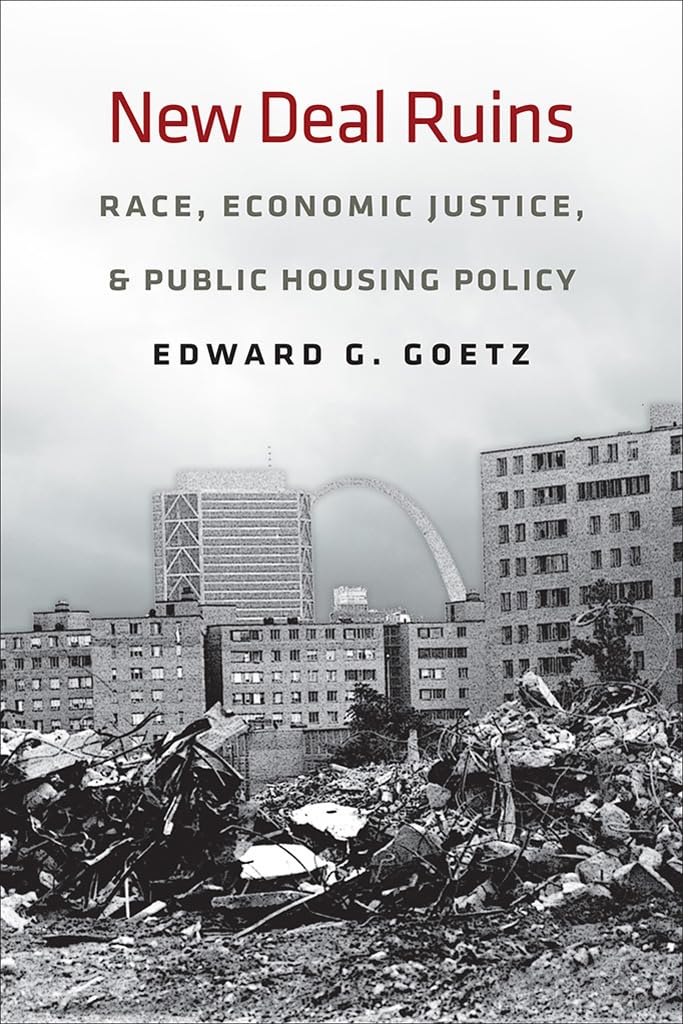
New Deal Ruins: Race, Economic Justice, and Public Housing Policy,Used
Sold by Ergodebooks, an authorized reseller.
Returns accepted within 30 days | support@ergodebooks.com
Shipping Information
- Free Standard Shipping — United States only
- Processing Time: 3–5 business days
- Estimated Delivery: 6–10 business days after dispatch
- Double-boxed, fully insured & discreetly packaged
- Tracking number sent via email once dispatched
Returns & Refund
Returns accepted within 30 days of delivery.
Damaged or Defective Item
Free return shipping + replacement or full refund
Wrong Item Received
Free return shipping + replacement or full refund
Change of Mind
Return shipping at customer's expense · 25% restocking fee applies
Payment Option

Public housing was an integral part of the New Deal, as the federal government funded public works to generate economic activity and offer material support to families made destitute by the Great Depression, and it remained a major element of urban policy in subsequent decades. As chronicled in New Deal Ruins, however, housing policy since the 1990s has turned to the demolition of public housing in favor of subsidized units in mixedincome communities and the use of tenantbased vouchers rather than direct housing subsidies. While these policies, articulated in the HOPE VI program begun in 1992, aimed to improve the social and economic conditions of urban residents, the results have been quite different. As Edward G. Goetz shows, hundreds of thousands of people have been displaced and there has been a loss of more than 250,000 permanently affordable residential units. Goetz offers a critical analysis of the nationwide effort to dismantle public housing by focusing on the impact of policy changes in three cities: Atlanta, Chicago, and New Orleans.Goetz shows how this transformation is related to pressures of gentrification and the enduring influence of race in American cities. African Americans have been disproportionately affected by this policy shift; it is the cities in which public housing is most closely identified with minorities that have been the most aggressive in removing units. Goetz convincingly refutes myths about the supposed failure of public housing. He offers an evidencebased argument for renewed investment in public housing to accompany housing choice initiatives as a model for innovative and equitable housing policy.
⚠️ WARNING (California Proposition 65):
This product may contain chemicals known to the State of California to cause cancer, birth defects, or other reproductive harm.
For more information, please visit www.P65Warnings.ca.gov.