
Title
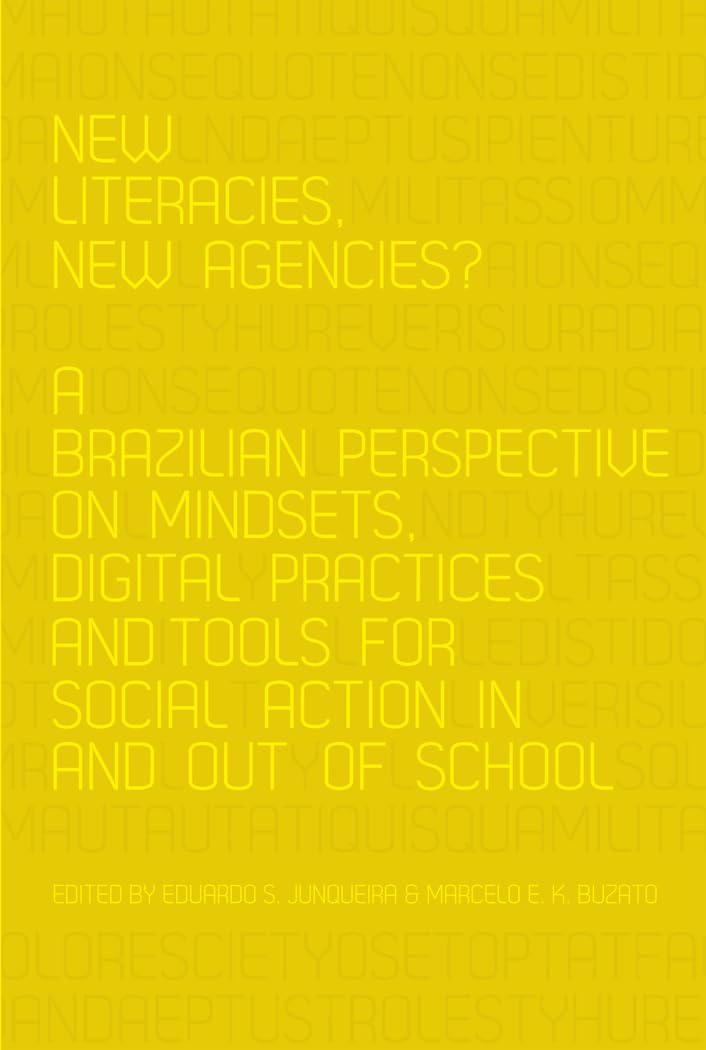
New Literacies, New Agencies?: A Brazilian Perspective on Mindsets, Digital Practices and Tools for Social Action In and Out of ,Used
Sold by Ergodebooks, an authorized reseller.
Returns accepted within 30 days | support@ergodebooks.com
Shipping Information
- Free Standard Shipping — United States only
- Processing Time: 3–5 business days
- Estimated Delivery: 6–10 business days after dispatch
- Double-boxed, fully insured & discreetly packaged
- Tracking number sent via email once dispatched
Returns & Refund
Returns accepted within 30 days of delivery.
Damaged or Defective Item
Free return shipping + replacement or full refund
Wrong Item Received
Free return shipping + replacement or full refund
Change of Mind
Return shipping at customer's expense · 25% restocking fee applies
Payment Option

From students as teachers pets to teachers as Second Life avatars, or from being ridiculed for not knowing your syntax to ridiculing others through multimodal remixing, something has changed in the way people are acting and being acted upon through literacies. From parallel text processing under a cloud to textasprocess enhanced by cloud computing, or from one laptop per child to several laptops left behind by children in creative spoken interaction, learners and educators actions through and around texts and technologies provide quite a telling example of such changes. From writing as technology to blogging as a tool for fostering critical mindsets within complexity, or from automatized knowledge acquisition routines to new forms of relating to knowledge and new perspectives on autonomy, social ordering and Self constitutional processes defy binaries such as agent/structure, global/local, social/technical, virtual/real, or even human/nonhuman. In this volume a team of scholars from some of the most prestigious Brazilian universities address these issues, and illustrate them with findings from research on the interplay between new literacies, digital technologies and social action in and outofschool. The chapters introduce, or revisit, an array of theoretical constructs from education, sociology, linguistics and media studies, while presenting a new inside perspective about how research on new literacies is being carried out in Brazil. Altogether, they provide a very useful set of ideas, tools and analytical frameworks for researchers, teachers, and students of Education, Language and Arts and Communication worldwide, especially those concerned with technologyenhanced education and social inclusion.
⚠️ WARNING (California Proposition 65):
This product may contain chemicals known to the State of California to cause cancer, birth defects, or other reproductive harm.
For more information, please visit www.P65Warnings.ca.gov.