
Title
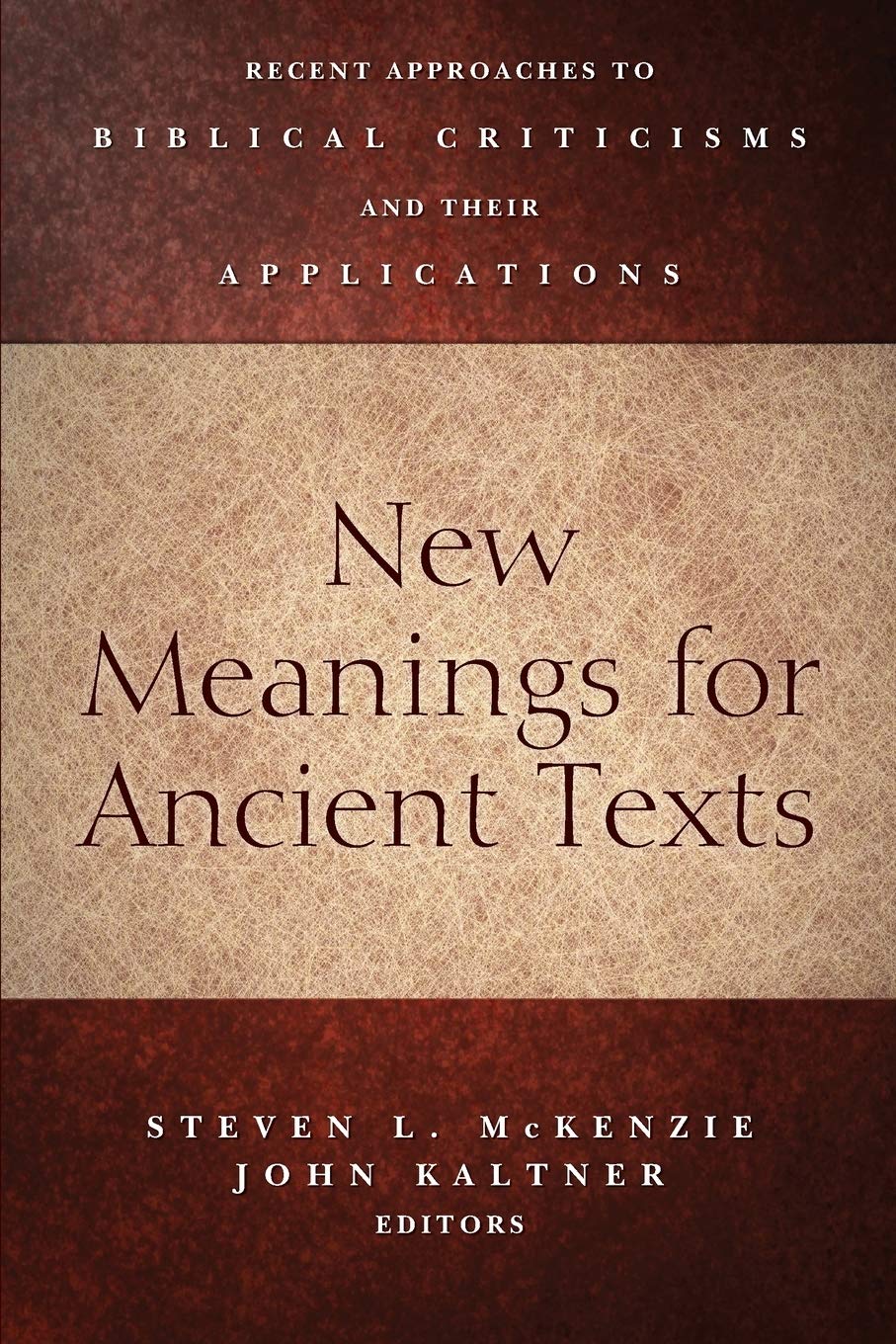
New Meanings For Ancient Texts: Recent Approaches To Biblical Criticisms And Their Applications
Sold by Ergodebooks, an authorized reseller.
Returns accepted within 30 days | support@ergodebooks.com
Shipping Information
- Free Standard Shipping — United States only
- Processing Time: 3–5 business days
- Estimated Delivery: 6–10 business days after dispatch
- Double-boxed, fully insured & discreetly packaged
- Tracking number sent via email once dispatched
Returns & Refund
Returns accepted within 30 days of delivery.
Damaged or Defective Item
Free return shipping + replacement or full refund
Wrong Item Received
Free return shipping + replacement or full refund
Change of Mind
Return shipping at customer's expense · 25% restocking fee applies
Payment Option

This Book Is A Supplement And Sequel To To Each Its Own Meaning, Edited By Steven L. Mckenzie And Stephen R. Haynes, Which Introduced The Reader To The Most Important Methods Of Biblical Criticism And Remains A Widely Used Classroom Textbook. This New Volume Explores Recent Developments In, And Approaches To, Biblical Criticism Since 1999. Leading Contributors Define And Describe Their Approach For Nonspecialist Readers, Using Examples From The Old And New Testament To Help Illustrate Their Discussion. Topics Include Cultural Criticism, Disability Studies, Queer Criticism, Postmodernism, Ecological Criticism, New Historicism, Popular Culture, Postcolonial Criticism, And Psychological Criticism. Each Section Includes A List Of Key Terms And Definitions And Suggestions For Further Reading.Contributors: Timothy Beal, Warren Carter, Norman C. Habel, Gina Henspiazza, Nyasha Junior, D. Andrew Kille, Hugh S. Pyper, Linda S. Schearing, Jeremy Schipper, Ken Stone, And Valarie H. Ziegler.
⚠️ WARNING (California Proposition 65):
This product may contain chemicals known to the State of California to cause cancer, birth defects, or other reproductive harm.
For more information, please visit www.P65Warnings.ca.gov.
- Q: What is the page count of the book? A: The book contains one hundred ninety-six pages. This includes various sections on biblical criticism and examples from both the Old and New Testaments.
- Q: What kind of binding does the book have? A: The book is available in paperback binding. This makes it lightweight and easy to handle for reading and studying.
- Q: Who is the author of this book? A: The book is authored by Steven L. McKenzie. He is well-known for his contributions to the field of biblical criticism.
- Q: How should I approach reading this book? A: You can read this book as a supplement to biblical criticism studies. It’s designed for both specialists and non-specialists, making it accessible for general readers.
- Q: Is this book suitable for beginners in biblical studies? A: Yes, this book is suitable for beginners. It introduces key concepts and methods in biblical criticism in an approachable manner.
- Q: What topics are covered in the book? A: The book covers various topics including cultural criticism, queer criticism, and ecological criticism. Each section provides examples to illustrate these approaches.
- Q: How do I keep this book in good condition? A: To maintain the book's condition, store it in a cool, dry place. Avoid exposure to direct sunlight, which can fade the cover and pages.
- Q: Can I highlight or write in this book? A: Yes, you can highlight or write in this book if you’re using it for study purposes. Ensure that you use non-bleeding ink or light pencil to avoid damage.
- Q: Is this book appropriate for group studies? A: Yes, this book is excellent for group studies. Its clear explanations and diverse topics facilitate discussions among participants.
- Q: What if my book arrives damaged? A: If your book arrives damaged, you should contact customer support for a return or exchange. They typically have a straightforward process for handling such issues.
- Q: Does this book have a return policy? A: Yes, there is a return policy for this book. Check with the retailer for specific details regarding time frames and conditions for returns.
- Q: Are there suggestions for further reading in the book? A: Yes, each section includes suggestions for further reading. These resources can enhance your understanding of the topics discussed.
- Q: Is this book part of a series? A: Yes, this book is a sequel to 'To Each Its Own Meaning'. It builds upon the concepts introduced in that previous volume.
- Q: Who are some contributors to this book? A: The book features contributions from authors like Timothy Beal and Warren Carter. Their expertise adds depth to the discussions within the text.
- Q: What is the main focus of the book? A: The main focus of the book is to explore recent approaches to biblical criticism. It aims to redefine and expand existing interpretations.