If you have any questions, you are always welcome to contact us. We'll get back to you as soon as possible, withing 24 hours on weekdays.
Customer service
All questions about your order, return and delivery must be sent to our customer service team by e-mail at yourstore@yourdomain.com
Sale & Press
If you are interested in selling our products, need more information about our brand or wish to make a collaboration, please contact us at press@yourdomain.com
Help
If you have any questions, you are always welcome to contact us. We'll get back to you as soon as possible, withing 24 hours on weekdays.
Customer service
All questions about your order, return and delivery must be sent to our customer service team by e-mail at yourstore@yourdomain.com
Sale & Press
If you are interested in selling our products, need more information about our brand or wish to make a collaboration, please contact us at press@yourdomain.com
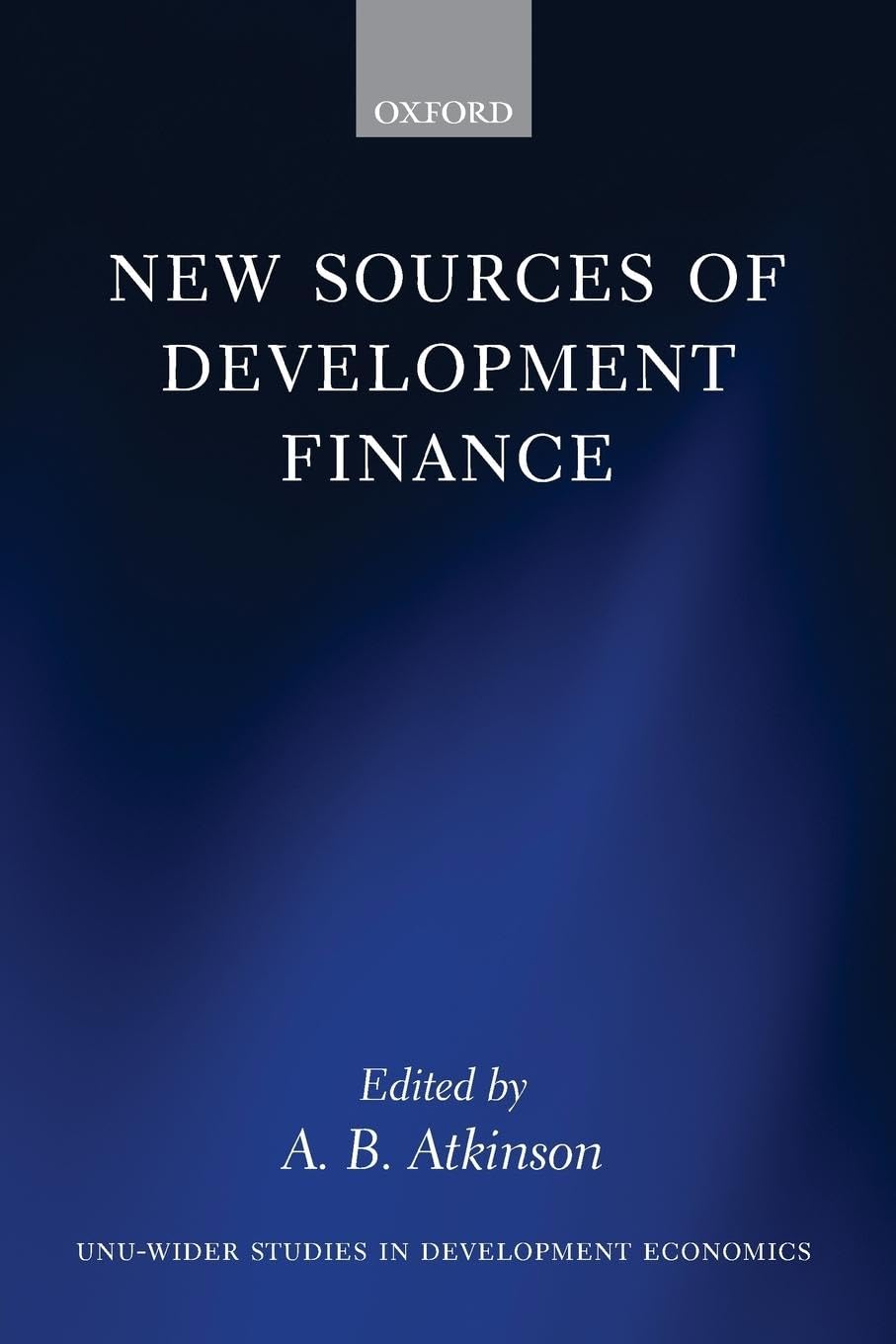
As their Millennium Development Goals, world leaders have pledged by 2015 to halve the number of people living in extreme poverty and hunger, to achieve universal primary education, to reduce child mortality, to halt the spread of HIV/AIDS, and to halve the number of people without safe drinking water. Achieving these goals requires a large increase in the flow of financial resources to developing countries double the present development assistance from abroad.Examining innovative ways to secure these resources, this book sets out a framework for the economic analysis of different sources of funding, applying the tools of modern public economics to identify the key issues. It examines the role of new sources of overseas aid, considers the fiscal architecture and the lessons that can be learned from federal fiscal systems, asks how far increased transfers impose a burden on donors, and investigates how far one can separate raising resources from their use.In turn, the book examines global environmental taxes (such as a carbon tax) the taxation of currency transactions (the Tobin tax), a developmentfocused allocation of Special Drawing Rights by the IMF, the UK Government proposal for an International Finance Facility, increased private donations for development purposes, a global lottery (or premium bond), and increased remittances by emigrants. In each case, it considers the feasibility of the proposal and the resources that it can realistically raise. In each case, it offers new perspectives and insights into these new and controversial proposals.
⚠️ WARNING (California Proposition 65):
This product may contain chemicals known to the State of California to cause cancer,
birth defects, or other reproductive harm.
For MAP (Minimum Advertised Price) violations and Intellectual Property (IP) or Trademark concerns, please contact:
support@ergodebooks.com
⚠️ California Proposition 65 Warning: Some products sold on this website may expose you to chemicals known to the State of California to cause cancer, birth defects, or other reproductive harm. For more information, visit www.P65Warnings.ca.gov.