If you have any questions, you are always welcome to contact us. We'll get back to you as soon as possible, withing 24 hours on weekdays.
Customer service
All questions about your order, return and delivery must be sent to our customer service team by e-mail at yourstore@yourdomain.com
Sale & Press
If you are interested in selling our products, need more information about our brand or wish to make a collaboration, please contact us at press@yourdomain.com
Help
If you have any questions, you are always welcome to contact us. We'll get back to you as soon as possible, withing 24 hours on weekdays.
Customer service
All questions about your order, return and delivery must be sent to our customer service team by e-mail at yourstore@yourdomain.com
Sale & Press
If you are interested in selling our products, need more information about our brand or wish to make a collaboration, please contact us at press@yourdomain.com
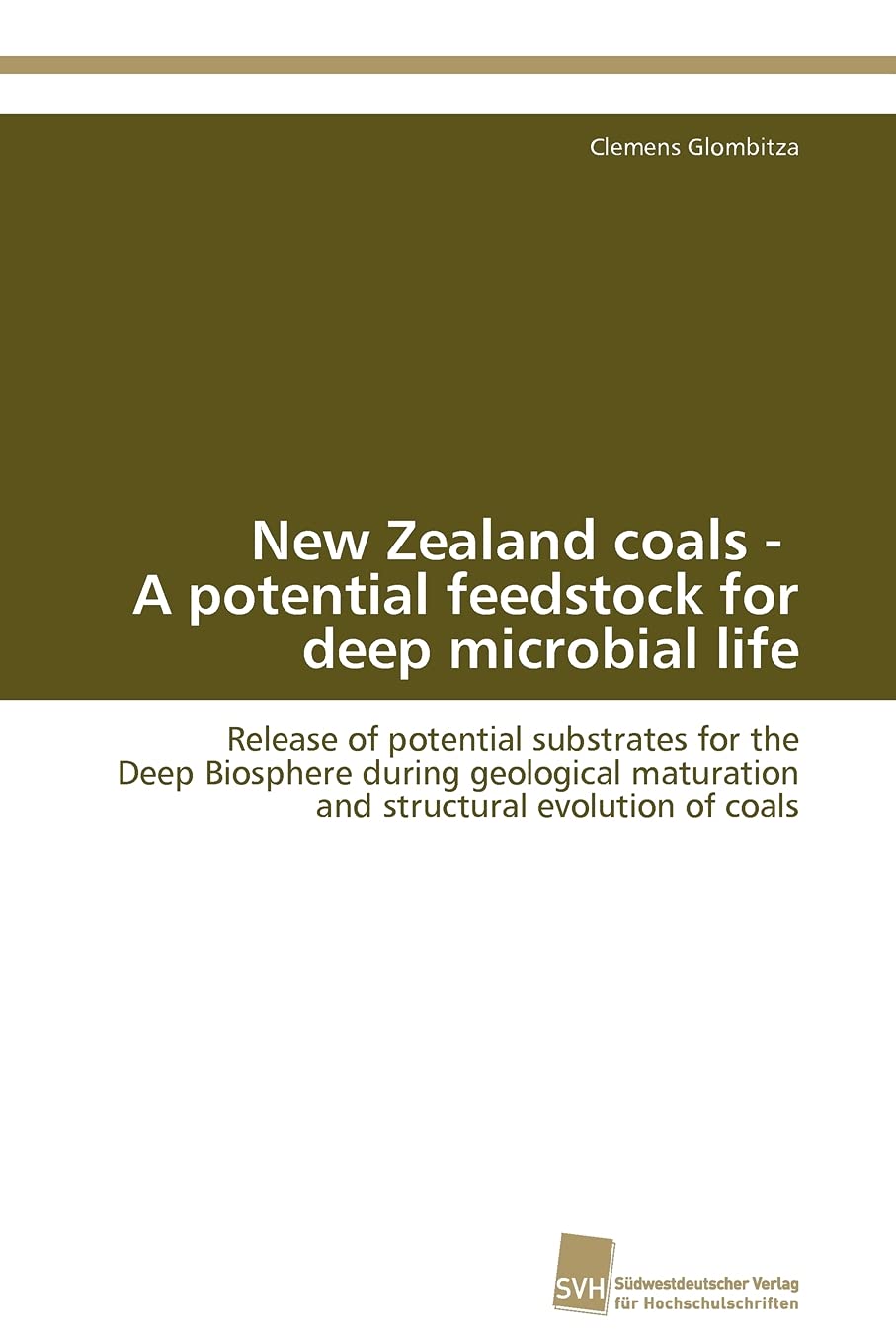
During the last decades of biogeochemical and microbiological research, the widespread occurrence of microorganisms was demonstrated in deep marine and terrestrial sediments. With this discovery inevitably, the question of potential carbon and energy sources for this deep subsurface microbial life arises. In sedimentary systems, such a source is provided by buried organic matter, deposited over geological times. During geochemical and geothermal maturation, this organic material undergoes biotic and abiotic alteration processes and is suggested, to release potential substrates into the surrounding. Previous studies showed, that especially oxygen containing compounds are lost from the macromolecular matrix during diagenesis and early catagenesis. Oxygen containing low molecular weight organic acids (LMWOAs) such as formate, acetate and oxalate represent important substrates for microbial metabolism. Thus, lithologies containing accumulated sedimentary organic matter (e.g. lignites and coals) may provide a large feedstock for deep microbial life releasing LMWOAs into the pore water during maturation.
⚠️ WARNING (California Proposition 65):
This product may contain chemicals known to the State of California to cause cancer,
birth defects, or other reproductive harm.
For MAP (Minimum Advertised Price) violations and Intellectual Property (IP) or Trademark concerns, please contact:
support@ergodebooks.com
⚠️ California Proposition 65 Warning: Some products sold on this website may expose you to chemicals known to the State of California to cause cancer, birth defects, or other reproductive harm. For more information, visit www.P65Warnings.ca.gov.