
Title
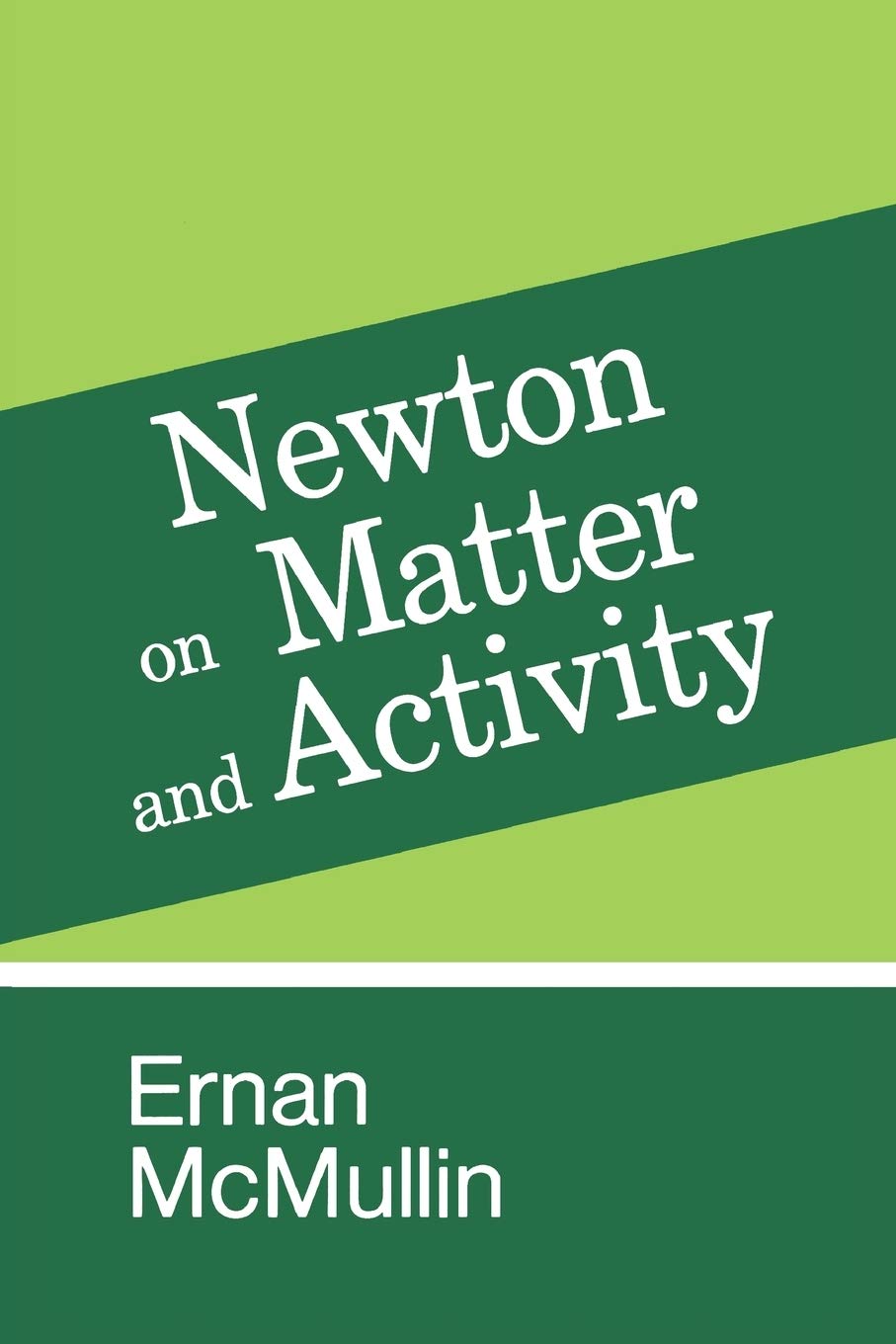
Newton On Matter And Activity
Sold by Ergodebooks, an authorized reseller.
Returns accepted within 30 days | support@ergodebooks.com
Shipping Information
- Free Standard Shipping — United States only
- Processing Time: 3–5 business days
- Estimated Delivery: 6–10 business days after dispatch
- Double-boxed, fully insured & discreetly packaged
- Tracking number sent via email once dispatched
Returns & Refund
Returns accepted within 30 days of delivery.
Damaged or Defective Item
Free return shipping + replacement or full refund
Wrong Item Received
Free return shipping + replacement or full refund
Change of Mind
Return shipping at customer's expense · 25% restocking fee applies
Payment Option

Newton On Matter And Activity Shows Persuasively That While The Principia Remains Within The First Two Stages Of Inquiry (Mathematical And Physical) Into Nature, Newton Spent The Next Forty Years Of His Life Making A Philosophical Analysis Of Matter, Force, And Transmission Of Force. Close Attention Is Paid To Methodological Issues, Especially Newton'S Move Beyond Inductivism And Toward A Reproductive Theoretical Schema Of Interpretation Required To Treat Of Attraction, Hardness, And Impenetrability. Cross Currents
⚠️ WARNING (California Proposition 65):
This product may contain chemicals known to the State of California to cause cancer, birth defects, or other reproductive harm.
For more information, please visit www.P65Warnings.ca.gov.
- Q: What is the size of 'Newton on Matter and Activity'? A: The book measures five point ninety-eight inches in length, zero point thirty-nine inches in width, and nine point zero two inches in height.
- Q: How many pages does 'Newton on Matter and Activity' have? A: The book contains one hundred seventy pages, providing a comprehensive exploration of Newton's philosophical analysis.
- Q: What type of binding does this book have? A: This book is available in a paperback binding, making it lightweight and easy to handle.
- Q: Who is the author of 'Newton on Matter and Activity'? A: The author of this book is Ernan McMullin, who offers insights into Newton's philosophical perspectives.
- Q: What is the main subject of 'Newton on Matter and Activity'? A: The book focuses on Newton's analysis of matter, force, and the transmission of force in nature.
- Q: What themes are explored in 'Newton on Matter and Activity'? A: The book discusses methodological issues and Newton's shift from inductivism to a reproductive theoretical schema.
- Q: Is 'Newton on Matter and Activity' suitable for beginners? A: Yes, this book is accessible for those interested in philosophical analysis and the history of science.
- Q: Can I read 'Newton on Matter and Activity' if I am not a physicist? A: Yes, the book is designed to engage readers with varying levels of expertise in science and philosophy.
- Q: How can I benefit from reading 'Newton on Matter and Activity'? A: Readers will gain insights into Newton's approaches to understanding matter and force, enhancing their knowledge of scientific history.
- Q: How should I store 'Newton on Matter and Activity' to keep it in good condition? A: Store the book in a cool, dry place away from direct sunlight to preserve its condition over time.
- Q: Does 'Newton on Matter and Activity' require special care? A: No, the book does not require special care; regular handling and reading will not damage it.
- Q: What if 'Newton on Matter and Activity' arrives damaged? A: If the book arrives damaged, you should contact the seller for a replacement or return options.
- Q: Is there a return policy for 'Newton on Matter and Activity'? A: Yes, most retailers offer a return policy; check with the seller for specific terms.
- Q: How does 'Newton on Matter and Activity' compare to other science philosophy books? A: This book provides a unique perspective on Newton's work, distinguishing itself with its focus on methodological transitions.
- Q: Should I read 'Newton on Matter and Activity' before other philosophy of science books? A: Yes, this book offers foundational insights that can enrich understanding of later philosophical discussions in science.