
Title
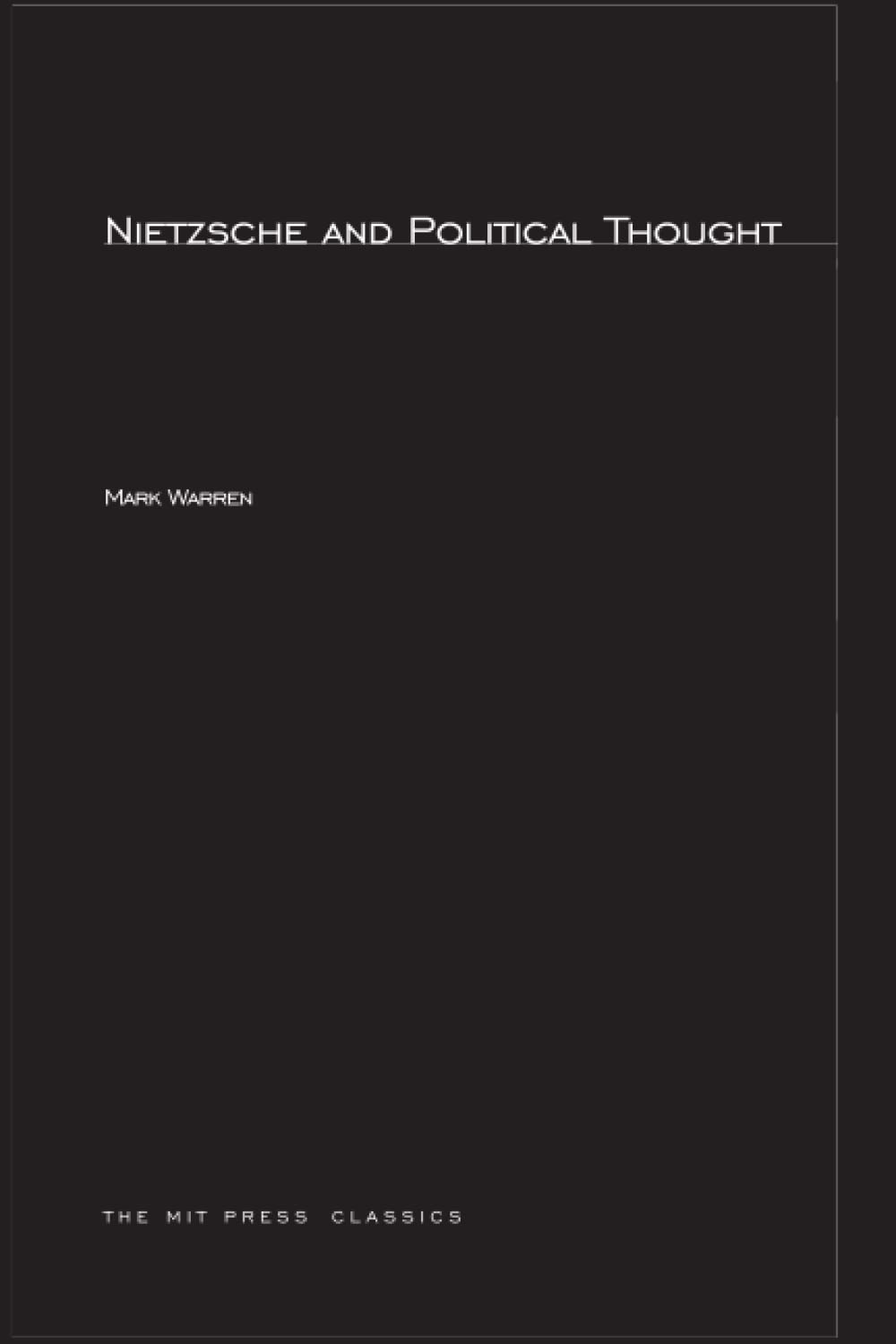
Nietzsche and Political Thought,Used
Sold by Ergodebooks, an authorized reseller.
Returns accepted within 30 days | support@ergodebooks.com
Shipping Information
- Free Standard Shipping — United States only
- Processing Time: 3–5 business days
- Estimated Delivery: 6–10 business days after dispatch
- Double-boxed, fully insured & discreetly packaged
- Tracking number sent via email once dispatched
Returns & Refund
Returns accepted within 30 days of delivery.
Damaged or Defective Item
Free return shipping + replacement or full refund
Wrong Item Received
Free return shipping + replacement or full refund
Change of Mind
Return shipping at customer's expense · 25% restocking fee applies
Payment Option

Friedrich Nietzsche was a troublesome genius, a figure outside the mainstream philosophical tradition whose very apartness has made him central to contemporary philosophy. Nietzsche and Political Thought reclaims the political implications of Nietzsche's work: it shows how his philosophy of power addresses key issues in modern political thought especially those having to do with the historical and cultural nature of human agency.In this thoughtprovoking study, Mark Warren claims entirely new ground. He develops a 'postmetaphysical' political philosophy that provides a link between Nietzsche's work and the later philosophies of the Frankfurt School and Michel Foucault. Warren comes to terms with Nietszche's views on power, freedom, domination, equality, ideology topics that recent interpretations have neglected in favor of a focus on the literary and philosophical aspects of his work, but that in fact make these literary and philosophical concerns relevant to social and political thought. Importantly, Warren draws a distinction between the implications of Nietzsche's theories concerning power and agency for contemporary political thought and Nietzsche's own politics. He demonstrates how Nietzsche's actual political views did not reflect and in large part falsified his own philosophical insights which taken by themselves point toward a pluralistic society in which egalitarianism underscores individuality. But his politics, Warren argues, derived too heavily from a deficient understanding of modern social and political organization.Nietzsche and Political Thought is included in the series Studies in Contemporary German Social Thought, edited by Thomas McCarthy.
⚠️ WARNING (California Proposition 65):
This product may contain chemicals known to the State of California to cause cancer, birth defects, or other reproductive harm.
For more information, please visit www.P65Warnings.ca.gov.