If you have any questions, you are always welcome to contact us. We'll get back to you as soon as possible, withing 24 hours on weekdays.
Customer service
All questions about your order, return and delivery must be sent to our customer service team by e-mail at yourstore@yourdomain.com
Sale & Press
If you are interested in selling our products, need more information about our brand or wish to make a collaboration, please contact us at press@yourdomain.com
Help
If you have any questions, you are always welcome to contact us. We'll get back to you as soon as possible, withing 24 hours on weekdays.
Customer service
All questions about your order, return and delivery must be sent to our customer service team by e-mail at yourstore@yourdomain.com
Sale & Press
If you are interested in selling our products, need more information about our brand or wish to make a collaboration, please contact us at press@yourdomain.com
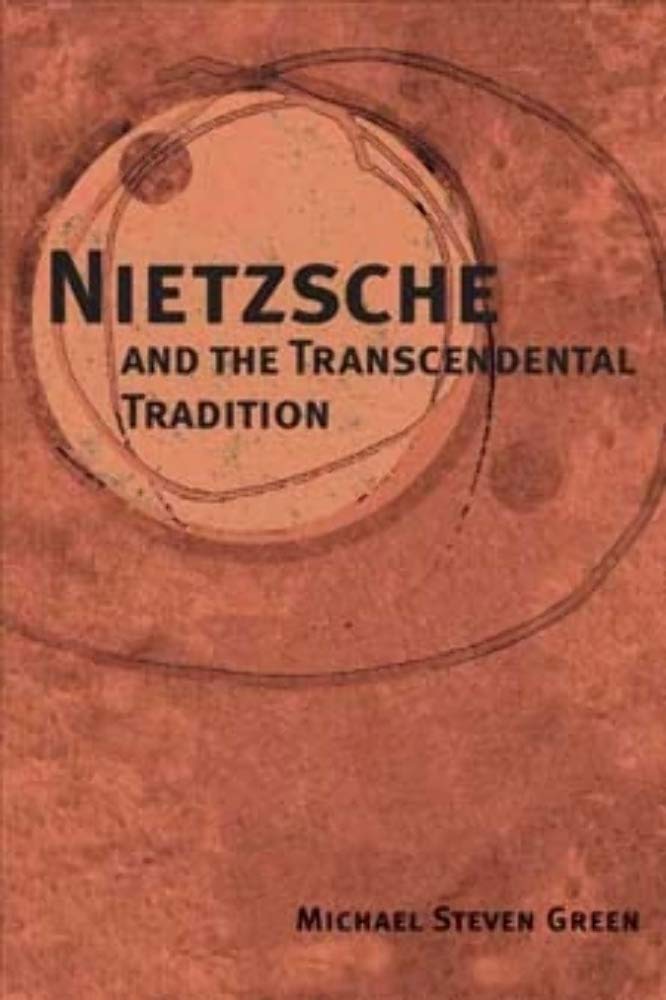
In recent years, both analytic thinkers and postmodern theorists have looked at Friedrich Nietzsche's epistemology from the perspectives of their philosophical traditions. Michael Steven Green's penetrating study tries instead to do justice to Nietzsche's views on truth and knowledge by looking at them from the perspective of his contemporaries, particularly the NeoKantian philosopher Afrikan Spir, whose ideas exerted a tremendous influence on Nietzsche's thought.Despite his generally naturalist outlook, Nietzsche was committed to an antinaturalist theory of cognition inherited from Kant and Spir. Green shows how this fundamental tension in Nietzsche's thought led him to present not only the antirealism that has commonly been attributed to him in the past, but two other epistemological positions. These are a denial of the possibility of human thought entirely, and an error theorythe argument that all of our judgments are falsethat has strong parallels in Spir's thought and Kant's antinomies.Viewing Nietzsche's error theory in light of Kantian transcendental idealism, Green makes sense of arguments that have previously confounded Nietzsche interpreters. Green also provides the first English translations of many passages from Spir's writings and Nietzsche's notebooks.In examining Nietzsche's thought through the lens of the philosophical influences upon himthe philosophers that Nietzsche himself readGreen establishes a significant new foundation from which to assess Nietzsche's place in modern philosophy and culture.
⚠️ WARNING (California Proposition 65):
This product may contain chemicals known to the State of California to cause cancer,
birth defects, or other reproductive harm.
For MAP (Minimum Advertised Price) violations and Intellectual Property (IP) or Trademark concerns, please contact:
support@ergodebooks.com
⚠️ California Proposition 65 Warning: Some products sold on this website may expose you to chemicals known to the State of California to cause cancer, birth defects, or other reproductive harm. For more information, visit www.P65Warnings.ca.gov.