If you have any questions, you are always welcome to contact us. We'll get back to you as soon as possible, withing 24 hours on weekdays.
Customer service
All questions about your order, return and delivery must be sent to our customer service team by e-mail at yourstore@yourdomain.com
Sale & Press
If you are interested in selling our products, need more information about our brand or wish to make a collaboration, please contact us at press@yourdomain.com
Help
If you have any questions, you are always welcome to contact us. We'll get back to you as soon as possible, withing 24 hours on weekdays.
Customer service
All questions about your order, return and delivery must be sent to our customer service team by e-mail at yourstore@yourdomain.com
Sale & Press
If you are interested in selling our products, need more information about our brand or wish to make a collaboration, please contact us at press@yourdomain.com
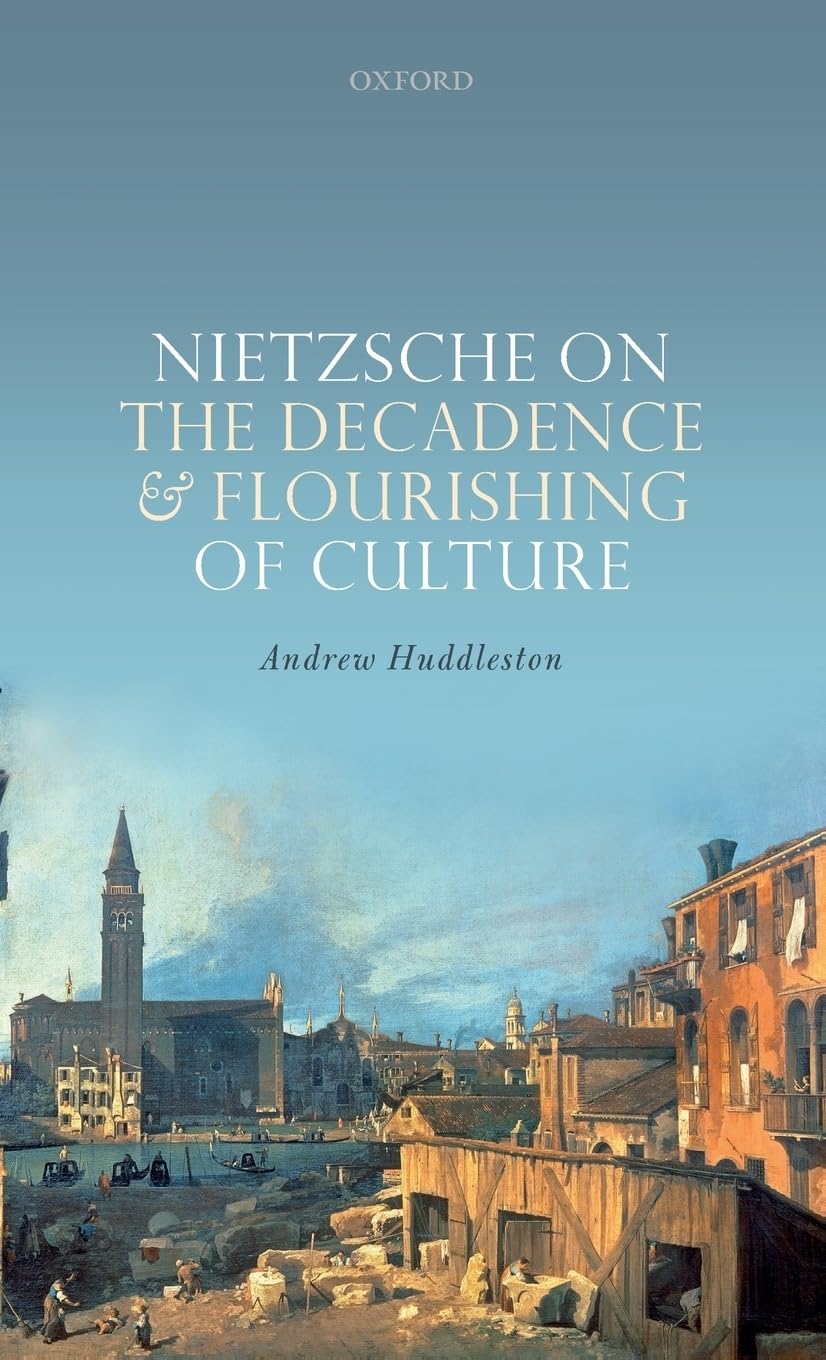
In Nietzsche's first book The Birth of Tragedy (1872), cultural renewal is paramount among his concerns. In the person of Richard Wagner, Nietzsche saw someone who might bring together a fragmented and directionless modern society through the creation of tragic festival that, through its mythic content, would allegedly give renewed meaning and purpose to human life. The standard story about Nietzsche's philosophical development is that he becomes disillusioned with this project and his mature philosophy undergoes a radical shift. Instead of reposing his hopes in a broader culture, he comes to occupy himself instead with the fate of a few great individuals, or, at the extreme, perhaps mainly with his own quasiartistic selfcultivation. On these readings, to the extent that he remains concerned with culture at all, it is only as something whose noxious influence threatens this cadre of elite individuals. Nietzsche on the Decadence and Flourishing of Culture questions this individualist reading that has become prevalent, and develops an alternative interpretation of Nietzsche as a more social thinker who sees collective cultural achievements as no less important. Great individuals are not all that matter. Andrew Huddleston uses Nietzsche's perfectionistic ideal of a flourishing culture and his diagnostics of cultural malaise as a point of departure for reconsidering many of the central themes in Nietzsche's ethics and social philosophy, as well as for understanding the interconnections with the form of cultural criticism that was part and parcel of his distinctive philosophical enterprise.
⚠️ WARNING (California Proposition 65):
This product may contain chemicals known to the State of California to cause cancer,
birth defects, or other reproductive harm.
For MAP (Minimum Advertised Price) violations and Intellectual Property (IP) or Trademark concerns, please contact:
support@ergodebooks.com
⚠️ California Proposition 65 Warning: Some products sold on this website may expose you to chemicals known to the State of California to cause cancer, birth defects, or other reproductive harm. For more information, visit www.P65Warnings.ca.gov.