
Title
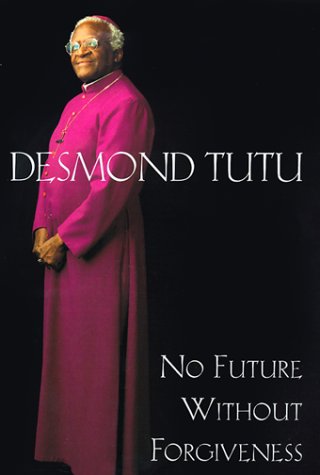
No Future Without Forgiveness,New
Sold by Ergodebooks, an authorized reseller.
Returns accepted within 30 days | support@ergodebooks.com
Shipping Information
- Free Standard Shipping — United States only
- Processing Time: 3–5 business days
- Estimated Delivery: 6–10 business days after dispatch
- Double-boxed, fully insured & discreetly packaged
- Tracking number sent via email once dispatched
Returns & Refund
Returns accepted within 30 days of delivery.
Damaged or Defective Item
Free return shipping + replacement or full refund
Wrong Item Received
Free return shipping + replacement or full refund
Change of Mind
Return shipping at customer's expense · 25% restocking fee applies
Payment Option

The Truth and Reconciliation Commission of South Africa has put the spotlight on all of us...In its hearings Desmond Tutu has conveyed our common pain and sorrow, our hope and confidence in the future.'Nelson MandelaThe establishment of South Africa's Truth and Reconciliation Commission was a pioneering international event. Never had any country sought to move forward from despotism to democracy both by exposing the atrocities committed in the past and achieving reconciliation with its former oppressors. At the center of this unprecedented attempt at healing a nation has been Archbishop Desmond Tutu, whom President Nelson Mandela named as Chairman of the Truth and Reconciliation Commission. With the final report of the Commission just published, Archbishop Tutu offers his reflections on the profound wisdom he has gained by helping usher South Africa through this painful experience.In No Future Without Forgiveness, Tutu argues that true reconciliation cannot be achieved by denying the past. But nor is it easy to reconcile when a nation 'looks the beast in the eye.' Rather than repeat platitudes about forgiveness, he presents a bold spirituality that recognizes the horrors people can inflict upon one another, and yet retains a sense of idealism about reconciliation. With a clarity of pitch born out of decades of experience, Tutu shows readers how to move forward with honesty and compassion to build a newer and more humane world.
⚠️ WARNING (California Proposition 65):
This product may contain chemicals known to the State of California to cause cancer, birth defects, or other reproductive harm.
For more information, please visit www.P65Warnings.ca.gov.
- Q: What is the main theme of 'No Future Without Forgiveness'? A: 'No Future Without Forgiveness' explores the themes of reconciliation and healing in post-apartheid South Africa, focusing on the Truth and Reconciliation Commission's efforts to confront past atrocities and promote national unity.
- Q: Who is the author of this book? A: The author of 'No Future Without Forgiveness' is Archbishop Desmond Tutu, a prominent South African leader and Nobel Peace Prize laureate.
- Q: When was 'No Future Without Forgiveness' published? A: 'No Future Without Forgiveness' was published on October 5, 1999.
- Q: What type of binding does this book have? A: This book is available in hardcover binding, making it durable for long-term use.
- Q: How many pages are in 'No Future Without Forgiveness'? A: 'No Future Without Forgiveness' contains a total of 304 pages.
- Q: Is this book in new condition? A: Yes, 'No Future Without Forgiveness' is available in new condition.
- Q: What category does this book fall under? A: 'No Future Without Forgiveness' falls under the category of South Africa, focusing on its historical and political context.
- Q: What key insights does Desmond Tutu offer in this book? A: In this book, Desmond Tutu offers insights on the importance of acknowledging the past for true reconciliation and emphasizes a spirituality that blends honesty with compassion.
- Q: Can this book be used as a resource for understanding reconciliation processes? A: Yes, 'No Future Without Forgiveness' serves as a valuable resource for understanding reconciliation processes, particularly in the context of post-conflict societies.
- Q: What is the significance of the Truth and Reconciliation Commission in South Africa? A: The Truth and Reconciliation Commission was significant as it aimed to address human rights violations during apartheid, enabling South Africa to confront its past and work towards a more inclusive future.