
Title
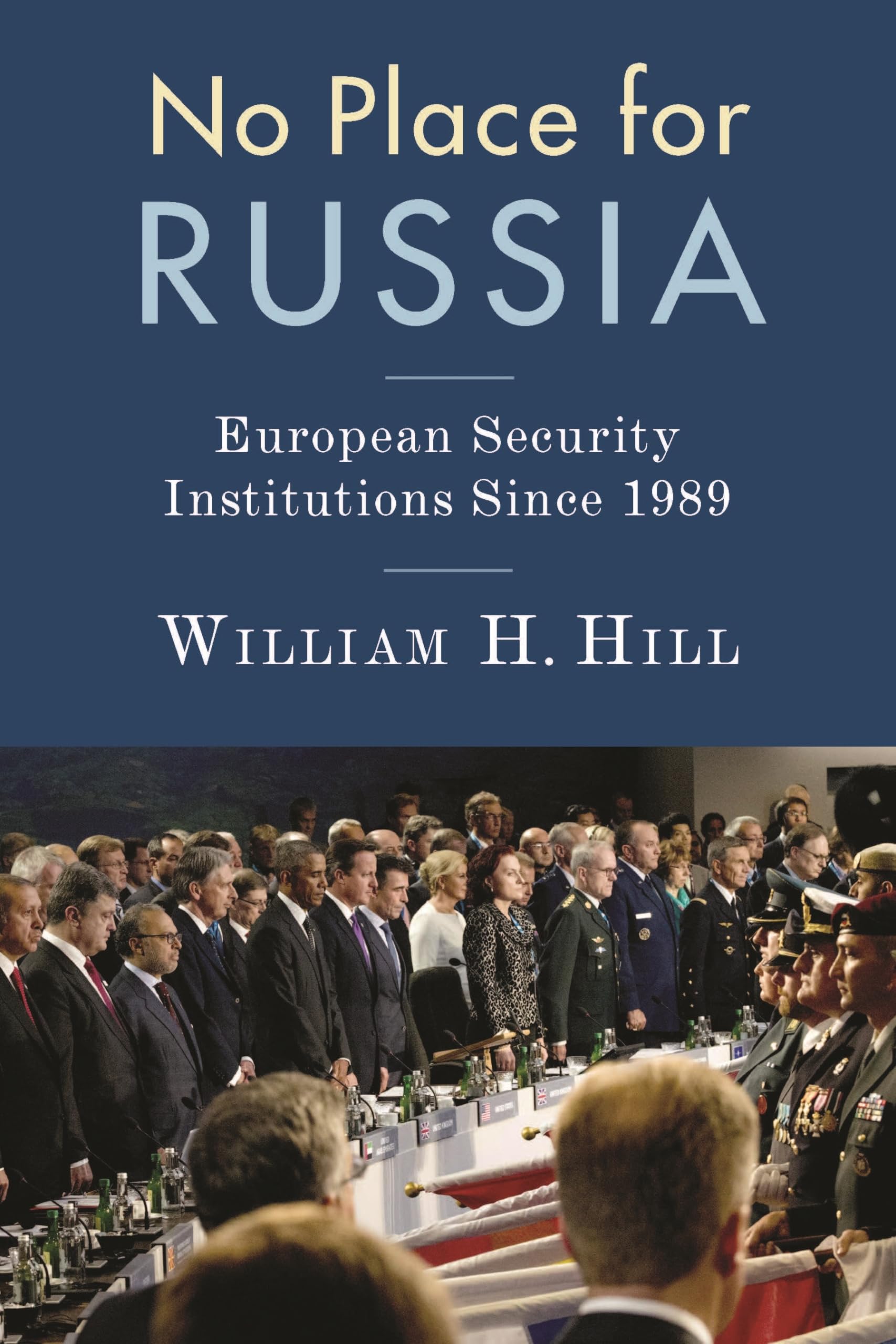
No Place for Russia: European Security Institutions Since 1989 (Woodrow Wilson Center Series),Used
Sold by Ergodebooks, an authorized reseller.
Returns accepted within 30 days | support@ergodebooks.com
Shipping Information
- Free Standard Shipping — United States only
- Processing Time: 3–5 business days
- Estimated Delivery: 6–10 business days after dispatch
- Double-boxed, fully insured & discreetly packaged
- Tracking number sent via email once dispatched
Returns & Refund
Returns accepted within 30 days of delivery.
Damaged or Defective Item
Free return shipping + replacement or full refund
Wrong Item Received
Free return shipping + replacement or full refund
Change of Mind
Return shipping at customer's expense · 25% restocking fee applies
Payment Option

The optimistic vision of a Europe whole and free after the fall of the Berlin Wall in 1989 has given way to disillusionment, bitterness, and renewed hostility between Russia and the West. In No Place for Russia, William H. Hill traces the development of the postCold War European security order to explain todays tensions, showing how attempts to integrate Russia into a unified EuroAtlantic security order were gradually overshadowed by the domination of NATO and the EUat Russias expense.Hill argues that the redivision of Europe has been largely unintended and not the result of any single decision or action. Instead, the current situation is the cumulative result of many decisionsreasonably made at the timethat gradually produced the current security architecture and led to mutual mistrust. Hill analyzes the United States decision to remain in Europe after the Cold War, the emergence of Germany as a major power on the continent, and the transformation of Russia into a nationstate, placing major weight on NATOs evolution from an alliance dedicated primarily to static collective territorial defense into a security organization with global ambitions and capabilities. Closing with Russias annexation of Crimea and war in eastern Ukraine, No Place for Russia argues that the postCold War security order in Europe has been irrevocably shattered, to be replaced by a new and asyetundefined order.
⚠️ WARNING (California Proposition 65):
This product may contain chemicals known to the State of California to cause cancer, birth defects, or other reproductive harm.
For more information, please visit www.P65Warnings.ca.gov.
- Q: What is the main topic of 'No Place for Russia'? A: 'No Place for Russia' discusses the evolution of European security institutions since 1989 and examines the tensions between Russia and the West following the Cold War.
- Q: Who is the author of 'No Place for Russia'? A: The book is authored by William H. Hill.
- Q: What is the publication date of this book? A: 'No Place for Russia' was published on August 14, 2018.
- Q: What is the format of the book? A: The book is available in hardcover format.
- Q: How many pages does 'No Place for Russia' have? A: The book contains 536 pages.
- Q: What are the key themes explored in the book? A: Key themes include the post-Cold War security architecture in Europe, NATO's evolution, and the impact of Russia's actions on European security.
- Q: Is 'No Place for Russia' suitable for academic research? A: Yes, the book provides in-depth analysis and references that make it suitable for academic research on European security issues.
- Q: Does the book include historical context? A: Yes, it traces the historical developments in European security institutions since the fall of the Berlin Wall.
- Q: What audience is 'No Place for Russia' intended for? A: The book is intended for readers interested in international relations, European history, and security studies.
- Q: Are there any specific events discussed in the book? A: Yes, it discusses significant events such as Russia's annexation of Crimea and the ongoing conflict in eastern Ukraine.