
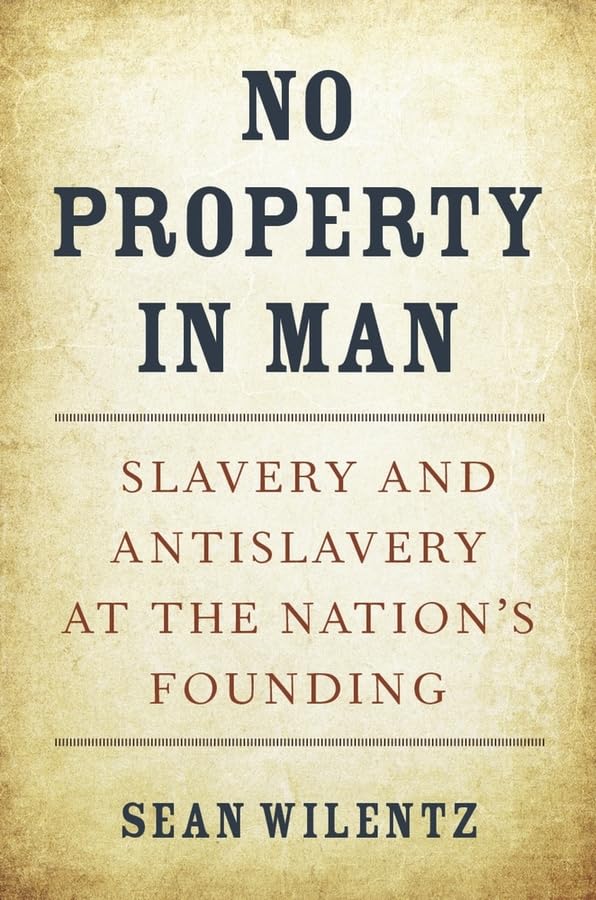
Title
No Property In Man: Slavery And Antislavery At The Nations Founding (The Nathan I. Huggins Lectures)
Sold by Ergodebooks, an authorized reseller.
Returns accepted within 30 days | support@ergodebooks.com
Shipping Information
- Free Standard Shipping — United States only
- Processing Time: 3–5 business days
- Estimated Delivery: 6–10 business days after dispatch
- Double-boxed, fully insured & discreetly packaged
- Tracking number sent via email once dispatched
Returns & Refund
Returns accepted within 30 days of delivery.
Damaged or Defective Item
Free return shipping + replacement or full refund
Wrong Item Received
Free return shipping + replacement or full refund
Change of Mind
Return shipping at customer's expense · 25% restocking fee applies
Payment Option

A Radical Reconstruction Of The Founders Debate Over Slavery And The Constitution, By The Bestselling, Awardwinning Author Of The Rise Of American Democracy.Americans Revere The Constitution Even As They Argue Fiercely Over Its Original Toleration Of Slavery. Some Historians Have Charged That Slaveholders Actually Enshrined Human Bondage At The Nations Founding. The Acclaimed Political Historian Sean Wilentz Shares The Dismay But Sees The Constitution And Slavery Differently. Although The Proslavery Side Won Important Concessions, He Asserts, Antislavery Impulses Also Influenced The Framers Work. Far From Covering Up A Crime Against Humanity, The Constitution Restricted Slaverys Legitimacy Under The New National Government. In Time, That Limitation Would Open The Way For The Creation Of An Antislavery Politics That Led To Southern Secession, The Civil War, And Emancipation.Wilentzs Controversial And Timely Reconsideration Upends Orthodox Views Of The Constitution. He Describes The Document As A Tortured Paradox That Abided Slavery Without Legitimizing It. This Paradox Lay Behind The Great Political Battles That Fractured The Nation Over The Next Seventy Years. As Southern Fireeaters Invented A Proslavery Version Of The Constitution, Antislavery Advocates, Including Abraham Lincoln And Frederick Douglass, Proclaimed Antislavery Versions Based On The Framers Refusal To Validate What They Called Property In Man.No Property In Man Invites Fresh Debate About The Political And Legal Struggles Over Slavery That Began During The Revolution And Concluded With The Confederacys Defeat. It Drives Straight To The Heart Of The Most Contentious And Enduring Issue In All Of American History.
⚠️ WARNING (California Proposition 65):
This product may contain chemicals known to the State of California to cause cancer, birth defects, or other reproductive harm.
For more information, please visit www.P65Warnings.ca.gov.
- Q: What is the main theme of 'No Property in Man'? A: The main theme of 'No Property in Man' is the complex relationship between slavery and the Constitution, exploring how the founders debated slavery's role in the nation while also recognizing antislavery sentiments.
- Q: Who is the author of 'No Property in Man'? A: The author of 'No Property in Man' is Sean Wilentz, a political historian known for his work on American history and politics.
- Q: What is the publication date of 'No Property in Man'? A: The book 'No Property in Man' was published on September 6, 2018.
- Q: How many pages does 'No Property in Man' have? A: 'No Property in Man' contains 368 pages.
- Q: What is the binding type of 'No Property in Man'? A: 'No Property in Man' is available in hardcover binding.
- Q: What category does 'No Property in Man' fall under? A: 'No Property in Man' falls under the category of Abolition.
- Q: Is 'No Property in Man' a first edition? A: Yes, 'No Property in Man' is a first edition.
- Q: What condition is 'No Property in Man' in? A: 'No Property in Man' is listed as being in very good condition.
- Q: What are the key arguments presented by Sean Wilentz in this book? A: Sean Wilentz argues that the Constitution both acknowledged and restricted slavery, fostering antislavery politics that contributed to significant historical events such as the Civil War and Emancipation.
- Q: Can 'No Property in Man' be used as a reference for understanding American history? A: Yes, 'No Property in Man' serves as a critical reference for understanding the political and legal struggles over slavery in American history.