
Title
No Small Matter: Science on the Nanoscale,Used
Sold by Ergodebooks, an authorized reseller.
Returns accepted within 30 days | support@ergodebooks.com
Shipping Information
- Free Standard Shipping — United States only
- Processing Time: 3–5 business days
- Estimated Delivery: 6–10 business days after dispatch
- Double-boxed, fully insured & discreetly packaged
- Tracking number sent via email once dispatched
Returns & Refund
Returns accepted within 30 days of delivery.
Damaged or Defective Item
Free return shipping + replacement or full refund
Wrong Item Received
Free return shipping + replacement or full refund
Change of Mind
Return shipping at customer's expense · 25% restocking fee applies
Payment Option

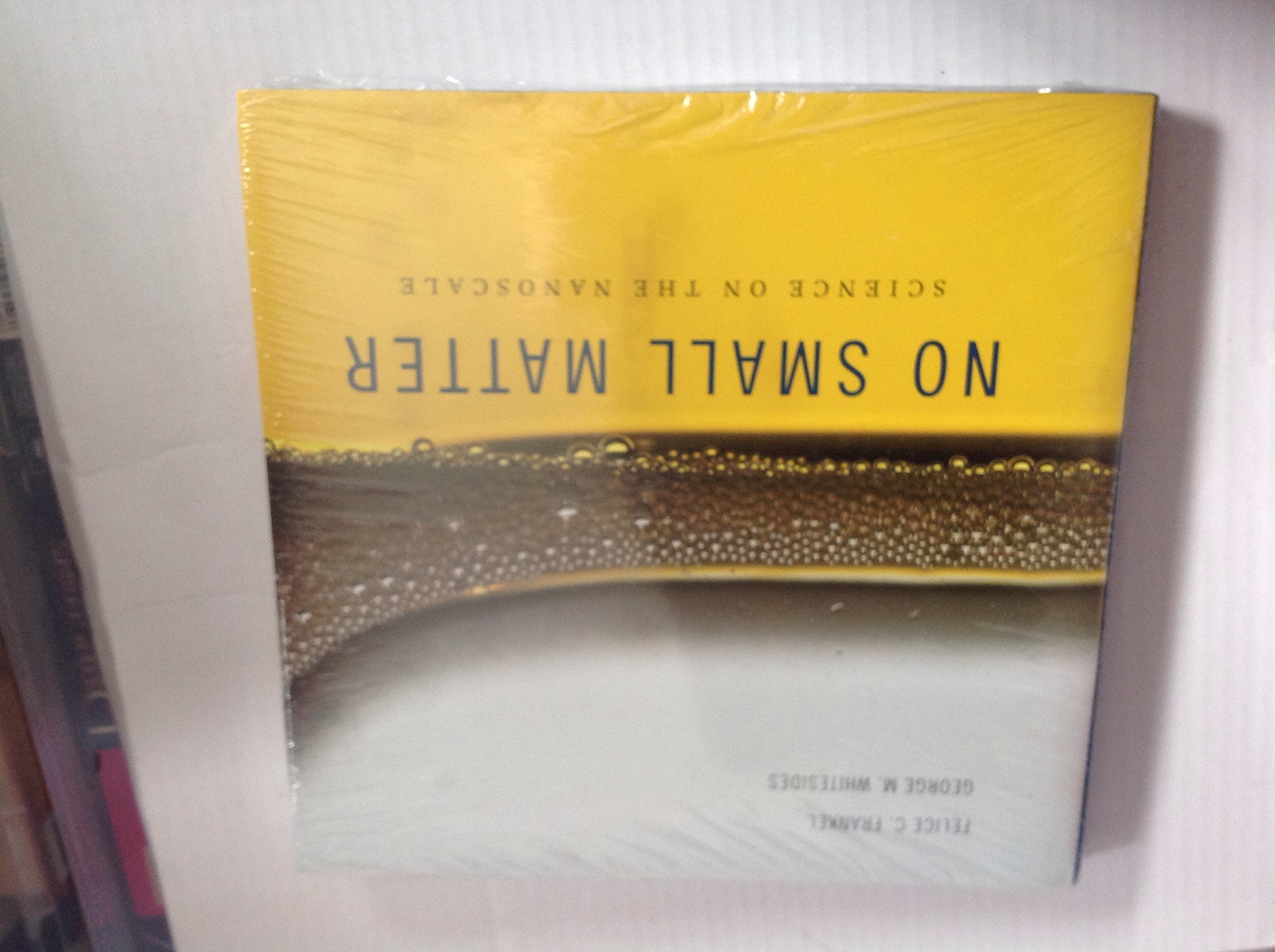
A small revolution is remaking the world. The only problem is, we cant see it. This book uses dazzling images and evocative descriptions to reveal the virtually invisible realities and possibilities of nanoscience. An introduction to the science and technology of small things, No Small Matter explains science on the nanoscale.Authors Felice C. Frankel and George M. Whitesides offer an overview of recent scientific advances that have given us our evershrinking microtechnologyfor instance, an information processor connected by wires only 1,000 atoms wide. They describe the new methods used to study nanostructures, suggest ways of understanding their often bizarre behavior, and outline their uses in technology. This book explains the various means of making nanostructures and speculates about their importance for critical developments in information processing, computation, biomedicine, and other areas.No Small Matter considers both the benefits and the risks of nano/microtechnologyfrom the potential of quantum computers and singlemolecule genomic sequencers to the concerns about selfreplicating nanosystems. By making the practical and probable realities of nanoscience as comprehensible and clear as possible, the book provides a unique vision of work at the very boundaries of modern science.
⚠️ WARNING (California Proposition 65):
This product may contain chemicals known to the State of California to cause cancer, birth defects, or other reproductive harm.
For more information, please visit www.P65Warnings.ca.gov.
- Q: What is the size of the book No Small Matter? A: The book measures ten point twenty-four inches in length, zero point eighty-one inches in width, and nine point ninety-two inches in height. It is a hardcover edition and contains one hundred ninety-two pages.
- Q: Who are the authors of No Small Matter? A: The authors are Felice C. Frankel and George M. Whitesides. They provide insights into the science and technology of nanoscience in this book.
- Q: What is the binding type of No Small Matter? A: The book is a hardcover edition. This binding type typically offers durability and protection for the pages inside.
- Q: What topics does No Small Matter cover? A: The book covers nanoscience and technology. It discusses recent scientific advances and the implications of nano/microtechnology.
- Q: How do I read No Small Matter? A: You can read the book at your own pace, as it is designed for general audiences. It is suitable for readers interested in science and technology.
- Q: Is No Small Matter suitable for beginners in science? A: Yes, it is suitable for beginners. The book provides clear explanations of complex scientific concepts in nanoscience.
- Q: How should I store No Small Matter to keep it in good condition? A: Store the book in a cool, dry place, away from direct sunlight. This will help preserve the integrity of the hardcover and the pages.
- Q: Can I clean the book No Small Matter? A: No, do not clean the book with water or chemicals. If it gets dirty, gently dust it with a soft, dry cloth.
- Q: What if No Small Matter arrives damaged? A: If the book arrives damaged, you should contact the seller for return instructions. Most sellers offer return policies to address such issues.
- Q: How does No Small Matter compare to other science books? A: No Small Matter uniquely focuses on nanoscience. Unlike many science books, it combines stunning images with accessible explanations.
- Q: Is No Small Matter appropriate for children? A: Yes, it is appropriate for older children and teens interested in science. The content is educational and engaging.
- Q: What scientific advances are discussed in No Small Matter? A: The book discusses advances in microtechnology, such as information processors and single-molecule genomic sequencers. It also covers methods for studying nanostructures.
- Q: How many pages does No Small Matter have? A: The book has one hundred ninety-two pages. This length allows for thorough exploration of its topics while remaining concise.
- Q: What type of images are included in No Small Matter? A: The book features dazzling images that illustrate concepts in nanoscience. These visuals help to convey the otherwise invisible realities of the subject.
- Q: What is the main message of No Small Matter? A: The main message is to make the complexities of nanoscience comprehensible. It highlights both the possibilities and risks of advancing nano/microtechnology.