If you have any questions, you are always welcome to contact us. We'll get back to you as soon as possible, withing 24 hours on weekdays.
Customer service
All questions about your order, return and delivery must be sent to our customer service team by e-mail at yourstore@yourdomain.com
Sale & Press
If you are interested in selling our products, need more information about our brand or wish to make a collaboration, please contact us at press@yourdomain.com
Help
If you have any questions, you are always welcome to contact us. We'll get back to you as soon as possible, withing 24 hours on weekdays.
Customer service
All questions about your order, return and delivery must be sent to our customer service team by e-mail at yourstore@yourdomain.com
Sale & Press
If you are interested in selling our products, need more information about our brand or wish to make a collaboration, please contact us at press@yourdomain.com
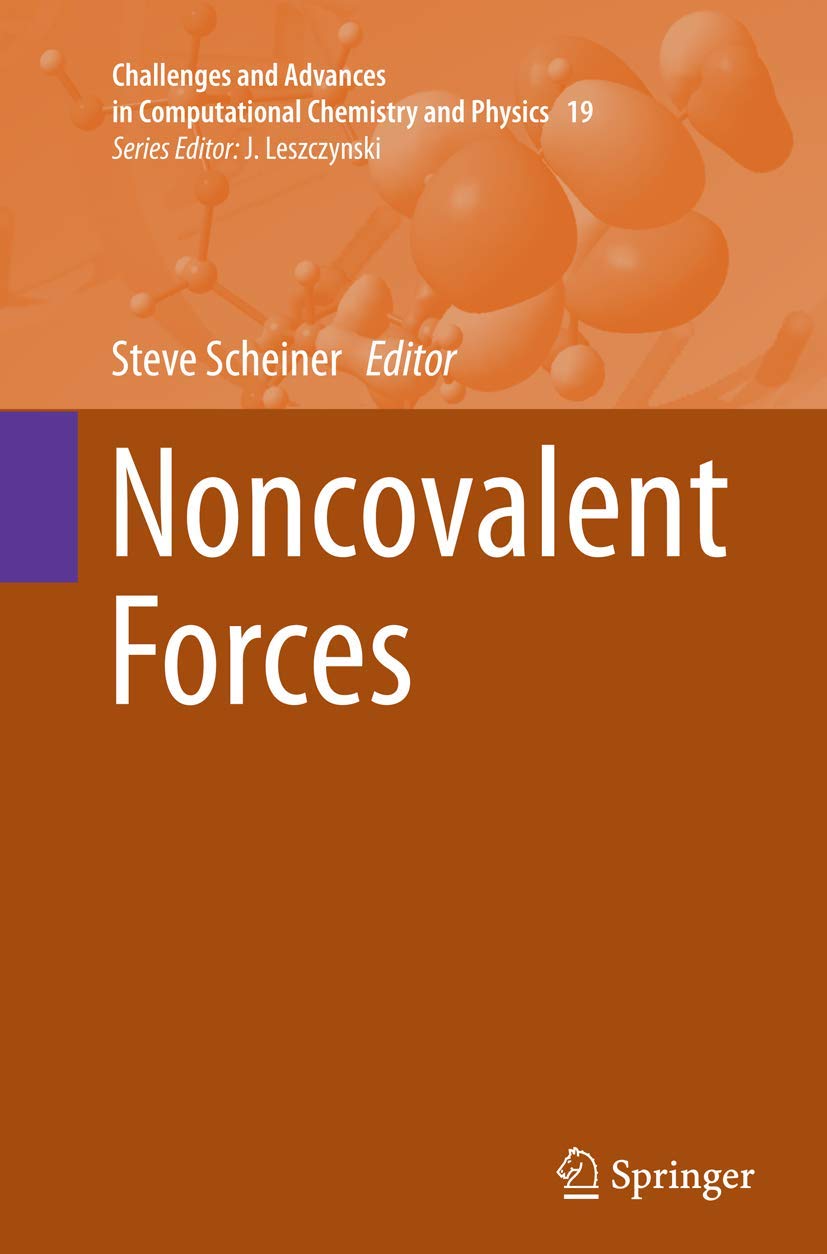
Computational methods, and in particular quantum chemistry, have taken the lead in our growing understanding of noncovalent forces, as well as in their categorization. This volume describes the current state of the art in terms of what we now know, and the current questions requiring answers in the future. Topics range from very strong (ionic) to very weak (CHp) interactions. In the intermediate regime, forces to be considered are Hbonds, particularly CHO and OHmetal, halogen, chalcogen, pnicogen and tetrel bonds, aromatic stacking, dihydrogen bonds, and those involving radicals. Applications include drug development and predictions of crystal structure.
⚠️ WARNING (California Proposition 65):
This product may contain chemicals known to the State of California to cause cancer,
birth defects, or other reproductive harm.
For MAP (Minimum Advertised Price) violations and Intellectual Property (IP) or Trademark concerns, please contact:
support@ergodebooks.com
⚠️ California Proposition 65 Warning: Some products sold on this website may expose you to chemicals known to the State of California to cause cancer, birth defects, or other reproductive harm. For more information, visit www.P65Warnings.ca.gov.